

Introduction
Managing energy costs is an important part of running a successful small business. Whether you operate a café, retail shop, office, salon, workshop, warehouse, or another type of small enterprise, choosing the right business energy contract can help you better understand your operating expenses and make informed purchasing decisions.
Unlike domestic energy tariffs, small business energy contracts are designed specifically for commercial customers. Suppliers typically consider factors such as your annual energy consumption, business location, meter type, and contract length when preparing a quote. As a result, two businesses may receive different prices even if they are located in the same area.
With numerous suppliers and tariff options available in the UK, comparing business energy quotes can seem overwhelming. However, understanding how commercial energy works—and what to look for when comparing contracts—can help you choose a solution that matches your business needs.
In this guide, we’ll explain what small business energy is, how business energy contracts work, how to choose a supplier, ways to manage your energy costs, and when it may be appropriate to compare new quotes.
Key Takeaways
Before we explore the details, here are the key points every small business owner should know:
- Small business energy contracts differ from domestic energy tariffs.
- Commercial energy quotes are based on your individual business requirements.
- Compare more than just the unit rate when reviewing suppliers.
- Review your contract before it expires to explore available options.
- Monitoring energy usage can support better energy management.
- Improving energy efficiency may help reduce overall consumption.
What Is Small Business Energy?
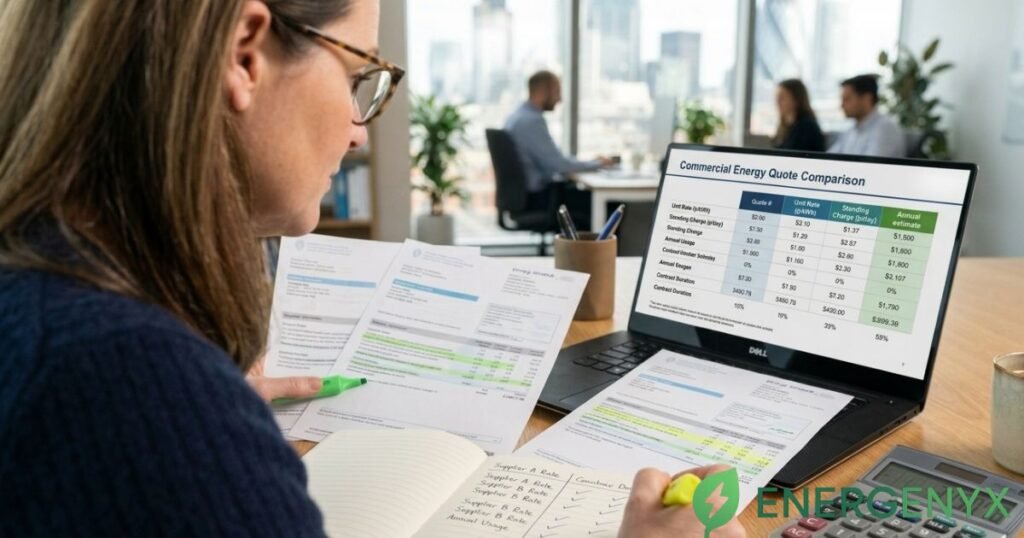
Small business energy refers to electricity and gas supplied under a commercial contract for businesses, charities, public organisations, and other non-domestic premises.
Unlike residential energy, business energy contracts are tailored to each organisation’s requirements. Suppliers consider factors such as energy usage, business type, contract duration, and location before providing a quotation.
Whether your business operates from a single office or several commercial premises, choosing an appropriate energy contract can support more effective budgeting and operational planning.
How Small Business Energy Differs from Domestic Energy
Although both domestic and business customers receive electricity and gas through the same national infrastructure, the way contracts are arranged is different.
Some of the main differences include:
| Domestic Energy | Small Business Energy |
|---|---|
| Standard consumer tariffs are often available | Quotes are generally tailored to the business |
| Designed for household use | Designed for commercial operations |
| Consumer protection rules differ | Commercial contract terms may vary between suppliers |
| Lower and more predictable usage patterns | Usage often varies by industry and operating hours |
Because of these differences, business owners should review contract terms carefully before making a decision.
Who Qualifies as a Small Business Customer?
While definitions can vary between suppliers, a small business customer typically includes organisations such as:
- Retail shops
- Cafés and restaurants
- Hair and beauty salons
- Professional offices
- Medical and dental practices
- Small warehouses
- Local trades and workshops
- Independent hotels and guest houses
- Start-ups
- Charities and community organisations
If your organisation operates from commercial premises and purchases energy for business purposes, you’ll generally require a business energy contract.
How Small Business Energy Works
Understanding how commercial energy is billed makes it easier to compare suppliers and choose an appropriate contract.
Most business energy bills contain several key components.
Electricity and Gas Supply
Many small businesses require both electricity and natural gas.
Some suppliers offer contracts for both fuels, while others may provide electricity or gas separately.
When comparing suppliers, consider whether managing both services with one provider—or separately—best suits your business needs.
Unit Rates
The unit rate is the price charged for each kilowatt-hour (kWh) of electricity or gas your business uses.
The total amount you pay depends on both your agreed unit rate and the amount of energy consumed.
When reviewing quotations, compare unit rates alongside the total estimated annual cost.
Standing Charges
Most business energy contracts also include a standing charge, which is a fixed daily fee.
Standing charges contribute towards maintaining the energy network, meter administration, and customer account services.
Although often smaller than overall energy costs, standing charges should always be included when comparing contracts.
Meter Readings
Your business energy meter records the amount of electricity or gas consumed.
Accurate meter readings help ensure your bills reflect your actual usage.
Many businesses now use smart meters, which can automatically provide readings and help monitor energy consumption more effectively.
Business Energy Contracts
Commercial energy contracts are available in different formats, including fixed and variable tariffs.
When choosing a contract, consider:
- Contract length
- Tariff type
- Budget requirements
- Expected future energy usage
- Business growth plans
Selecting a contract that aligns with your operational requirements is just as important as comparing prices.
How to Choose the Right Small Business Energy Supplier
Choosing an energy supplier involves more than selecting the lowest quote.
Taking a broader view of each supplier’s offering can help you identify the contract that best suits your business.
Don’ know about your energy supplier, here is a guide from OFGEM: Find your energy supplier
Compare Multiple Suppliers
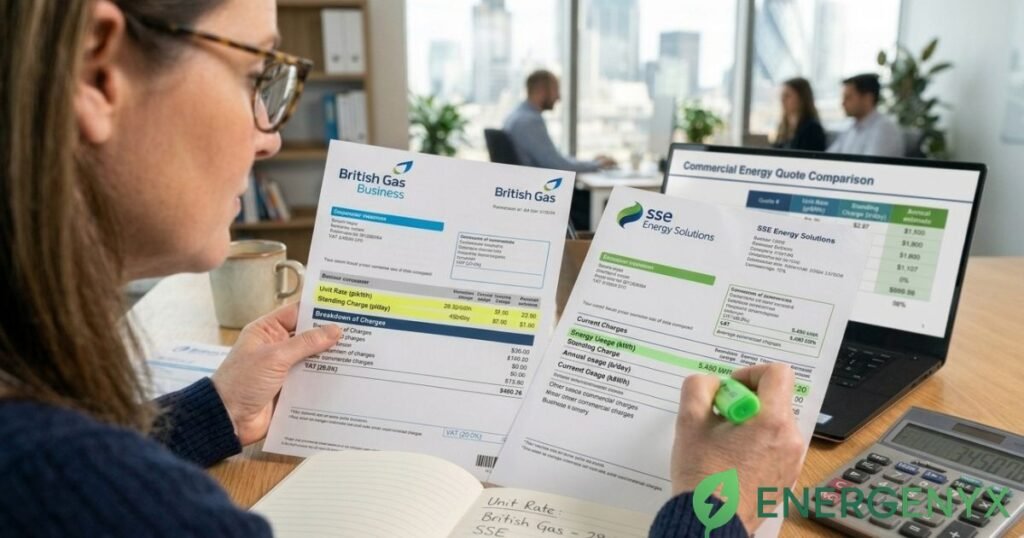
Rather than accepting the first offer you receive, compare quotations from several suppliers.
Look at:
- Unit rates
- Standing charges
- Contract length
- Tariff options
- Renewable energy availability
- Billing methods
- Customer support
Comparing multiple suppliers gives you a clearer picture of the market and helps you make a more informed decision.
Review Contract Terms Carefully
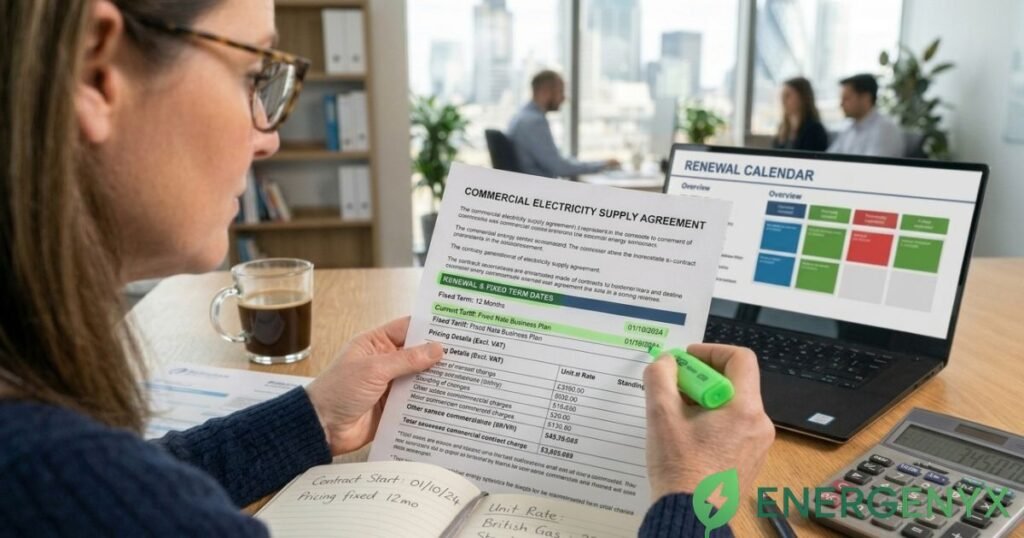
Before agreeing to a contract, read the terms and conditions carefully.
Pay particular attention to:
- Contract duration
- Renewal process
- Notice periods
- Billing arrangements
- Exit conditions
- Payment terms
Understanding these details before signing can help prevent misunderstandings later.
Consider Customer Service
Reliable customer support can make managing your energy account much easier.
When evaluating suppliers, consider:
- Contact options
- Response times
- Online account management
- Billing accuracy
- Business support services
Good customer service becomes particularly valuable if you need assistance during your contract.
Renewable Energy Options
Many suppliers now offer renewable electricity options for businesses interested in reducing their environmental impact.
If sustainability is important to your organisation, ask suppliers about renewable energy tariffs and the information they provide about electricity sourcing.
How to Reduce Small Business Energy Costs
Managing energy costs isn’t just about finding competitive prices. It also involves understanding how your business uses energy and identifying opportunities to improve efficiency.
Below are several practical ways small businesses can better manage their commercial energy costs.
1. Compare Business Energy Quotes Regularly
One of the easiest ways to understand the market is to compare business energy quotes before your current contract expires.
When reviewing quotes, compare:
- Unit rates
- Standing charges
- Contract lengths
- Tariff types
- Customer support
- Renewable energy options
Looking at the overall value of a contract, rather than just the headline price, helps you make a more informed decision.
2. Monitor Your Energy Usage
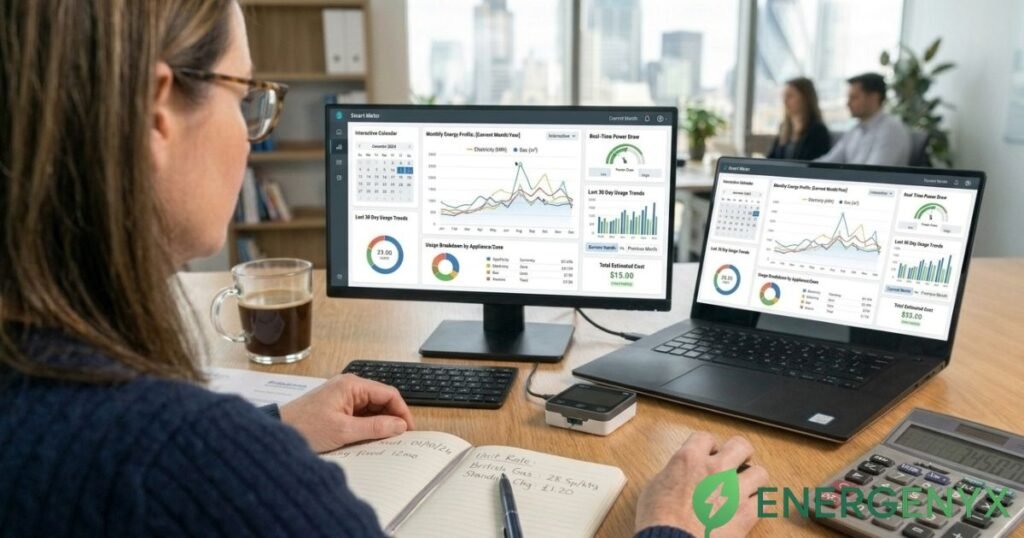
Understanding how your business uses electricity and gas is the first step towards improving efficiency.
Review:
- Monthly energy consumption
- Seasonal changes
- Peak operating hours
- High-energy equipment
- Future business expansion plans
Regular monitoring can help identify trends and opportunities to reduce unnecessary energy use.
3. Improve Energy Efficiency

Small improvements across your workplace can reduce overall energy consumption over time.
Examples include:
- Replacing traditional lighting with LED lighting
- Installing programmable heating controls
- Switching off equipment when not in use
- Improving insulation around doors and windows
- Maintaining heating and cooling systems
- Upgrading older equipment to more energy-efficient models
Although each change may seem small, together they can contribute to more efficient energy management.
4. Review Your Energy Contract Early
Avoid waiting until the final weeks of your contract.
Starting the review process several months before renewal gives you more time to:
- Compare suppliers
- Understand tariff options
- Review your current energy usage
- Evaluate different contract lengths
Planning ahead helps reduce the pressure of making last-minute decisions.
5. Avoid Automatic Renewals
Some commercial energy contracts include automatic renewal provisions if no action is taken before the contract ends.
Reviewing your contract well in advance allows you to compare available options and decide whether renewing with your current supplier remains the best choice.
6. Maintain Business Equipment
Poorly maintained equipment often uses more energy than necessary.
Consider regularly servicing:
- Boilers
- Air conditioning systems
- Heating equipment
- Refrigeration units
- Manufacturing machinery
- Ventilation systems
Well-maintained equipment generally operates more efficiently and may help reduce energy consumption.
When Should You Switch Suppliers?

There isn’t a single “best” time for every business to switch suppliers. However, certain situations often prompt businesses to review their contracts and compare new quotes.
Before Your Contract Expires
Many businesses begin comparing suppliers several months before their current agreement ends.
Starting early provides time to:
- Review the market
- Compare different tariffs
- Understand contract terms
- Avoid rushed decisions
When Moving Business Premises
If you’re relocating your business, it’s a good opportunity to review your energy arrangements.
Moving premises may require:
- Setting up a new energy account
- Reviewing your expected energy usage
- Comparing suppliers for the new location
Planning your energy contract alongside your move can help simplify the transition.
If Your Energy Needs Change
Business growth, new equipment, or changes in operating hours can all affect your energy usage.
If your requirements have changed significantly since signing your current contract, comparing new options may help you identify contracts better suited to your business.
During Contract Renewal
Renewal is an ideal time to review the wider market rather than automatically accepting your current supplier’s offer.
Comparing multiple quotations provides a broader understanding of the options available.
Common Mistakes Small Businesses Make
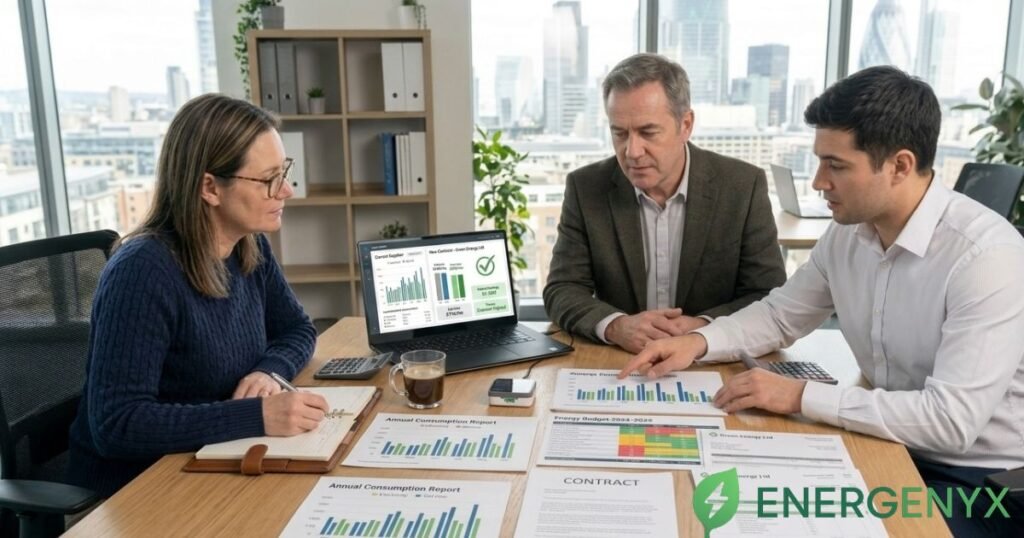
Many small businesses unintentionally increase their energy costs because of avoidable mistakes.
Being aware of these issues can help you make better-informed decisions.
Choosing Only on Price
The cheapest advertised tariff isn’t always the most suitable.
Also compare:
- Standing charges
- Contract length
- Customer service
- Billing arrangements
- Renewable energy options
- Overall contract flexibility
A balanced comparison often provides better long-term value.
Ignoring Standing Charges
Some businesses focus entirely on the unit rate while overlooking daily standing charges.
Since standing charges contribute to your total annual cost, they should always be considered alongside the unit rate.
Missing Renewal Dates
Leaving contract reviews until the last minute can reduce the time available to compare suppliers and understand different tariff options.
Setting reminders well before your business energy renewal date gives you greater flexibility.
Not Comparing Suppliers
Accepting the first quotation without reviewing other suppliers may mean missing alternative contract options.
Comparing multiple quotes provides a better understanding of the commercial energy market.
Not Understanding Energy Usage
Businesses that don’t regularly monitor their electricity and gas consumption may find it more difficult to choose the most appropriate contract.
Reviewing your usage patterns supports more meaningful comparisons and better energy planning.
Overlooking Customer Service
While price is important, reliable customer support also plays a key role in managing your energy account.
Choosing a supplier with responsive service and accurate billing can improve your overall experience throughout the contract.
Benefits of Comparing Small Business Energy Quotes
Comparing energy quotes offers several advantages beyond simply reviewing prices.
Some of the main benefits include:
- Access to multiple supplier quotations
- Better understanding of available tariff options
- Opportunity to review contract lengths
- Easier comparison of unit rates and standing charges
- Greater awareness of renewable energy options
- More informed decision-making
- Better preparation for future contract renewals
By taking the time to compare suppliers carefully, small businesses can choose contracts that better align with their operational needs and financial objectives.
Frequently Asked Questions

What is small business energy?
Small business energy refers to commercial electricity and gas supplied to businesses operating from non-domestic premises. Unlike household energy, business energy contracts are tailored to the needs of each organisation and are typically based on factors such as energy consumption, location, meter type, and contract length.
Can small businesses switch energy suppliers?
Yes. Most UK small businesses can switch energy suppliers when their current contract allows. Many businesses begin comparing quotes several months before their renewal date to understand the options available and make an informed decision.
Is business energy cheaper than domestic energy?
Business and domestic energy contracts are priced differently, so it’s not always possible to say one is cheaper than the other. Commercial energy quotes are usually tailored to the individual business, taking into account its energy usage, location, contract length, and other factors.
What information do I need to compare small business energy quotes?
Having the following information ready will help suppliers prepare accurate quotations:
- Recent electricity and gas bills
- Business name and address
- MPAN and MPRN numbers
- Annual energy usage
- Current supplier details
- Contract end date
Can I get electricity and gas from the same supplier?
Yes. Many suppliers offer both commercial electricity and business gas services, allowing businesses to manage both fuels under one account. Whether this is the best option depends on your individual business requirements and the contracts available.
How often should I compare business energy prices?
It’s generally recommended to review your business energy contract well before it expires. Regularly comparing suppliers helps you stay informed about market options and gives you enough time to evaluate different tariffs before making a decision.
Final Thoughts
Choosing the right small business energy contract involves more than simply selecting the lowest advertised price. Understanding your energy usage, comparing multiple suppliers, reviewing contract terms, and considering customer service can all help you make a better-informed decision.
By planning ahead, monitoring your energy consumption, and reviewing your contract before renewal, you can choose an energy solution that supports your business’s operational and financial goals.
Whether you’re starting a new business, relocating to different premises, or reviewing an existing contract, taking a structured approach to comparing business energy options can make the process much simpler.
Compare Small Business Energy Quotes with Energenyx Now
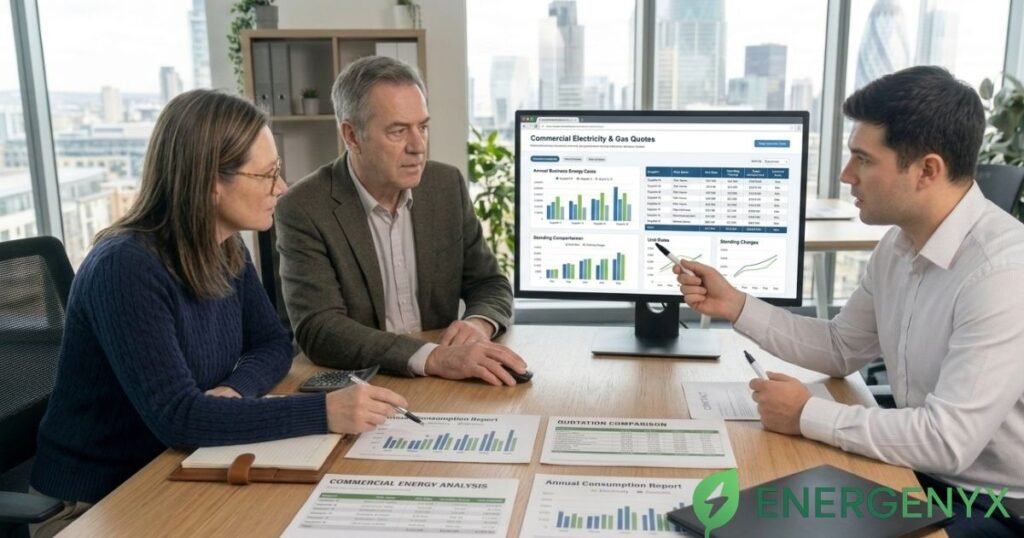
Finding the right energy contract for your small business doesn’t have to be complicated.
At Energenyx, we help UK small businesses compare commercial electricity and gas quotes from trusted suppliers, making it easier to review tariffs, contract lengths, and pricing options in one place.
Whether you’re:
- Starting a new business
- Renewing your current contract
- Switching energy suppliers
- Moving to new business premises
- Looking to better understand your energy costs
Request your free, no-obligation small business energy comparison today and discover electricity and gas contracts designed for your business.