
If you’ve ever compared your business electricity bill to your household bill and wondered why they work so differently, you’re not alone.
Many business owners assume that business energy and domestic energy operate under the same rules. In reality, there are significant differences between the two. From pricing and contracts to switching suppliers and billing structures, understanding these differences can help your business avoid costly mistakes and potentially save hundreds—or even thousands—of pounds each year.
In this guide, we’ll explain the key differences between business energy and domestic energy, how commercial energy contracts work, and why comparing business energy suppliers regularly is one of the smartest financial decisions a company can make.
What Is Business Energy?
Business energy refers to electricity and gas supplied to commercial premises rather than residential properties. Whether you run a small shop, office, warehouse, restaurant, salon, or manufacturing facility, you’ll usually require a business energy contract.
Unlike domestic customers, businesses are typically offered bespoke energy rates based on their usage, location, meter type, and contract length.
Business energy suppliers assess each company individually, which means two businesses operating in the same area may pay very different rates for electricity and gas.
Want to know more about how business energy works, read our guide on : What Is Business Energy & How Does It Work in the UK?
Who Needs a Business Energy Contract?
You will generally need a business energy contract if you operate:
- Retail stores
- Offices
- Restaurants and cafes
- Warehouses
- Factories
- Commercial units
- Rental and commercial properties
Even sole traders operating from dedicated commercial premises may require a business electricity or gas tariff.
How Business Energy Is Supplied
Commercial energy can include:
- Business electricity
- Business gas
- Multi-site energy contracts
- Half-hourly metered electricity supplies
- Renewable business energy tariffs
The type of supply you need depends on your business operations and annual energy consumption. Electricity is delivered through the UK’s transmission and distribution network, managed by organizations such as National Grid.
What Is Domestic Energy?
Domestic energy refers to gas and electricity supplied to residential properties such as houses, flats, and apartments.
Most homeowners and tenants purchase energy through standard household tariffs offered by residential energy suppliers.
Unlike business energy contracts, domestic energy is heavily regulated and often provides stronger consumer protections.
Household customers typically have access to standard variable tariffs, fixed-rate tariffs, and government-backed consumer rights that may not apply to commercial customers.
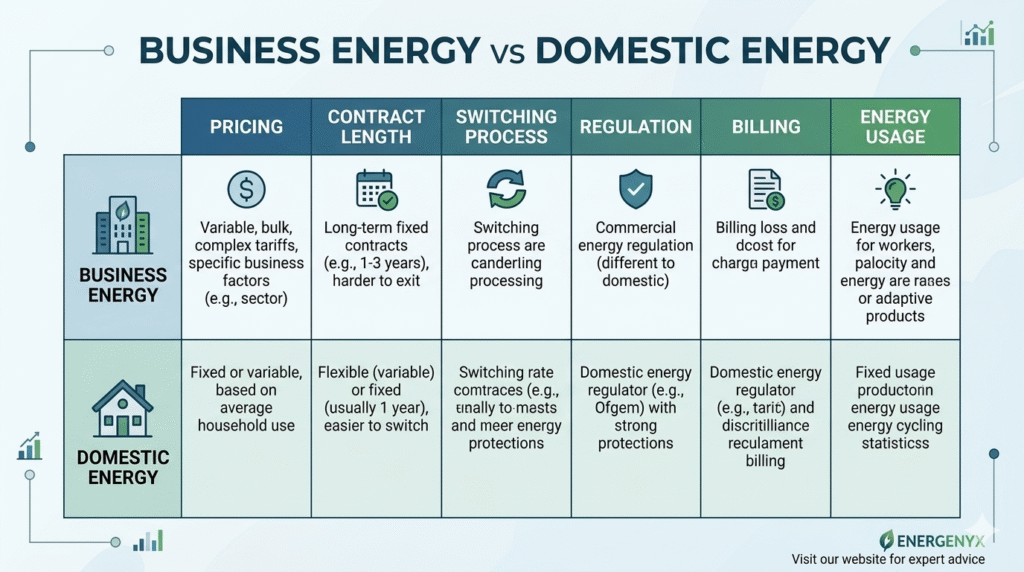
Business Energy vs Domestic Energy: The Main Differences
Although both provide gas and electricity, the way they are priced and managed differs significantly.
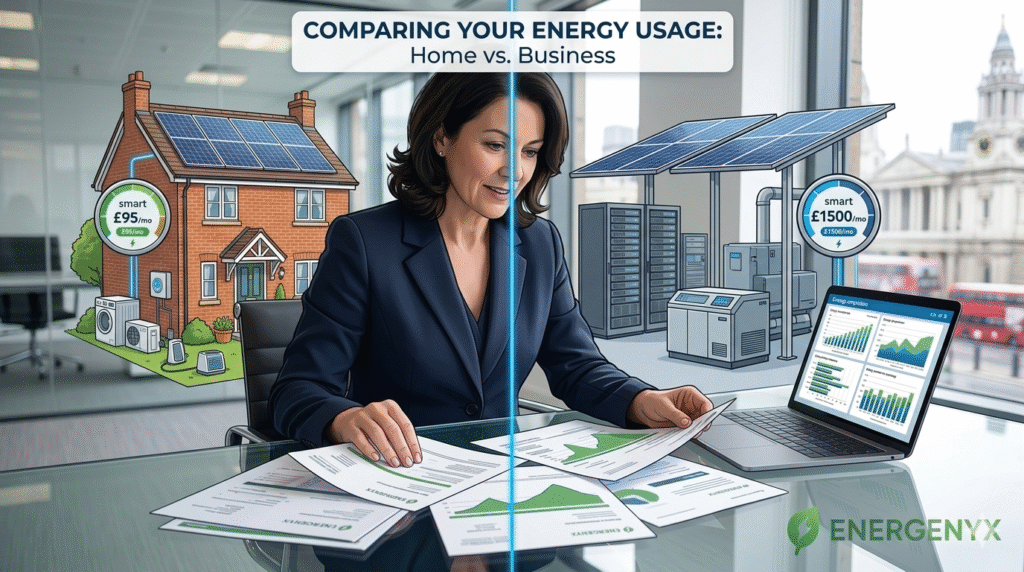
1. Energy Prices
One of the biggest differences between business energy and domestic energy is pricing.
Domestic energy prices are generally advertised publicly and are easier to compare online.
Business energy prices, however, are usually tailored to each organization.
Suppliers consider factors such as:
- Annual consumption
- Business size
- Industry sector
- Meter type
- Contract length
- Location
Because rates are often negotiated, comparing business energy suppliers is essential if you want the most competitive deal.
2. Contract Lengths
Domestic customers often enjoy greater flexibility.
Business energy contracts typically range from one to five years.
Longer contracts can provide protection against market fluctuations, but they may also include termination clauses and renewal conditions.
This makes it important to understand your contract end date and renewal window.

3. Switching Suppliers
Switching domestic energy suppliers is usually straightforward.
Business energy switching can involve additional considerations, including:
- Existing contract obligations
- Notice periods
- Meter requirements
- Multi-site agreements
The good news is that switching business energy suppliers does not interrupt your electricity or gas supply.
4. Regulation and Consumer Protection
Domestic consumers benefit from stronger regulatory protections.
Businesses are generally expected to take greater responsibility for reviewing contracts and understanding their energy agreements.
This is why many organisations work with business energy brokers or comparison specialists when renewing their contracts.
Businesses have different rights and responsibilities than domestic consumers. You can learn more from Ofgem’s guidance for non-domestic energy customers.
5. Billing and Metering
Commercial energy bills can be more complex than residential bills.
Businesses may encounter:
- Standing charges
- Capacity charges
- Climate-related levies
- Half-hourly metering
- Reactive power charges
Understanding these costs can help identify opportunities to reduce energy expenditure.
Why Are Business Energy Costs Different?
Many business owners ask why they pay different rates compared to households.
The answer lies in several factors.
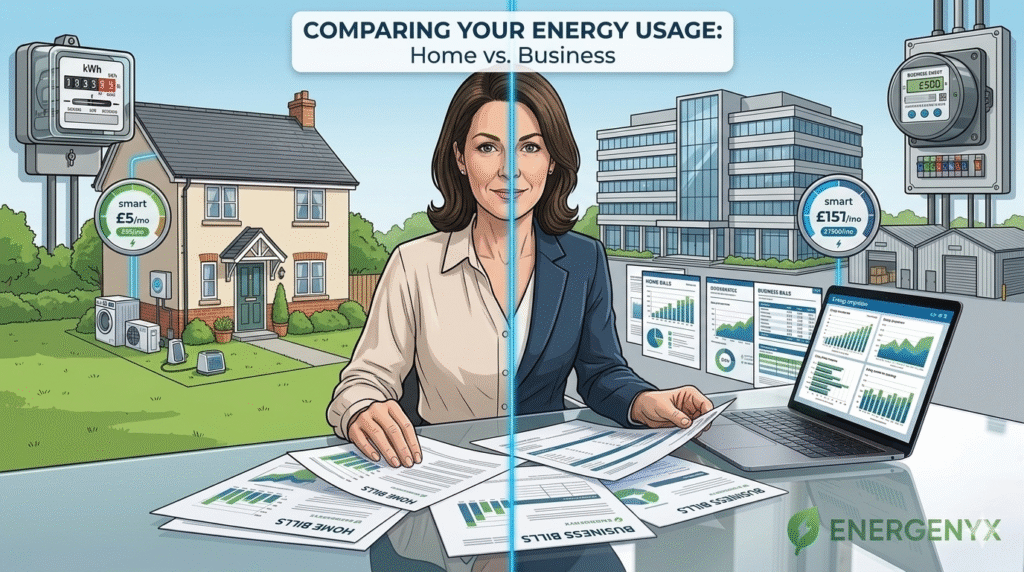
Energy Consumption
Businesses often consume significantly more electricity and gas than residential properties.
Higher consumption creates greater exposure to wholesale energy market fluctuations.
Industry Type
Different industries use energy differently.
For example:
- A warehouse may primarily use lighting and equipment.
- A restaurant may consume large amounts of gas and electricity throughout the day.
- A manufacturing facility may require high-capacity energy supplies.
Suppliers factor these requirements into pricing.
Meter Configuration
The type of electricity meter installed at your premises can also affect rates.
Some businesses use half-hourly meters, which provide detailed consumption data and can influence supplier pricing.
Businesses considering smart meters can learn more from Smart Energy GB.
Wholesale Market Conditions
Commercial energy prices are closely linked to wholesale energy markets.
Changes in global energy demand, supply constraints, and economic conditions can all affect the rates available to businesses.
Can You Use a Domestic Energy Tariff for a Business?
In most cases, no.
Commercial premises are usually required to operate on business energy contracts.
Even if a domestic tariff appears cheaper, suppliers may not permit business activities under residential energy agreements.
Using the correct commercial tariff ensures compliance and provides access to appropriate business support services.
Why Businesses Should Compare Energy Suppliers Regularly
Many companies stay with the same supplier for years simply because switching seems complicated.
Unfortunately, this can be expensive.
Avoid Expensive Renewal Rates
When a contract expires, businesses may be placed onto higher renewal rates or deemed rates.
These tariffs are often significantly more expensive than negotiated contracts.
Access Better Energy Deals
The energy market changes constantly.
A supplier that offered the best rate three years ago may no longer be competitive today.
Regular business energy comparison allows companies to take advantage of lower rates and improved contract terms.
Reduce Operating Costs
Energy is one of the largest overheads for many businesses.
Even a modest reduction in electricity and gas costs can improve profitability and free up budget for growth.

How Energenyx Helps Businesses Compare Energy Prices
At Energenyx, we help UK businesses compare business energy suppliers and find competitive electricity and gas contracts tailored to their needs.
Our process is simple:
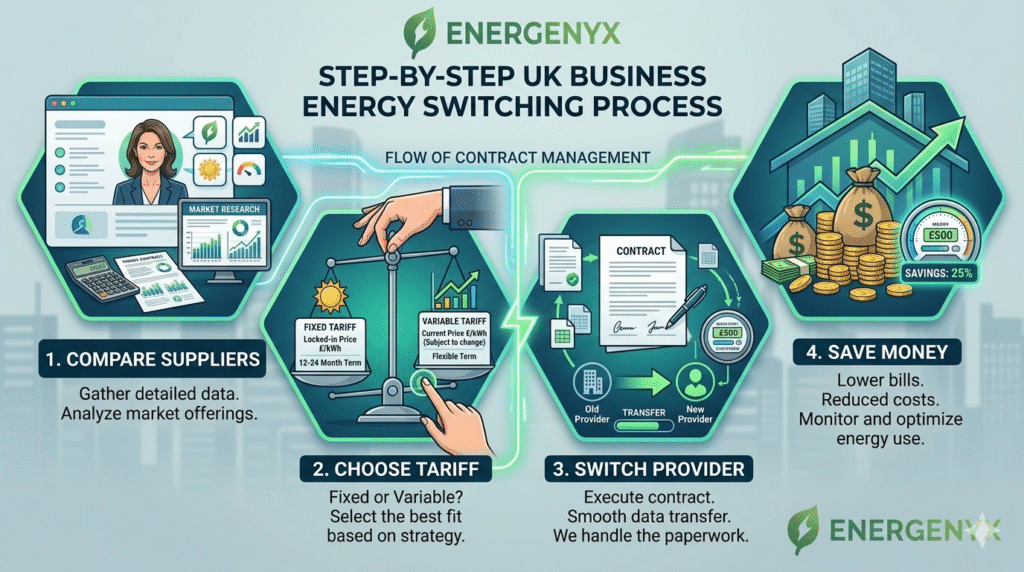
- Share your business details.
- We compare rates from trusted suppliers.
- Review your options.
- Choose a suitable tariff.
- We support the switching process from start to finish.
There is no disruption to your supply, and you gain access to expert guidance throughout the process.
Frequently Asked Questions
Is business energy cheaper than domestic energy?
Not necessarily. Business energy rates depend on usage, contract length, market conditions, and supplier pricing. Some businesses secure very competitive rates through effective comparison and negotiation.
Can I switch business energy suppliers before my contract ends?
Possibly. However, early termination charges may apply. It’s important to review your existing contract before switching.
What happens when a business energy contract expires?
If no action is taken, your supplier may move you onto a higher renewal tariff or deemed rate, which could increase your costs.
How much can businesses save by switching energy suppliers?
Savings vary depending on consumption, supplier rates, and market conditions. Many businesses can significantly reduce their energy costs by comparing suppliers before renewal.
Final Thoughts
While business energy and domestic energy may appear similar, they operate under very different rules.
Business energy contracts are often more complex, less regulated, and heavily influenced by usage patterns and market conditions. Understanding these differences can help your company avoid unnecessary costs and make informed decisions when choosing an energy supplier.
If your contract is approaching renewal, now is the ideal time to compare business energy prices and explore your options.
Looking for a better business energy deal? Contact Energenyx today and receive a free, no-obligation business energy quote.