
Introduction
Choosing the right business energy tariff is one of the most important financial decisions a business can make. While electricity and gas are essential for day-to-day operations, the type of tariff you choose can have a significant impact on your monthly expenses, budgeting, and long-term financial planning.
When comparing business energy suppliers, you’ll usually come across two main types of tariffs: fixed business energy tariffs and variable business energy tariffs. Although both provide the same electricity and gas supply, they work in very different ways.
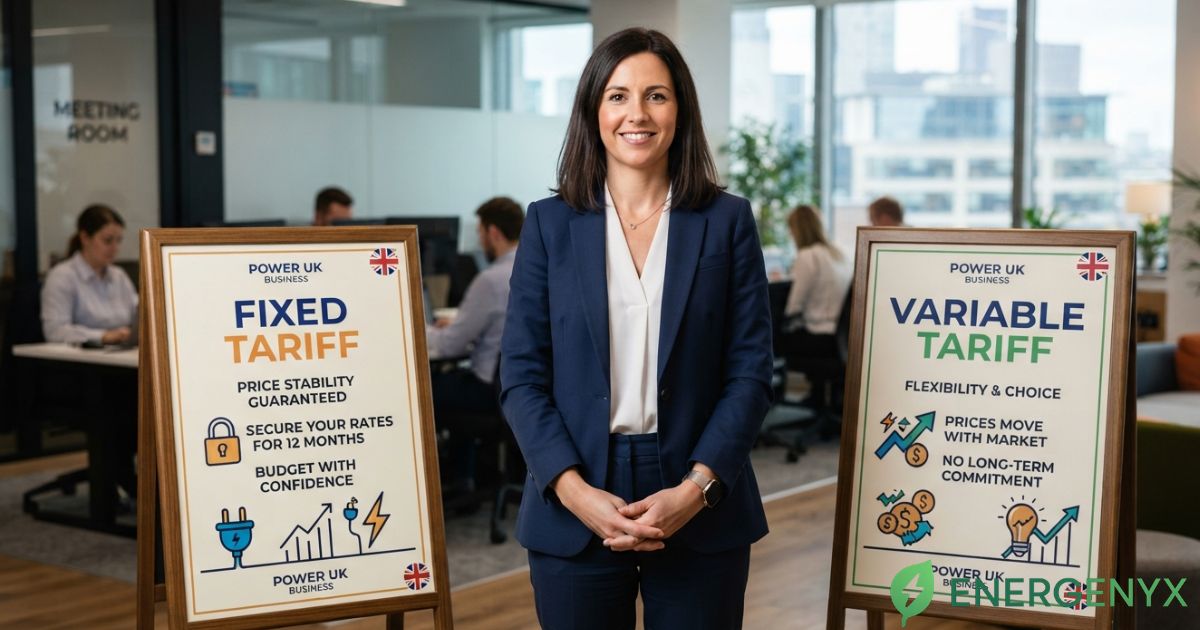
A fixed tariff offers price stability by locking in your unit rates for the duration of your contract, while a variable tariff allows your energy prices to rise or fall in line with market conditions.
So, which option is best for your business?
The answer depends on several factors, including your energy consumption, budget, appetite for risk, and expectations about future energy prices.
In this guide, we’ll explain the differences between fixed and variable business energy tariffs, explore the advantages and disadvantages of each, and help you choose the most suitable option for your business.
Key Takeaways
Before diving into the details, here’s a quick overview of the two tariff types.
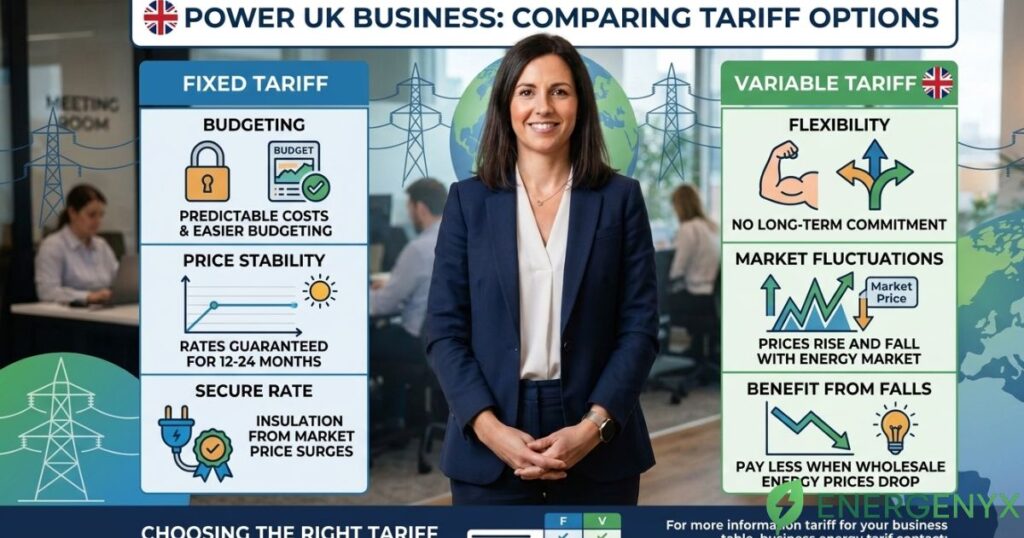
| Fixed Business Energy Tariff | Variable Business Energy Tariff |
|---|---|
| Unit rates remain the same throughout the contract | Unit rates can increase or decrease depending on market conditions |
| Easier to budget and forecast costs | Bills may fluctuate from month to month |
| Protection from wholesale energy price increases | Opportunity to benefit if wholesale prices fall |
| Popular among businesses seeking financial certainty | Better suited to businesses comfortable with market fluctuations |
Understanding these differences will help you make a more informed decision when comparing business energy contracts.
What Is a Business Energy Tariff?
A business energy tariff is the pricing agreement between your business and your energy supplier.
It determines how much you’ll pay for the electricity and gas your business consumes throughout the contract.
A typical business energy tariff includes:
- Unit rate (price per kilowatt-hour)
- Standing charge
- Contract length
- Payment terms
- Renewal conditions
- Additional fees (where applicable)
Unlike domestic energy, business tariffs are often tailored to individual businesses. Your quote may be based on factors such as:
- Annual electricity and gas consumption
- Business location
- Industry type
- Meter type
- Credit profile
- Contract length
This is why two businesses in the same town can receive different energy prices from the same supplier.
What Is a Fixed Business Energy Tariff?
A fixed business energy tariff allows you to lock in your electricity rates and gas unit rates for an agreed period, typically between one and five years.
During the contract, the price you pay per unit of energy remains unchanged, regardless of movements in the wholesale energy market.
For example, if energy prices rise sharply after you’ve signed your agreement, your unit rates stay the same until the contract ends.
This level of price certainty makes fixed tariffs one of the most popular options for UK businesses.
It’s important to note that while the unit rate is fixed, your total bill may still change depending on how much energy your business uses.
If your electricity or gas consumption increases, your monthly bill will naturally be higher—even though the price per unit hasn’t changed.
How Does a Fixed Business Energy Tariff Work?
Once you’ve agreed to a fixed tariff, your supplier guarantees the agreed unit price for the duration of the contract.
Every month, your bill is calculated using:
- The fixed unit rate
- Your actual energy usage
- Standing charges
- Any applicable taxes or levies
Because the unit price doesn’t fluctuate, businesses can estimate future energy costs with greater confidence.
For companies working to strict budgets or managing multiple operating expenses, this predictability can be a major advantage.
Advantages of Fixed Business Energy Tariffs
Fixed tariffs remain the preferred choice for many UK businesses because they provide stability during periods of market uncertainty.
Here are some of the biggest benefits.

Predictable Energy Costs
One of the main reasons businesses choose a fixed tariff is budgeting certainty.
Knowing your unit rate in advance makes it easier to forecast monthly expenses, prepare financial reports, and manage cash flow.
This can be particularly valuable for small businesses with tighter operating budgets.
Protection Against Rising Energy Prices
Wholesale energy markets can be unpredictable.
Events such as supply shortages, geopolitical tensions, or increased demand can cause energy prices to rise rapidly.
With a fixed tariff, you’re protected from these market increases because your agreed unit rate remains unchanged throughout your contract.
Easier Financial Planning
Stable energy costs allow businesses to make informed decisions about pricing, staffing, and investment.
Instead of worrying about fluctuating utility bills, you can focus on growing your business.
For organisations operating multiple sites, consistent energy pricing also simplifies budgeting across different locations.
Greater Peace of Mind
Many business owners value certainty.
Rather than monitoring wholesale energy markets or worrying about sudden price increases, a fixed tariff allows you to concentrate on running your business, knowing your energy rates (electricity rates and business gas rates) won’t unexpectedly change.
Disadvantages of Fixed Business Energy Tariffs
Although fixed tariffs offer many advantages, they aren’t always the right choice for every business.
Understanding the potential drawbacks can help you decide whether a fixed contract aligns with your business needs.
You Won’t Benefit If Market Prices Fall
The biggest limitation of a fixed tariff is that your agreed rate remains the same even if wholesale energy prices decrease.
If market prices drop significantly during your contract, businesses on variable tariffs may pay less for their energy.
This means a fixed tariff could end up being more expensive than market rates in certain circumstances.
Early Termination Fees May Apply
Most fixed business energy contracts are designed to last for an agreed period.
If you decide to leave before the contract expires, your supplier may charge an early termination fee.
These fees vary between suppliers and should always be considered before signing a long-term agreement.
Less Flexibility
Fixed contracts generally provide less flexibility than variable tariffs.
If your business is expecting significant changes—such as relocating, downsizing, or expanding rapidly—you should carefully consider whether a longer fixed agreement is appropriate.
Reviewing your future business plans before committing to a contract can help avoid unnecessary complications later.
If you want to get know about UK business energy rights, you can get here on Official regulator explaining business energy rights.
Is a Fixed Business Energy Tariff Right for Your Business?
A fixed tariff may be a suitable option if your business:
- Prefers predictable monthly energy costs.
- Operates on a fixed budget.
- Wants protection against future energy price increases.
- Values financial stability over potential short-term savings.
- Plans to remain at the same premises throughout the contract period.
For many small and medium-sized businesses, the reassurance of knowing exactly how much they’ll pay per unit of energy outweighs the possibility of benefiting from future market price reductions.
However, every business has different priorities, which is why it’s important to compare available tariffs before making a decision.
What Is a Variable Business Energy Tariff?
A variable business energy tariff is a contract where the price you pay for electricity and gas can change throughout the agreement.
Unlike a fixed tariff, your unit rate isn’t locked in. Instead, it moves in line with market conditions. If wholesale energy prices fall, your business could benefit from lower energy costs. However, if prices increase, your monthly bills may also rise.
Variable tariffs are generally chosen by businesses that are comfortable with some level of price uncertainty and are willing to accept market fluctuations in exchange for the possibility of lower costs.
It’s important to remember that although a variable tariff offers flexibility, it also requires businesses to be prepared for changing energy prices throughout the year.
How Does a Variable Business Energy Tariff Work?
With a variable tariff, your supplier reviews energy prices based on market conditions.
Your monthly bill is usually calculated using:
- The current unit rate
- Your energy consumption
- Standing charges
- Applicable taxes and levies
Because the unit rate can change, your electricity and gas costs may be different each month, even if your energy usage remains similar.
This makes forecasting future energy expenses more challenging than with a fixed-rate contract.
Advantages of Variable Business Energy Tariffs
For some businesses, flexibility is more valuable than price certainty.
Here are some of the main benefits of choosing a variable tariff.
Opportunity to Benefit from Falling Energy Prices
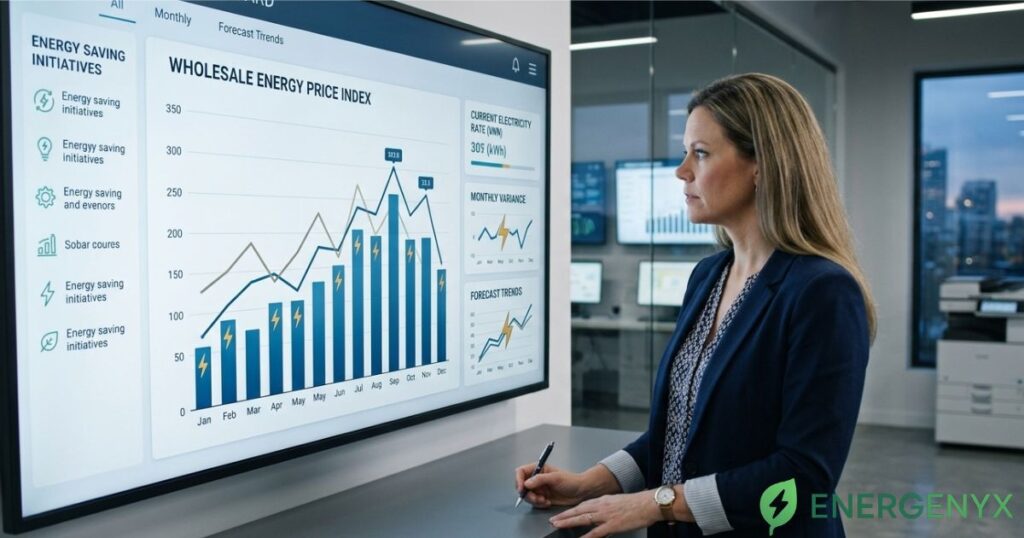
One of the biggest advantages is the potential to pay less if wholesale energy prices decrease.
Unlike fixed tariffs, where your agreed rate stays the same, variable tariffs can reflect favourable market conditions.
Businesses that closely monitor the energy market may benefit from lower costs during periods of declining prices.
Greater Flexibility
Variable tariffs often offer more flexibility than fixed contracts.
Depending on the supplier and agreement, businesses may have fewer restrictions when changing tariffs or reviewing their options.
This can be useful for organisations that expect changes in their energy requirements over the coming months.
Suitable for Short-Term Planning
Some businesses avoid committing to long-term fixed contracts because they expect significant changes, such as:
- Moving to new premises
- Expanding operations
- Reducing energy consumption
- Investing in energy-efficient equipment
A variable tariff may provide additional flexibility during these periods of transition.
If you want to switch business energy supplier you can read our guide on: How to Switch Business Energy Suppliers in the UK
Disadvantages of Variable Business Energy Tariffs
While variable tariffs can offer opportunities for savings, they also come with additional risks.
Understanding these drawbacks is essential before making your decision.
Energy Prices Can Increase
The biggest disadvantage is uncertainty.
If wholesale energy prices rise, your electricity and gas costs can increase without warning.
For businesses operating on tight budgets, unexpected increases may place pressure on cash flow.
Budgeting Becomes More Difficult
Because your unit rates can change, forecasting monthly operating costs becomes less predictable.
This can make financial planning more challenging, particularly for small businesses with limited cash reserves.
Greater Exposure to Market Volatility
Energy markets are influenced by many factors, including:
- Global supply and demand
- Weather conditions
- International events
- Fuel prices
- Government policies
Businesses on variable tariffs are directly affected by these market movements.
Fixed vs Variable Business Energy Tariffs: Side-by-Side Comparison
Choosing between a fixed and variable tariff becomes easier when you compare their key features.
| Feature | Fixed Business Energy Tariff | Variable Business Energy Tariff |
|---|---|---|
| Unit Rate | Fixed throughout the contract | Changes with market prices |
| Monthly Bills | More predictable | Can increase or decrease |
| Budgeting | Easier | Less predictable |
| Protection Against Rising Prices | Yes | No |
| Benefit from Falling Prices | No | Yes |
| Financial Risk | Lower | Higher |
| Flexibility | Usually lower | Often higher |
| Best For | Businesses wanting stability | Businesses comfortable with market fluctuations |
Neither option is universally better—the right choice depends on your business objectives, financial planning, and attitude towards risk.

Which Business Energy Tariff Is Right for You?
Every business has different priorities.
Here are some general recommendations based on common business scenarios.
Choose a Fixed Business Energy Tariff If You:
- Want predictable monthly energy costs.
- Prefer long-term financial stability.
- Operate with a fixed annual budget.
- Want protection from rising wholesale energy prices.
- Don’t want to monitor the energy market regularly.
This option is particularly popular with small and medium-sized businesses that value certainty over potential short-term savings.
Choose a Variable Business Energy Tariff If You:
- Are comfortable with changing energy prices.
- Can absorb short-term increases in operating costs.
- Want the opportunity to benefit from falling market prices.
- Expect your energy requirements to change.
- Prefer greater flexibility.
Businesses with strong cash flow and experience managing market fluctuations may find this option more suitable.
Questions to Ask Before Choosing a Tariff
Before signing any business energy contract, take a moment to consider the following questions:
- How important is budget certainty to my business?
- Could my business absorb higher energy costs if prices increase?
- How long do I plan to stay at my current premises?
- Is my energy usage likely to change significantly?
- Am I prioritising stability or flexibility?
- Does my business have sustainability goals that require renewable energy options?
Answering these questions can help you choose a tariff that aligns with your operational and financial objectives.
Expert Tip
Don’t focus solely on the unit rate when comparing business energy tariffs.
A competitive contract should also offer:
- Fair standing charges
- Flexible contract terms
- Reliable customer support
- Accurate billing
- Transparent renewal conditions
The cheapest tariff isn’t always the best value. Looking at the complete package can help you make a more informed decision and avoid unexpected costs later.
If you want to get info about the difference between business and domestic energy you can read by click here.
Things to Consider Before Choosing a Business Energy Tariff
Choosing between a fixed and variable business energy tariff isn’t just about today’s prices. The right choice depends on your business goals, financial position, and future plans.
Before signing a new energy contract, consider the following factors.
Your Business Budget
If your business operates on a strict monthly budget, a fixed tariff may provide greater peace of mind. Knowing your unit rates won’t change makes it easier to forecast expenses and manage cash flow.
If your business has more financial flexibility and can handle occasional price fluctuations, a variable tariff may be worth considering.
Your Energy Consumption
Businesses with high electricity or gas usage are often more affected by changes in energy prices.
For example, manufacturers, hotels, restaurants, and warehouses typically consume much more energy than small offices.
If your business uses large amounts of energy, protecting yourself from unexpected price increases with a fixed tariff may be beneficial.
Market Conditions
Wholesale energy prices are influenced by many factors, including global supply, demand, weather conditions, and economic events.
No one can accurately predict future energy prices.
Rather than trying to “time the market,” businesses should choose a tariff that aligns with their financial objectives and risk tolerance.
Contract Length
Business energy contracts typically range from one to five years.
A longer contract may provide greater price stability but less flexibility.
A shorter agreement may allow you to review the market more frequently, although it could also expose you to changing prices sooner.
Sustainability Goals
If your business is working towards environmental targets, check whether your supplier offers renewable electricity tariffs.
Many suppliers now provide green energy options that can support your sustainability strategy without significantly changing your day-to-day operations.
Common Mistakes Businesses Make When Choosing an Energy Tariff
Many businesses miss opportunities to reduce costs because they make avoidable mistakes when selecting a tariff.
Here are some of the most common ones.
Choosing Based Only on Price
It’s tempting to choose the supplier offering the lowest advertised unit rate.
However, the cheapest tariff isn’t always the best value.
Always compare:
- Standing charges
- Contract length
- Customer service
- Billing accuracy
- Exit fees
- Renewable energy options
Looking at the overall package helps you avoid unexpected costs later.
Accepting the First Renewal Offer
When your contract is nearing its end, your existing supplier may send you a renewal offer.
Many businesses accept this without comparing other suppliers.
Taking the time to compare business energy quotes can help you determine whether a more competitive tariff is available elsewhere.
Missing the Notice Period
Some business energy contracts require you to give notice before switching suppliers.
Missing this window may result in an automatic renewal or placement on a higher-priced tariff.
Adding a reminder to your calendar several months before your contract ends can help you avoid this situation.
Not Reviewing Energy Usage
Your business may have changed since you signed your last contract.
Perhaps you’ve expanded, reduced operating hours, installed energy-efficient equipment, or moved to larger premises.
Reviewing your current energy usage before renewing your contract helps ensure you’re choosing a tariff that reflects your current needs.
How Energenyx Helps Businesses Compare Energy Tariffs
Finding the right business energy tariff can take time, especially when you’re comparing multiple suppliers individually.
At Energenyx, we make the process straightforward by helping businesses compare a range of commercial electricity and gas tariffs from trusted UK suppliers.
Our comparison service is designed to help businesses:
- Compare fixed and variable business energy tariffs.
- Review multiple supplier quotes in one place.
- Understand contract terms before signing.
- Find tariffs that suit their budget and energy usage.
- Make informed switching decisions.
Whether you’re a small business looking to reduce operating costs or a larger organisation reviewing multiple sites, our goal is to simplify the comparison process and help you choose a tariff with confidence.
Frequently Asked Questions
Is a fixed business energy tariff better than a variable tariff?
Neither tariff is better for every business.
A fixed tariff provides predictable pricing and protection from market increases, while a variable tariff offers greater flexibility and the potential to benefit if energy prices fall.
The right option depends on your business objectives and financial priorities.
Can I change from a variable tariff to a fixed tariff?
In many cases, yes.
However, this depends on your supplier and the terms of your existing contract.
Review your agreement carefully or speak with your supplier before making any changes.
Do fixed business energy tariffs include standing charges?
Yes.
Most business energy contracts include both a unit rate and a standing charge.
The standing charge may remain fixed for the duration of the contract, depending on your agreement.
Can business energy prices change during a fixed contract?
The agreed unit rate normally remains the same throughout a fixed contract.
However, your overall bill may still change if your energy consumption increases or decreases.
Should small businesses choose fixed or variable tariffs?
Many small businesses prefer fixed tariffs because they provide predictable costs and make budgeting easier.
However, every business is different, so it’s worth comparing available options before making a decision.
Final Thoughts
Choosing between a fixed and variable business energy tariff is an important decision that can influence your operating costs for years to come.
A fixed tariff offers certainty and protection from rising prices, making it a popular choice for businesses that value predictable budgeting.
A variable tariff, on the other hand, provides greater flexibility and the opportunity to benefit if market prices fall, although it also comes with a higher level of risk.
Rather than focusing solely on price, it’s important to consider your energy usage, business goals, contract terms, and financial priorities.
Taking the time to compare tariffs before renewing your contract can help you make a well-informed decision and avoid paying more than necessary.
Ready to Compare Business Energy Tariffs?
Whether you’re considering a fixed or variable tariff, comparing quotes from multiple suppliers is one of the best ways to find a contract that suits your business.
At Energenyx, we help UK businesses compare commercial electricity and gas tariffs from trusted suppliers, making it easier to understand your options and choose a tariff with confidence.

Request your free, no-obligation business energy quote today and discover which tariff is the best fit for your business.
Ready to find the right business energy tariff?
Whether you prefer the stability of a fixed tariff or the flexibility of a variable tariff, Energenyx helps UK businesses compare commercial electricity and gas quotes from trusted suppliers.