

Introduction
Choosing the right business energy supplier is only part of the decision. Equally important is selecting the right business energy contract length.
The length of your energy contract can affect your monthly costs, budgeting, flexibility, and ability to respond to changes in the energy market. A contract that’s too short may expose your business to frequent price changes, while one that’s too long could leave you locked into rates that no longer represent the best value.
So, how long are business energy contracts, and which option is right for your business?
The answer depends on several factors, including your energy usage, financial goals, market conditions, and future business plans.
In this guide, we’ll explain the most common business energy contract terms, compare the advantages and disadvantages of different contract lengths, and help you choose an agreement that supports your business objectives.
Whether you’re renewing an existing contract or arranging energy for a new business premises, length of an energy contract can influence how businesses manage their exposure to changing commercial gas pricing and electricity pricing. Understanding your options can help you make a more informed decision.
Key Takeaways
Before exploring each contract type in detail, here are the main points to remember.
- Most business energy contracts last between one and five years.
- Longer contracts usually provide greater price certainty but less flexibility.
- Shorter contracts offer more flexibility but may expose businesses to changing market prices.
- The right contract length depends on your business goals, energy usage, and risk tolerance.
- Comparing multiple suppliers before renewing your contract can help you secure a more competitive deal.
What Is a Business Energy Contract?
A business energy contract is a legally binding agreement between your business and an energy supplier.
It sets out the terms under which electricity and gas will be supplied to your business premises.
Your contract typically includes:
- Unit rates for electricity and gas
- Standing charges
- Contract length
- Payment terms
- Meter details
- Renewal conditions
- Notice period
- Exit fees (where applicable)
Unlike domestic energy tariffs, business energy contracts are usually tailored to each organisation. The rates offered will depend on factors such as your annual energy consumption, business location, meter type, credit profile, and the length of the agreement.
This means that two businesses with similar energy usage may still receive different quotes depending on their circumstances.
How Long Are Business Energy Contracts?
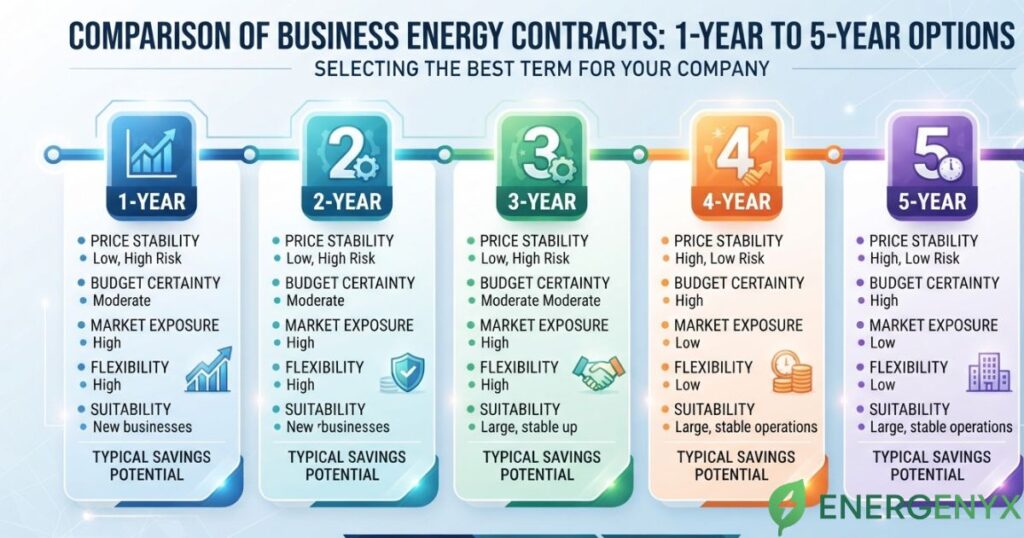
Most UK business energy contracts are available for periods ranging from one to five years.
The most common options are:
- 1-year contracts
- 2-year contracts
- 3-year contracts
- 4-year contracts
- 5-year contracts
Some suppliers may also offer bespoke contract lengths for larger organisations or businesses with multiple sites, but these are less common.
Each contract length has its own advantages and disadvantages.
A shorter agreement provides greater flexibility, while a longer agreement offers more protection from market price fluctuations.
Choosing the right contract isn’t simply about selecting the longest or shortest option—it’s about finding the balance that best suits your business.
Want best energy rates, compare business energy prices, click the link and fill the form, we will reach out to you.
Why Does Contract Length Matter?
The length of your business energy contract affects more than just the renewal date.
It can influence:
- Monthly energy costs
- Budget planning
- Cash flow
- Exposure to market price changes
- Flexibility to switch suppliers
- Long-term financial planning
For example, a business expecting to relocate within the next year may not want to commit to a five-year agreement.
On the other hand, a company planning to remain at the same premises for several years may prefer the stability of a longer contract.
If need to issue a termination notice based on their current duration, you can visit: MoneySuperMarket Guide on When to Switch Business Energy.

One-Year Business Energy Contracts
A one-year contract is the shortest standard agreement offered by many business energy suppliers.
It allows businesses to review the market more frequently and potentially take advantage of changing prices when the contract ends.
Benefits of a One-Year Contract
- Greater flexibility.
- Opportunity to review supplier options every year.
- Suitable for businesses expecting changes in the near future.
- Useful if market prices are expected to fall.
Potential Drawbacks
- More frequent renewals.
- Less protection against future price increases.
- More time spent comparing suppliers and negotiating contracts.
A one-year contract may be suitable for businesses that value flexibility over long-term price certainty.
Two-Year Business Energy Contracts
A two-year agreement offers a balance between stability and flexibility.
Many small and medium-sized businesses choose this option because it provides predictable pricing without committing to a very long contract.
Benefits of a Two-Year Contract
- Better price stability than a one-year agreement.
- Fewer renewals.
- Easier budgeting.
- Flexibility to review the market after two years.
Potential Drawbacks
- Less flexibility than a one-year contract.
- Market prices may fall during the agreement.
For many businesses, a two-year contract offers a practical compromise between financial certainty and future flexibility.
Three-Year Business Energy Contracts
Three-year contracts are among the most popular options in the UK business energy market.
They provide longer-term protection against rising energy prices while reducing the need to renegotiate contracts frequently.
Benefits of a Three-Year Contract
- Long-term price certainty.
- Reduced administrative workload.
- Easier financial planning.
- Protection from market volatility.
Potential Drawbacks
- Reduced flexibility.
- Possible early termination fees if your circumstances change.
- You may miss out if market prices fall significantly.
Businesses that prioritise predictable operating costs often consider a three-year contract an attractive option.
Four-Year Business Energy Contracts
A four-year business energy contract is designed for organisations that value long-term price stability and don’t expect significant changes to their operations.
Although less common than one, two, or three-year agreements, many suppliers offer four-year contracts to businesses looking to secure energy prices for an extended period.
Benefits of a Four-Year Contract
Choosing a four-year agreement can provide several advantages.
Long-Term Price Protection
One of the biggest benefits is protection against future increases in wholesale energy prices.
If energy costs rise during your contract, your agreed unit rate remains the same, making it easier to manage long-term operating expenses.
Reduced Administrative Work
With fewer contract renewals, your business spends less time comparing suppliers, negotiating prices, and completing paperwork.
This allows you to focus on running your business rather than managing frequent energy renewals.
Improved Budget Planning
Businesses with stable operations often appreciate the certainty that comes from knowing their energy rates for several years.
This makes financial forecasting and long-term planning much easier.
Potential Drawbacks
While a four-year contract provides stability, it also has some disadvantages.
- Less flexibility if your business plans change.
- You may miss out on lower market prices if energy costs fall.
- Early termination fees may apply if you leave the contract before it expires.
Five-Year Business Energy Contracts
A five-year contract is usually the longest standard agreement available from UK business energy suppliers.
These contracts are often chosen by businesses that want maximum price certainty and have no plans to relocate or significantly change their energy usage.
Benefits of a Five-Year Contract
Maximum Price Stability
Locking in your energy rates for five years provides protection against future market volatility.
This can be especially valuable during periods of uncertain wholesale energy prices.
Easier Long-Term Financial Planning
Businesses with predictable energy usage can forecast costs more accurately, helping with budgeting and investment decisions.
Fewer Contract Renewals
Because renewals occur less frequently, there’s less administration involved over the life of the contract.
Potential Drawbacks
A longer contract isn’t always the best choice.
Before committing to a five-year agreement, consider:
- Whether your business may relocate.
- If your energy usage is likely to increase or decrease significantly.
- Whether you may want greater flexibility in the future.
If your circumstances change unexpectedly, leaving the contract early could result in termination charges.
Short-Term vs Long-Term Business Energy Contracts
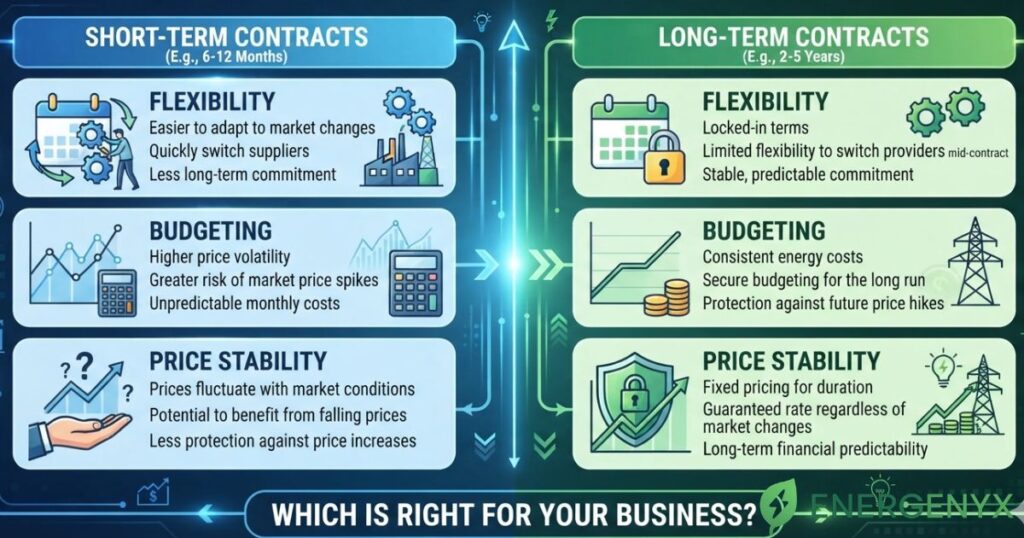
Choosing between a short-term and long-term contract depends on your business priorities.
The table below highlights the key differences.
| Feature | Short-Term Contracts (1–2 Years) | Long-Term Contracts (3–5 Years) |
|---|---|---|
| Flexibility | High | Lower |
| Price Stability | Lower | High |
| Protection from Rising Prices | Limited | Strong |
| Renewal Frequency | More frequent | Less frequent |
| Budgeting | Less predictable | More predictable |
| Opportunity to Benefit from Lower Prices | Higher | Lower |
| Best For | Growing or changing businesses | Stable businesses with predictable energy usage |
Neither option is automatically better.
The right choice depends on your business strategy, financial objectives, and future plans.
Thinking about your future business plans before choosing a contract length can help you avoid unnecessary costs and complications later. For official instruction on negotiating payment plans or resolving utility disputes you can visit: Citizens Advice Small Business Energy Bills Guide
Which Contract Length Is Best for Your Business?
Every business has different energy requirements.
Here are some general recommendations based on common business types.
Start-ups and New Businesses
Recommended Contract Length:
1–2 years
New businesses often experience rapid growth and changing energy requirements.
A shorter contract provides greater flexibility while you establish your operations.
Small Offices and Professional Services
Recommended Contract Length:
2–3 years
Businesses with relatively stable energy consumption often benefit from the balance between predictable pricing and reasonable flexibility.
Retail Shops
Recommended Contract Length:
2–3 years
Retail businesses generally value predictable operating costs while maintaining the ability to review supplier options every few years.
Restaurants, Cafés and Hospitality Businesses
Recommended Contract Length:
3 years
These businesses usually have higher electricity and gas consumption.
A three-year contract can help provide cost certainty while protecting against future price increases.
Manufacturing and Industrial Businesses
Recommended Contract Length:
3–5 years
Manufacturing businesses often consume significant amounts of energy.
Longer contracts may provide greater protection against market volatility, making financial planning easier.
Businesses Planning to Relocate
Recommended Contract Length:
1 year
If you’re expecting to move premises soon, a shorter agreement offers greater flexibility and reduces the risk of early termination fees.
Questions to Ask Before Choosing a Contract Length
Before signing your next business energy agreement, ask yourself:
- How long will my business remain at its current premises?
- Is my energy usage likely to change?
- How important is predictable budgeting?
- Could my business absorb future energy price increases?
- Am I planning to expand or reduce operations?
- Would I prefer flexibility or long-term price certainty?
Answering these questions can help you choose a contract that supports both your immediate needs and long-term business objectives.
You can immediately run live calculations and check supplier timelines before committing by checking money super market business energy comparison tool.
Expert Tips for Choosing the Right Contract
Making the right decision isn’t just about choosing the longest contract available.
Keep these best practices in mind:
Compare Multiple Suppliers
Never accept the first renewal offer without exploring other options.
Comparing quotes from several suppliers may help you find a tariff that better suits your business.
Review Your Contract Early
Start reviewing your energy contract three to six months before it expires.
This gives you time to compare prices, understand your notice period, and avoid expensive automatic renewals.
Consider the Total Cost
Don’t focus only on the unit rate.
Also compare:
- Standing charges
- Contract terms
- Customer service
- Billing options
- Exit fees
- Renewable energy options
Looking at the overall value of the contract helps you make a more informed decision.
Seek Independent Advice
If you’re unsure which contract length is right for your business, an independent comparison service can help you understand your options without the need to contact multiple suppliers individually.
What Happens When Your Business Energy Contract Ends?
As your business energy contract approaches its end date, you’ll need to decide whether to renew with your current supplier or switch to a new one.
Many suppliers contact businesses several months before the contract expires with a renewal offer. While this may seem convenient, it’s important not to assume it’s the most competitive deal available.
Taking the time to compare offers from multiple suppliers could help you secure a better tariff and avoid paying more than necessary.
Reviewing your options before your renewal date also gives you enough time to understand your contract terms and make an informed decision without feeling rushed.
What Is Automatic Contract Renewal?
Some business energy contracts include an automatic renewal clause.
If you don’t notify your supplier within the required notice period, your contract may automatically renew for another fixed term or move onto a different tariff, depending on the supplier’s terms and conditions.
Automatic renewals can sometimes result in higher energy rates than those available elsewhere in the market.
For this reason, it’s a good idea to review your contract well before its expiry date and explore alternative offers before accepting any renewal.
Understanding Notice Periods
A notice period is the amount of time you must give your supplier if you intend to switch or end your contract.
The required notice period varies depending on your supplier and contract.
Missing the notice deadline could limit your options or delay your ability to switch suppliers.
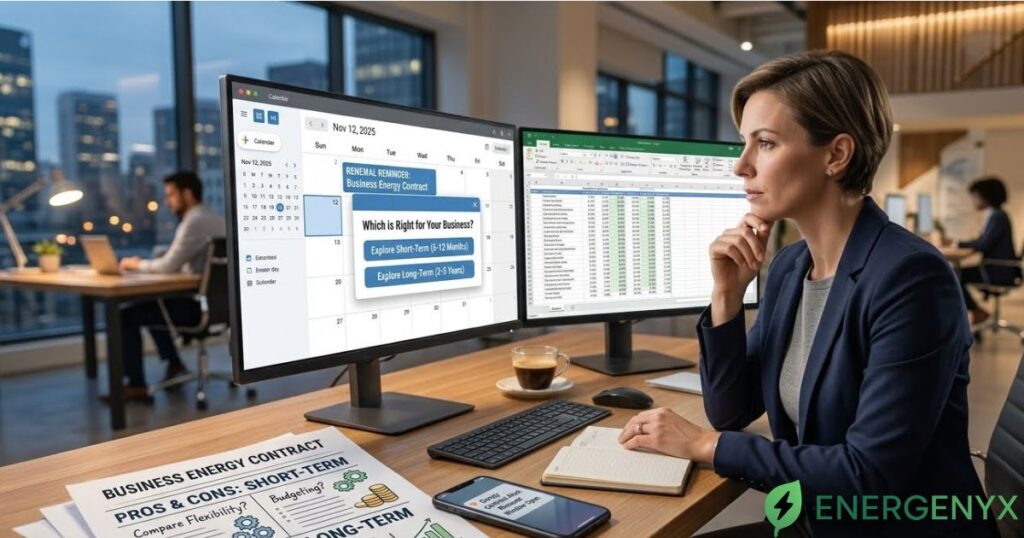
To avoid unnecessary complications, consider setting a reminder several months before your contract expires.
This gives you enough time to:
- Review your current agreement.
- Compare business energy quotes.
- Choose a suitable tariff.
- Complete the switching process before renewal.
Planning ahead is one of the easiest ways to avoid expensive last-minute decisions.
Common Mistakes Businesses Make
Choosing the right contract length is important, but avoiding common mistakes is equally valuable.
Here are some of the most frequent issues businesses encounter.
Waiting Until the Last Minute
Leaving your energy renewal until the final few weeks can reduce your options and increase the pressure to accept the first offer available.
Starting the comparison process early gives you access to more suppliers and more time to make an informed decision.
Choosing the Longest Contract Without a Plan
A longer agreement isn’t always the best option.
If your business expects to relocate, expand, or significantly change its energy usage, a shorter contract may provide greater flexibility.
Think about your future plans before committing to a long-term agreement.
Focusing Only on Unit Rates
While unit rates are important, they aren’t the only factor affecting the total cost of your energy contract.
Always compare:
- Standing charges
- Contract terms
- Customer support
- Billing methods
- Exit fees
- Renewable energy options
Looking at the complete package helps you understand the true value of each offer.
Forgetting About Notice Periods
Many businesses miss their opportunity to switch simply because they overlook the notice period.
Keeping a record of important contract dates can help prevent automatic renewals and unnecessary costs.
How Energenyx Helps Businesses Compare Energy Contracts
Finding the right business energy contract doesn’t have to be complicated.
Energenyx helps businesses compare commercial electricity and gas contracts from a range of trusted UK suppliers, making it easier to find a tariff that suits your business.
When you compare through Energenyx, you can:
- Review different contract lengths in one place.
- Compare fixed and variable tariffs.
- Understand key contract terms before signing.
- Explore competitive quotes from multiple suppliers.
- Make informed decisions based on your business needs.
Whether you’re renewing an existing agreement or arranging energy for new premises, our goal is to simplify the comparison process and help your business secure a suitable contract with confidence.
Frequently Asked Questions
How long are business energy contracts?
Most UK business energy contracts last between one and five years, although some suppliers may offer bespoke terms for larger businesses.
Can I leave my business energy contract early?
It depends on your contract.
Some agreements allow early termination, while others may include exit fees if you leave before the agreed end date.
Always review your contract terms before making a decision.
What is the best business energy contract length?
There isn’t a single answer for every business.
A shorter contract offers greater flexibility, while a longer contract provides more predictable pricing.
The best option depends on your business goals, energy usage, and future plans.
Can I negotiate my business energy contract?
In many cases, yes.
Businesses often have the opportunity to compare quotes from multiple suppliers before choosing a new contract.
Comparing offers can help you identify competitive pricing and contract terms.
When should I renew my business energy contract?
It’s generally a good idea to begin reviewing your options three to six months before your contract expires.
Starting early gives you more time to compare suppliers and avoid automatic renewals.
Final Thoughts
Choosing the right business energy contract length is about more than deciding how many years your agreement should last.
The ideal contract balances price stability, flexibility, and your business’s future plans.
A shorter contract may suit businesses expecting change, while a longer agreement can provide valuable certainty for organisations with predictable energy usage.
Rather than accepting the first renewal offer, take the time to compare suppliers, review your contract carefully, and consider the total value of the agreement.
Making an informed decision today could help your business manage energy costs more effectively over the coming years.
Ready to Compare Business Energy Contracts?

Whether you’re looking for a one-year agreement or the stability of a longer-term contract, Energenyx helps UK businesses compare commercial electricity and gas contracts from trusted suppliers.
Our free comparison service makes it easy to explore different contract lengths, compare tariffs, and choose an option that suits your business.
Request your free, no-obligation business energy quote today and discover whether your business could benefit from a more competitive contract.
Related Guides
Business Energy vs Domestic Energy
Fixed vs Variable Business Energy Tariffs