

Introduction
If your business energy contract is coming to an end, now is the perfect time to review your options. Many businesses simply accept their supplier’s renewal offer without comparing alternative tariffs, potentially paying more than necessary for their electricity and gas.
Renewing your business energy contract isn’t just about extending your current agreement. It’s an opportunity to evaluate your energy usage, compare suppliers, negotiate better rates, and choose a tariff that supports your business goals.
Leaving your renewal until the last minute can limit your choices and, in some cases, result in more expensive out-of-contract or deemed rates. By planning ahead, you give yourself time to make an informed decision and secure a more competitive deal.
In this guide, you’ll learn how the business energy renewal process works, when to start comparing quotes, what information you’ll need, and the practical steps you can take to improve your chances of finding a better tariff.
Key Takeaways
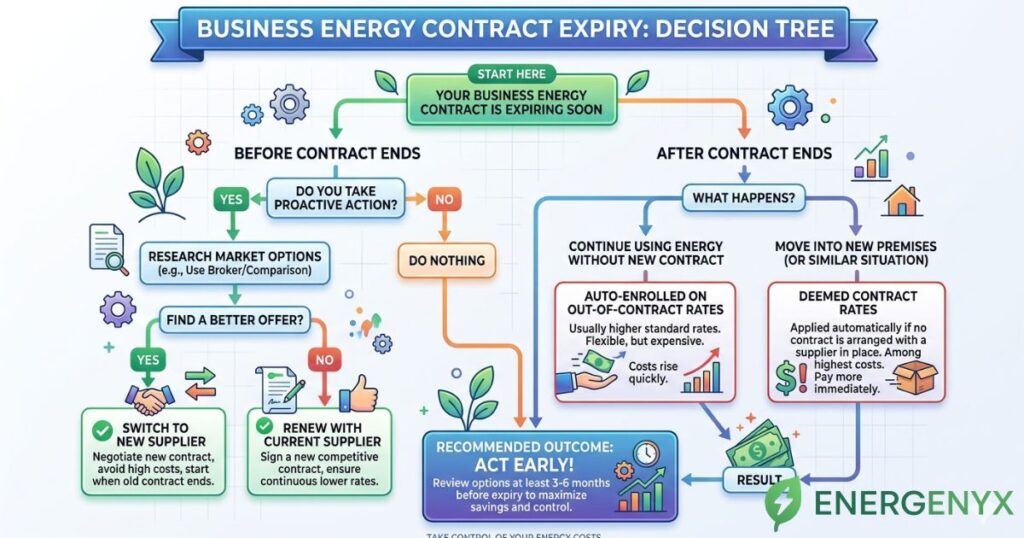
Before we look at the renewal process in detail, here are the main points to remember:
- Start reviewing your business energy contract several months before it expires.
- Compare quotes from multiple suppliers instead of accepting the first renewal offer.
- Check both the unit rate and standing charge, not just the headline price.
- Have your latest business energy bill, annual consumption, MPAN, and MPRN ready before requesting quotes.
- Understanding your contract’s notice period can help you avoid unnecessary costs or delays.
- Renewing early gives you more time to evaluate tariffs and make an informed decision.
What Is a Business Energy Renewal?
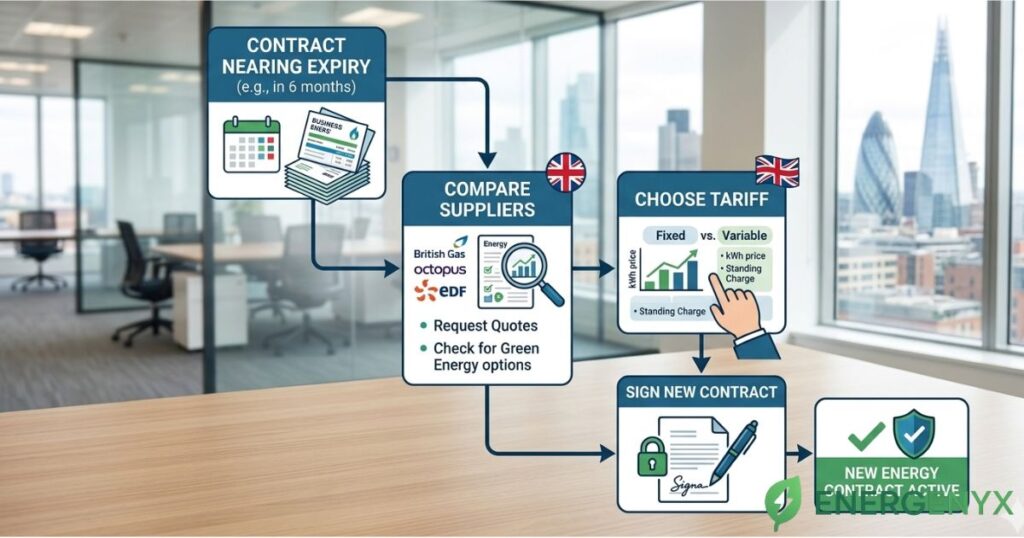
A business energy renewal is the process of replacing your current energy contract with a new one before your existing agreement ends.
When your contract approaches its expiry date, your supplier will usually contact you with a renewal offer. You can choose to:
- Accept your current supplier’s renewal offer.
- Compare quotes from other suppliers.
- Switch to a different supplier.
- Select a different tariff from your existing supplier.
Every business has different priorities. Some focus on achieving the lowest possible energy costs, while others value budget certainty through fixed-rate contracts or prefer renewable energy options.
Taking the time to review your choices can help ensure your new contract matches your business’s needs.
How Do Business Energy Contracts Work?
Unlike many domestic energy plans, business energy contracts typically run for a fixed period.
Common contract lengths include:
- 12 months
- 24 months
- 36 months
- 48 months
During this period, you’ll usually pay the agreed unit rates and standing charges outlined in your contract, unless you’ve chosen a tariff where prices can change.
Before your agreement ends, your supplier will normally issue a renewal notice explaining your options and any actions you need to take.
Understanding the terms of your current contract is an important first step before comparing alternative offers.
Why Is Renewing Your Contract Important?
Some businesses assume they’ll automatically continue paying the same rates after their contract ends.
In reality, that’s not always the case.
If you don’t review your options before renewal, you may:
- Miss opportunities to secure more competitive prices.
- Stay on a tariff that no longer suits your business.
- Lose the chance to negotiate improved contract terms.
- Face higher out-of-contract or deemed rates, depending on your circumstances.
Reviewing your contract before it expires gives you greater control over your future energy costs and allows you to make decisions based on your current business needs rather than convenience. Businesses can also stay informed about developments affecting the UK’s energy system through the National Grid.
When Should You Start Comparing Business Energy Quotes?
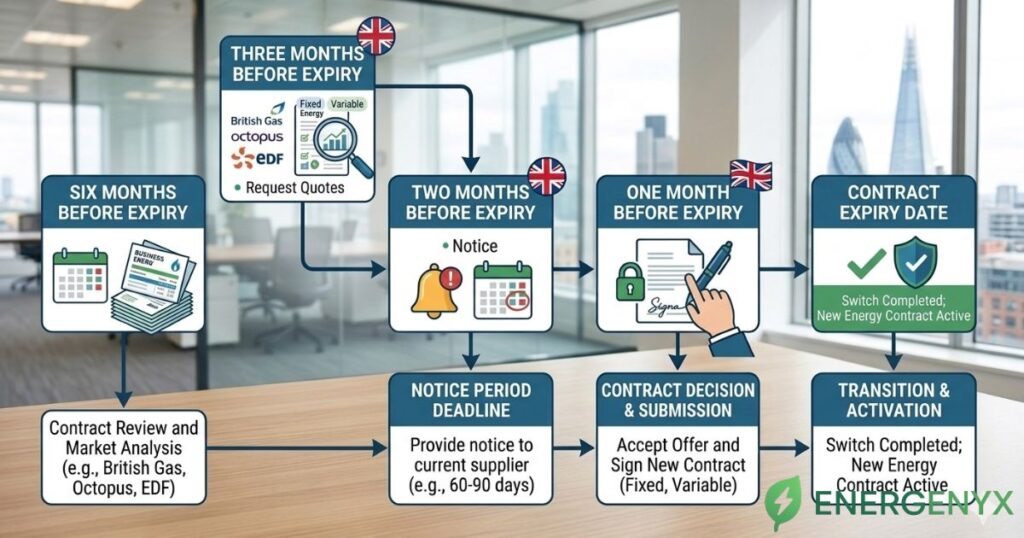
One of the biggest mistakes businesses make is waiting until the final weeks of their contract before exploring alternative suppliers.
Starting early gives you more flexibility and reduces the pressure of making a last-minute decision.
Although every contract is different, many businesses begin reviewing their options several months before their renewal date.
Six Months Before Your Contract Ends
If your contract still has around six months remaining, it’s a good time to:
- Review your current contract.
- Understand your annual energy usage.
- Check your contract end date.
- Monitor changes in the business energy market.
- Gather your recent energy bills.
Starting early allows you to prepare without rushing into a decision.
Three Months Before Your Contract Ends
As your renewal date approaches, you should begin requesting quotes from multiple suppliers.
This is also a good opportunity to compare:
- Unit rates.
- Standing charges.
- Contract lengths.
- Fixed and variable tariffs.
- Renewable energy options.
- Customer service and billing features.
Comparing offers side by side makes it easier to identify the tariff that delivers the best overall value rather than simply choosing the lowest advertised price.
The Department for Energy Security and Net Zero (DESNZ) publishes information on UK energy policy and initiatives that may affect businesses.
Check Your Notice Period
Many business energy contracts include a notice period.
This is the amount of notice you may need to give your supplier if you intend to switch or choose a different contract.
Missing the notice period could reduce your options or delay the switching process.
Before making any decisions, carefully review your current contract or contact your supplier to confirm the applicable notice requirements.
Keeping track of important dates can help ensure a smoother renewal process.
What Happens If You Don’t Renew Your Business Energy Contract?
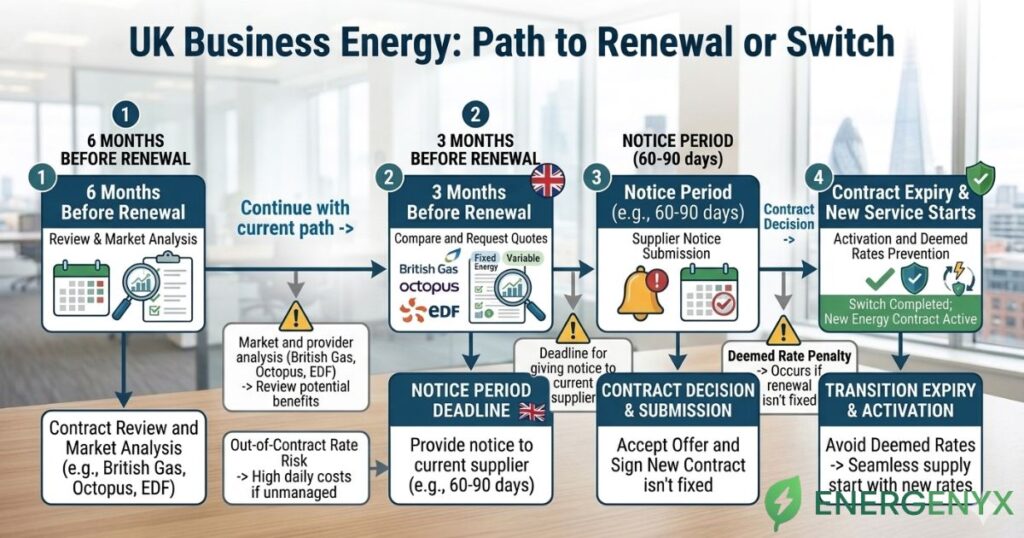
Many business owners are busy running their day-to-day operations, so it’s easy for a contract renewal date to slip by unnoticed. However, failing to review your options before your agreement expires can have financial consequences.
What happens next depends on your supplier and the terms of your existing contract, but it’s important to understand the possible outcomes before your renewal date arrives.
You Could Be Moved to Out-of-Contract Rates
If your fixed-term contract ends and you haven’t agreed to a new tariff or switched suppliers, your supplier may place your business on out-of-contract rates.
These rates are often higher than those available through a negotiated fixed-term contract.
Because they’re designed as temporary rates, they may not offer the same price stability or value as a new agreement.
Reviewing your options before your contract expires can help you avoid this situation.
You May Be Placed on Deemed Rates
If you’ve moved into new business premises or your previous contract has ended under certain circumstances, you could be supplied on deemed rates.
Deemed rates are typically among the most expensive business energy tariffs because no formal contract has been agreed.
Although they provide continuity of supply, they’re generally intended as a temporary arrangement until you agree to a new contract or switch suppliers.
If you believe your business is on deemed rates, comparing suppliers as soon as possible could help reduce your future energy costs.
Missing Opportunities to Save
Even if your current supplier offers a renewal quote, accepting it without comparing alternatives could mean paying more than necessary.
Business energy prices vary between suppliers, and the most competitive option isn’t always offered automatically.
Taking time to compare quotes gives you a clearer picture of the market and helps ensure you’re making an informed decision.
Should You Stay With Your Current Supplier or Switch?
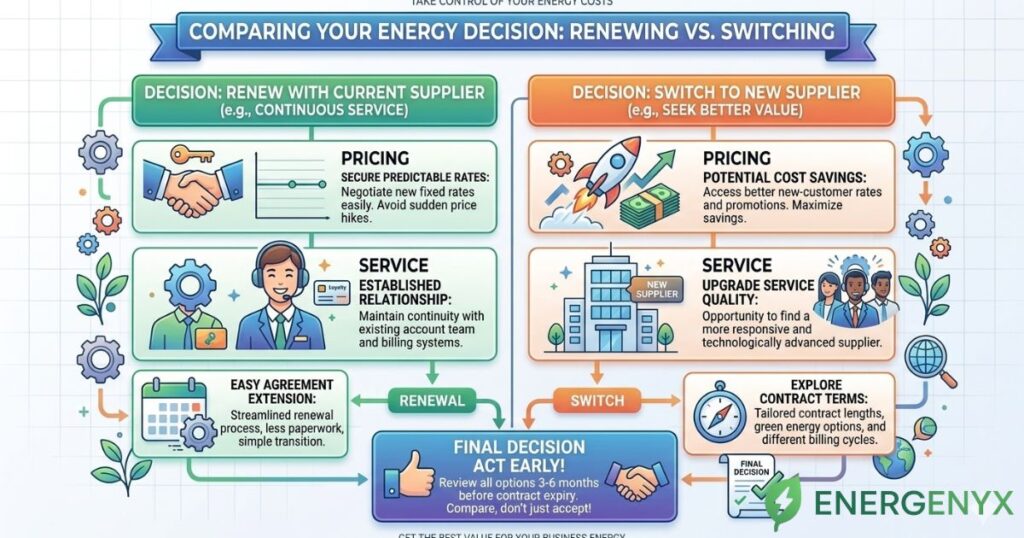
One of the biggest questions businesses face during renewal is whether to remain with their existing supplier or move to a different one.
There’s no single answer that suits every business.
The right decision depends on your energy usage, contract terms, pricing, and service expectations.
Reasons to Stay With Your Current Supplier
Renewing with your existing supplier may be the right option if they offer:
- Competitive renewal prices.
- Reliable customer service.
- Accurate billing.
- Flexible payment options.
- Contract terms that suit your business.
Staying with the same supplier may also reduce administration, as your account details and billing arrangements are already in place.
However, it’s still worth comparing alternative offers before making a final decision.
Reasons to Switch Suppliers
Switching may be beneficial if another supplier offers:
- Lower overall annual costs.
- More competitive unit rates.
- Lower standing charges.
- Better contract flexibility.
- Renewable energy options.
- Improved customer service.
Many businesses discover that comparing several suppliers before renewal gives them more confidence that they’re choosing the right tariff.
What Information Do You Need Before Renewing?
Having accurate information available before requesting quotes makes the renewal process much smoother.
Here are the key details you’ll usually need.
Your Latest Business Energy Bill
Your most recent bill contains valuable information, including:
- Current supplier.
- Unit rates.
- Standing charges.
- Annual or estimated consumption.
- Account details.
- Meter readings.
- Contract information.
Keeping a recent bill to hand helps suppliers prepare more accurate quotations.
Annual Energy Consumption
Most suppliers will ask how much electricity or gas your business uses each year.
This is usually measured in kilowatt-hours (kWh).
Knowing your annual consumption allows suppliers to provide quotes based on your actual usage rather than estimates.
MPAN and MPRN Numbers
If you’re requesting quotes or planning to switch suppliers, you’ll often need your:
These unique identifiers help suppliers locate your energy supply accurately.
You’ll usually find them on your business energy bill.
Contract End Date
Always check when your current agreement ends.
Knowing the expiry date helps you:
- Avoid missing important deadlines.
- Understand your notice period.
- Plan your comparison process.
- Arrange a smooth supplier switch if required.
Adding your renewal date to your business calendar is a simple way to avoid last-minute decisions.
How to Prepare for Your Business Energy Renewal
Preparation makes comparing suppliers much easier.
Before requesting quotes, create a simple checklist.
Business Energy Renewal Checklist
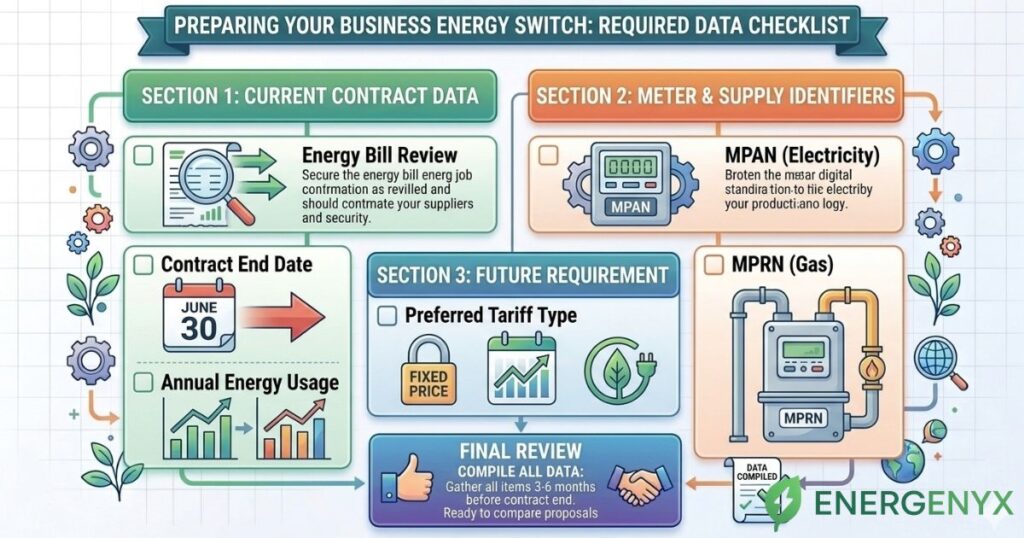
✔ Latest business energy bill
✔ Annual electricity usage (kWh)
✔ Annual gas usage (if applicable)
✔ MPAN number
✔ MPRN number
✔ Current supplier details
✔ Contract end date
✔ Notice period
✔ Preferred contract length
✔ Fixed or variable tariff preference
Having this information ready allows suppliers to prepare accurate quotations and helps you compare offers on a like-for-like basis.
It also reduces delays if you decide to switch suppliers.
How to Get the Best Business Energy Renewal Deal
Renewing your business energy contract is about more than simply accepting the first offer you receive. Taking a structured approach can help you secure a tariff that better suits your business’s needs and budget.
Start Comparing Early
The earlier you begin reviewing your options, the more time you’ll have to compare suppliers, understand market conditions, and evaluate different tariffs.
Avoid waiting until the final days of your contract, as this may limit your choices.
Compare More Than Just Price
While price is important, it shouldn’t be the only factor you consider.
Compare:
- Unit rates
- Standing charges
- Contract length
- Fixed or variable tariffs
- Customer service
- Billing options
- Renewable energy availability
- Exit terms and conditions
Looking at the complete package helps you choose the tariff that offers the best overall value.
Review Your Energy Usage
Your business may use significantly more or less energy than it did when you signed your current contract.
Review your recent bills to understand:
- Annual electricity usage
- Annual gas usage
- Seasonal consumption patterns
- Changes in operating hours
- New equipment or machinery
Choosing a tariff based on your current usage can help improve long-term cost efficiency. The Carbon Trust offers practical advice on improving energy efficiency and reducing carbon emissions for organisations.
Consider Your Business Goals
Different businesses have different priorities.
For example:
- A manufacturer may prioritise stable, fixed energy costs.
- A small office may focus on reducing monthly expenses.
- A growing business may value contract flexibility.
- An environmentally conscious organisation may prefer renewable energy tariffs.
Selecting a contract that aligns with your business objectives is often more beneficial than choosing the lowest advertised price alone.
Common Business Energy Renewal Mistakes
Avoiding these common mistakes can save your business both time and money.
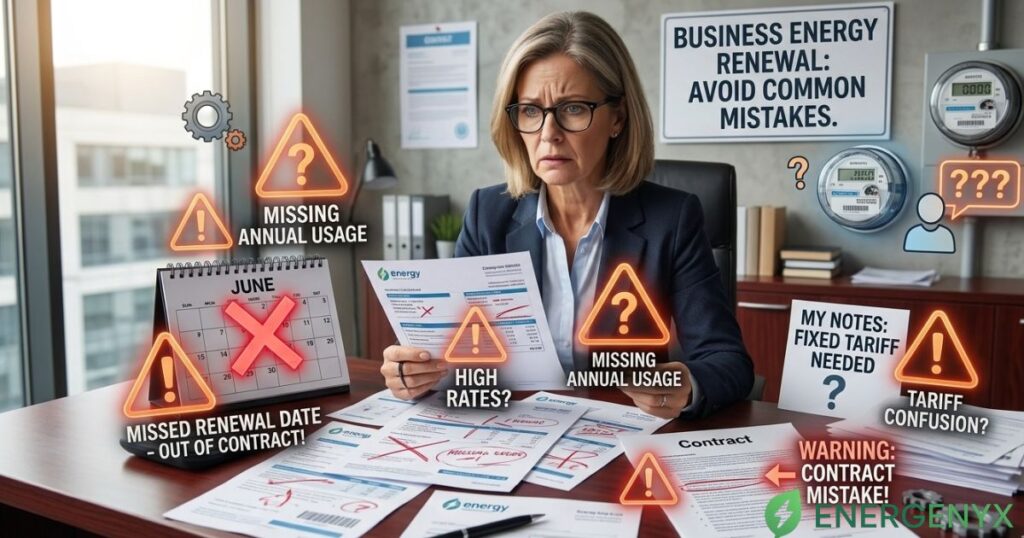
Accepting the First Renewal Offer
Many businesses renew with their existing supplier without comparing alternative quotes.
Although your supplier’s offer may be competitive, comparing several suppliers gives you greater confidence that you’re making the right decision.
Missing the Notice Period
Every contract has different notice requirements.
Failing to notify your supplier within the required timeframe could affect your ability to switch or choose a different tariff.
Always check your contract well before the renewal date.
Looking Only at Unit Rates
A lower unit rate does not always mean a lower annual bill.
Remember to compare:
- Standing charges
- Contract length
- Additional fees
- Tariff type
- Overall annual cost
Forgetting to Check Your Latest Bill
Your most recent business energy bill contains valuable information that suppliers use to prepare accurate quotations.
Keeping an up-to-date bill available can make the comparison process much smoother.
Leaving Renewal Too Late
Waiting until your contract has already expired may reduce your options and could result in higher temporary rates.
Planning ahead gives you more control over your next contract.
Frequently Asked Questions
When should I renew my business energy contract?
It’s generally a good idea to begin reviewing your options several months before your contract expires. This gives you enough time to compare suppliers, understand your energy usage, and avoid rushed decisions.
Can I switch business energy suppliers at renewal?
Yes.
For many businesses, the renewal period is one of the best times to switch suppliers, provided you follow the terms of your existing contract and any applicable notice requirements.
What happens if I miss my renewal date?
Depending on your supplier and circumstances, you may be placed on out-of-contract or deemed rates, which can be more expensive than fixed-term agreements.
Reviewing your options early helps reduce this risk.
Can I negotiate my renewal offer?
In some cases, suppliers may be willing to offer alternative tariffs or contract terms.
Comparing quotes from multiple suppliers also gives you a stronger basis for evaluating any renewal offer.
What information do I need before requesting quotes?
You’ll usually need:
- Your latest business energy bill
- Annual energy consumption (kWh)
- MPAN and MPRN numbers
- Current supplier details
- Contract end date
Having this information ready allows suppliers to provide more accurate quotations.
Does switching suppliers interrupt my energy supply?
No.
In most cases, switching suppliers does not interrupt your electricity or gas supply. The change usually takes place behind the scenes, with no disruption to your day-to-day business operations.
Final Thoughts
Renewing your business energy contract is an opportunity to review your current tariff, understand your energy usage, and explore better options available in the market.
By starting the process early, comparing multiple suppliers, and reviewing more than just the headline price, you can make a more informed decision that supports your business over the long term.
Whether you decide to stay with your current supplier or switch to a new one, taking time to evaluate your options can help you avoid unnecessary costs and choose a contract that reflects your business’s current needs.
The British Business Bank also provides practical resources to help small businesses improve financial planning and resilience.
Compare Business Energy Quotes with Energenyx
Finding the right renewal deal doesn’t have to be complicated.
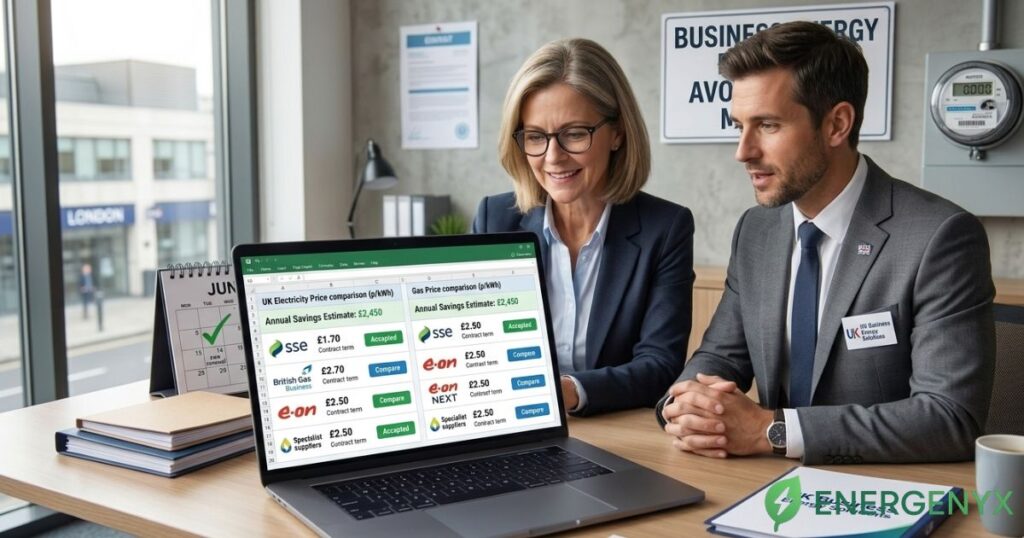
Whether your contract is due to expire in a few months or you’re ready to switch today, comparing quotes is one of the simplest ways to explore better energy options.
Request your free, no-obligation business energy comparison today and take the next step towards securing a more competitive business energy contract.