

Introduction
Choosing the right business gas supplier is an important decision for organisations of all sizes. Whether you run a small café, restaurant, hotel, manufacturing facility, warehouse, office, or retail business, your gas contract can have a significant impact on your operating costs and day-to-day business operations.
The UK commercial gas market offers businesses a wide choice of suppliers, tariff options, and contract lengths. While this competition provides greater flexibility, it can also make comparing suppliers more challenging. Looking only at the lowest quoted price may not provide the complete picture, as factors such as standing charges, contract terms, billing services, customer support, and green gas options should also be considered.
Before signing a new commercial gas contract, businesses should take time to compare multiple suppliers, understand their energy requirements, and review the overall value of each offer rather than focusing solely on unit rates.
In this guide, we’ll explain how business gas suppliers operate, how commercial gas contracts work, what information you’ll need before requesting quotes, and how to compare suppliers to make a well-informed decision.
Key Takeaways
Before comparing business gas suppliers, remember these key points:
- Compare multiple suppliers rather than accepting the first quotation.
- Review both gas unit rates and standing charges.
- Understand contract length and renewal terms before signing.
- Gather your recent gas bill and MPRN number before requesting quotes.
- Compare customer service, billing features, and green gas options.
- Start reviewing suppliers well before your current contract expires.
What Are Business Gas Suppliers?
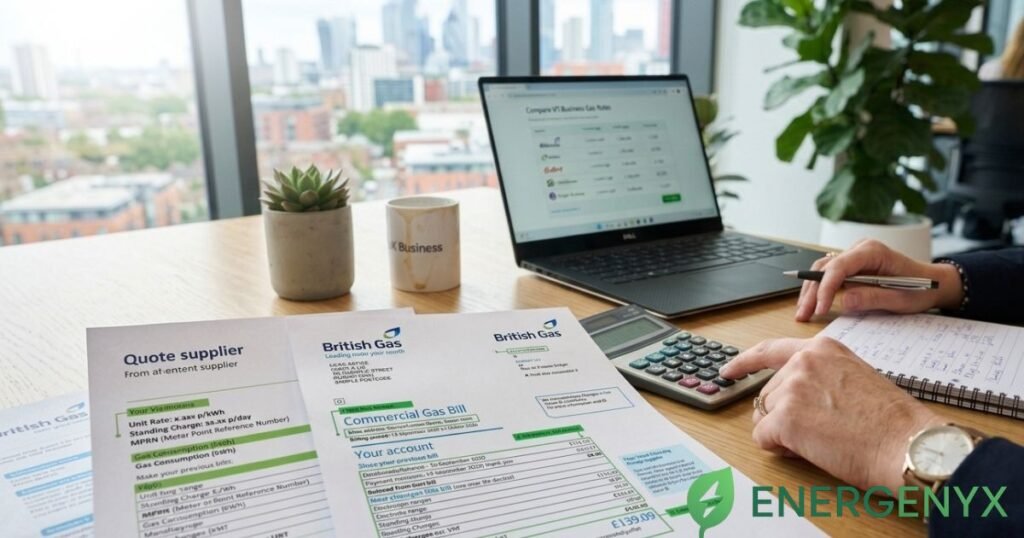
Business gas suppliers are companies that provide natural gas to commercial customers through non-domestic energy contracts.
These suppliers purchase gas from the wholesale energy market and offer commercial contracts tailored to different types of businesses across the UK.
Unlike domestic gas tariffs, business gas contracts are generally based on several factors, including:
- Annual gas consumption
- Business location
- Meter type
- Contract duration
- Business sector
Because every business uses gas differently, quotations are usually prepared according to each organisation’s specific requirements.
You can also read our article on : Business Energy for Small Businesses: Complete UK Guide
How Commercial Gas Supply Works
Although your chosen supplier manages your contract and billing, several organisations work together to deliver natural gas to your business premises.
The process generally follows these stages:
- Natural gas is produced or imported into the UK.
- Gas is transported through the National Transmission System.
- Regional gas distribution networks deliver gas to commercial premises.
- Your business gas supplier manages your account, billing, and customer service.
This explains why changing suppliers normally does not interrupt your gas supply, as the physical infrastructure remains the same.
Business Gas Suppliers vs Gas Network Operators
Many businesses assume that their supplier owns the gas pipes delivering fuel to their premises. In reality, gas suppliers and gas network operators perform different roles.
Business Gas Supplier
Your supplier is responsible for:
- Managing your commercial gas contract
- Issuing invoices
- Providing customer support
- Offering tariff options
- Managing account administration
- Processing contract renewals
Gas Network Operator
The network operator is responsible for:
- Maintaining the local gas infrastructure
- Repairing gas distribution networks
- Connecting commercial premises
- Responding to network faults
- Ensuring the safe delivery of gas
Even if your business switches suppliers, your local gas network operator usually remains the same.
How to Choose a Business Gas Supplier
Selecting a commercial gas supplier requires more than comparing prices.
A structured comparison helps businesses evaluate the complete value of each supplier and choose a contract that supports their operational requirements.
Compare Multiple Suppliers
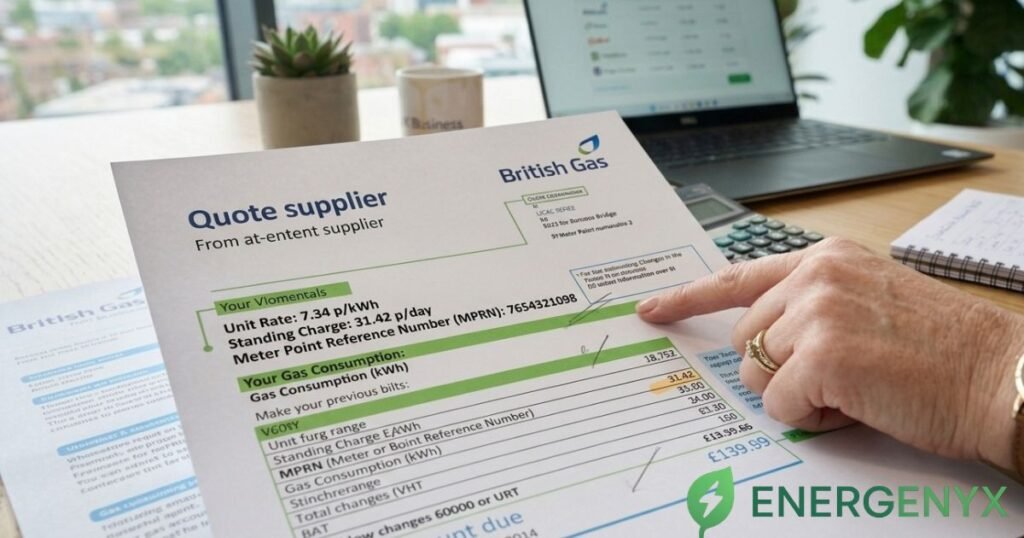
Request quotations from several business gas suppliers before making your decision.
When reviewing quotations, compare:
- Unit rates
- Standing charges
- Contract length
- Billing methods
- Customer support
- Green gas availability
- Online account management
Reviewing multiple offers provides a clearer understanding of the market and helps you identify the most suitable contract.
Compare Unit Rates
The gas unit rate is the amount charged for each kilowatt-hour (kWh) of gas your business consumes.
Although unit rates are important, they should always be considered alongside other contract costs.
A slightly higher unit rate combined with lower standing charges or better service may provide greater overall value depending on your business’s consumption.
Review Standing Charges
Standing charges are fixed daily fees that apply regardless of how much gas your business uses.
These charges contribute towards maintaining the gas supply infrastructure and account administration.
When comparing suppliers, always calculate the estimated annual cost rather than focusing only on the unit rate.
Consider Contract Length
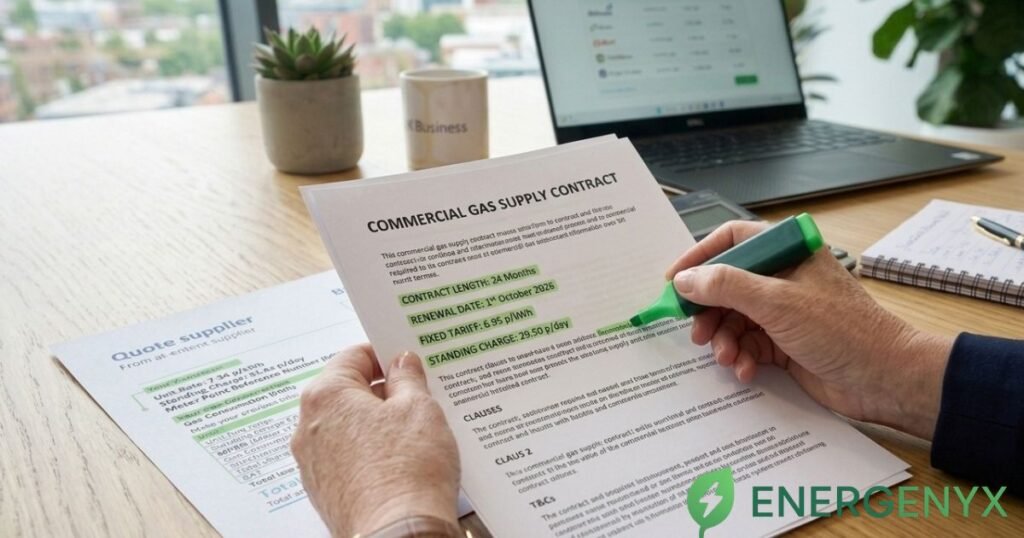
Commercial gas contracts are available in a range of durations, commonly between one and several years.
Before choosing a contract, think about:
- Budget certainty
- Planned business growth
- Future energy requirements
- Possible relocation
- Operational flexibility
The right contract length depends on your individual business circumstances and long-term plans.
Evaluate Customer Service
Reliable customer service can make managing your commercial gas account much easier throughout the life of your contract.
When comparing suppliers, consider:
- Ease of contacting support
- Billing accuracy
- Online account management
- Smart meter support
- Complaint handling
- Business account services
Strong customer support can save valuable time if questions or issues arise during your contract.
Green Gas Options

Many commercial suppliers now offer green gas or carbon reduction initiatives as part of their business energy services.
If sustainability is one of your organisation’s priorities, ask suppliers about:
- Green gas tariffs
- Carbon reduction programmes
- Renewable gas initiatives
- Environmental reporting
Reviewing these options alongside pricing and contract terms can help your business choose a supplier that aligns with its wider environmental objectives.
If you want more info you can also read our article on : Business Electricity Suppliers UK: How to Choose the Right Supplier
What Information Do You Need Before Requesting Business Gas Quotes?
Having accurate business information ready before requesting quotations helps suppliers prepare more relevant estimates and makes comparing offers much easier.
Below are the key details most business gas suppliers will request.
Business Name and Address
Suppliers need the registered business name and the address of the premises where gas is supplied.
If your organisation operates from multiple sites, prepare the information for each location to receive accurate quotations.
Recent Business Gas Bill
Your latest commercial gas bill contains important information suppliers use to prepare quotes.
It usually includes:
- Current gas supplier
- Unit rate
- Standing charge
- Annual gas usage
- Meter details
- Account number
- MPRN number
Having a recent bill available can speed up the quotation process and improve quote accuracy.
MPRN Number
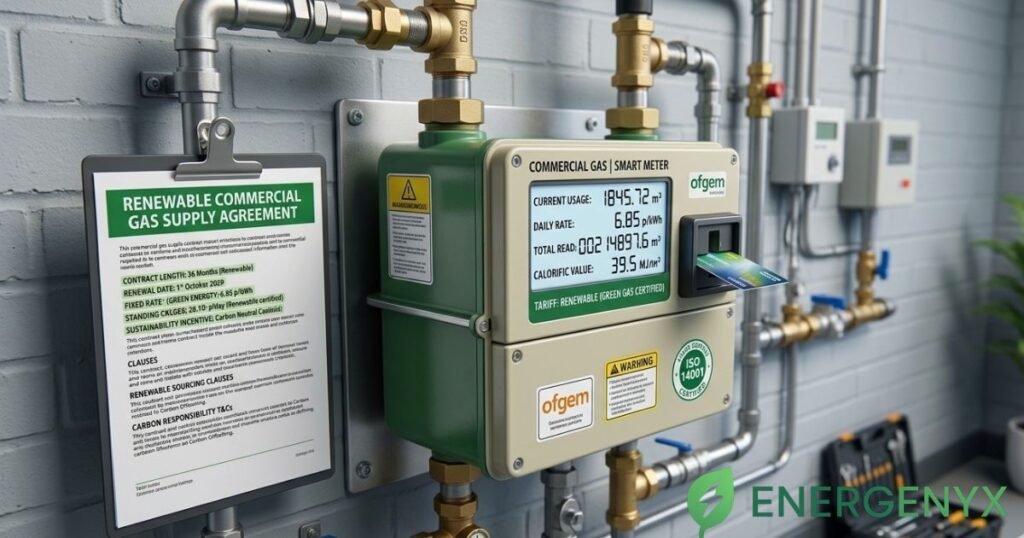
The Meter Point Reference Number (MPRN) is a unique number assigned to every gas supply point in Great Britain.
Your MPRN allows suppliers to identify your gas connection and prepare an accurate quotation.
You can usually find your MPRN on your business gas bill.
Annual Gas Consumption
Commercial gas suppliers often calculate quotations using your annual gas usage.
Knowing your yearly consumption makes it easier to compare suppliers fairly and understand how different tariffs may affect your overall costs.
If you are unsure of your annual usage, your recent gas bills usually include this information.
Current Gas Supplier
Knowing your existing supplier allows you to compare your current contract against new quotations and understand how different suppliers structure their commercial gas contracts.
Contract End Date
Your contract expiry date is one of the most important pieces of information when comparing suppliers.
Starting your comparison several months before renewal gives you more time to:
- Compare commercial gas suppliers
- Review contract options
- Understand pricing structures
- Evaluate customer service
- Make a well-informed decision
Planning ahead can reduce pressure during the renewal process.
If you want more info you can also read our article on : How to Compare Business Energy Quotes: A Step-by-Step UK Guide
When Should You Compare Business Gas Suppliers?
Businesses review commercial gas suppliers for many reasons.
The following situations often provide the best opportunity to compare available contracts.
Before Contract Renewal
Many businesses begin comparing suppliers several months before their contract ends.
This provides sufficient time to review different quotations and understand the commercial gas market before committing to a new agreement.
When Moving Business Premises
Relocating to new premises often requires reviewing your commercial gas arrangements.
Moving provides an opportunity to:
- Assess expected gas usage
- Compare suppliers
- Review contract lengths
- Explore green gas options
Planning your energy arrangements early can make the relocation process smoother.
If Your Gas Usage Changes
Business growth, additional equipment, seasonal demand, or changes in operating hours can significantly affect gas consumption.
If your energy requirements have changed since signing your current contract, comparing suppliers may help you identify options that better reflect your current needs.
During Business Expansion
Opening additional sites or increasing production may require reviewing your commercial gas contracts.
Comparing suppliers during expansion ensures your energy arrangements continue supporting your business objectives.
Common Mistakes to Avoid
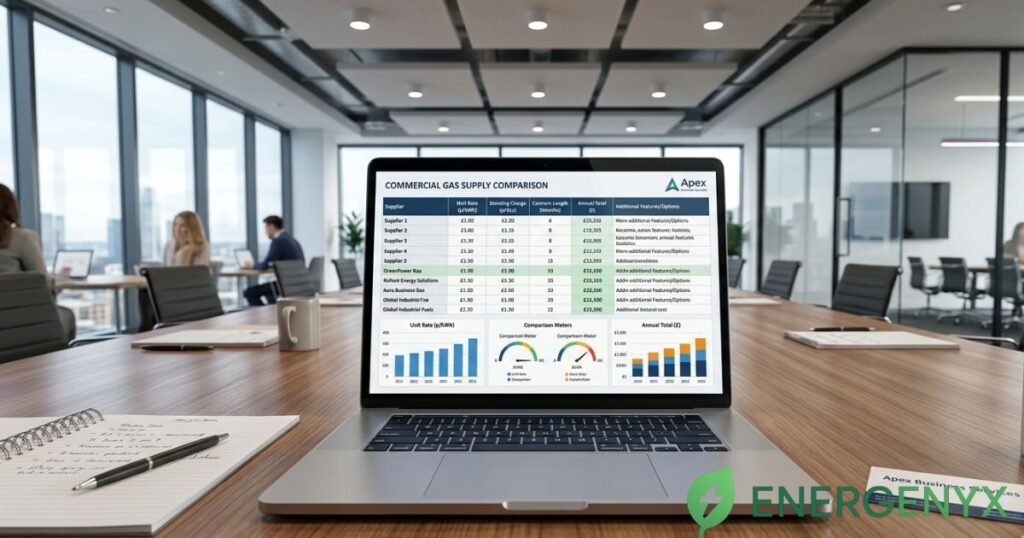
Choosing a commercial gas supplier is an important business decision.
Avoiding the following mistakes can help you make a more informed comparison.
Choosing Only on Price
A low unit rate may appear attractive, but it doesn’t always represent the best overall value.
Also compare:
- Standing charges
- Contract duration
- Customer service
- Billing options
- Green gas availability
- Online account management
Looking at the complete package provides a more accurate comparison.
Ignoring Standing Charges
Some businesses compare only gas unit rates while overlooking daily standing charges.
Standing charges contribute to your annual energy costs and should always be considered alongside the unit rate.
Waiting Until the Last Minute
Leaving supplier comparisons until your contract is about to expire limits your available time to review different offers.
Starting early gives you greater flexibility and allows you to evaluate suppliers without unnecessary pressure.
Not Reading Contract Terms
Before signing a commercial gas contract, carefully review:
- Contract duration
- Renewal terms
- Notice periods
- Exit conditions
- Billing arrangements
- Payment terms
Understanding these details helps prevent unexpected surprises later.
Comparing Only One Supplier
Accepting the first quotation without comparing alternatives may mean missing contracts that better suit your business.
Reviewing several suppliers provides a broader understanding of the commercial gas market.
Tips for Choosing the Right Business Gas Supplier
If you’re comparing suppliers for the first time, these practical tips can help simplify the process.
Gather Accurate Information
Before requesting quotes, have your latest gas bill, MPRN number, annual consumption, and contract details ready.
Providing accurate information helps suppliers prepare more relevant quotations.
Compare Like-for-Like Quotes
Ensure each quotation is based on the same business information, estimated usage, and contract requirements.
This allows you to compare suppliers on a consistent basis.
Think About Future Business Needs
Consider how your gas requirements may change over the coming years.
Business expansion, relocation, new equipment, or changes in operating hours may influence which contract is most suitable.
Review Customer Support
A responsive supplier can make managing your account much easier.
Consider:
- Customer support availability
- Billing accuracy
- Online account features
- Smart meter assistance
- Complaint resolution
Good service adds value beyond pricing alone.
Don’t Rush Your Decision
Choosing a commercial gas supplier is an important decision.
Taking time to compare several suppliers and understand contract details can help you select an agreement that supports your long-term business objectives.
Benefits of Comparing Business Gas Suppliers
Comparing suppliers offers several benefits beyond reviewing prices.
Businesses can:
- Compare multiple commercial gas providers
- Understand different tariff options
- Review contract lengths
- Evaluate customer service
- Explore green gas choices
- Compare billing services
- Make more informed purchasing decisions
- Prepare for future contract renewals
A structured comparison helps businesses identify contracts that align with their operational requirements, financial planning, and long-term goals.
Frequently Asked Questions
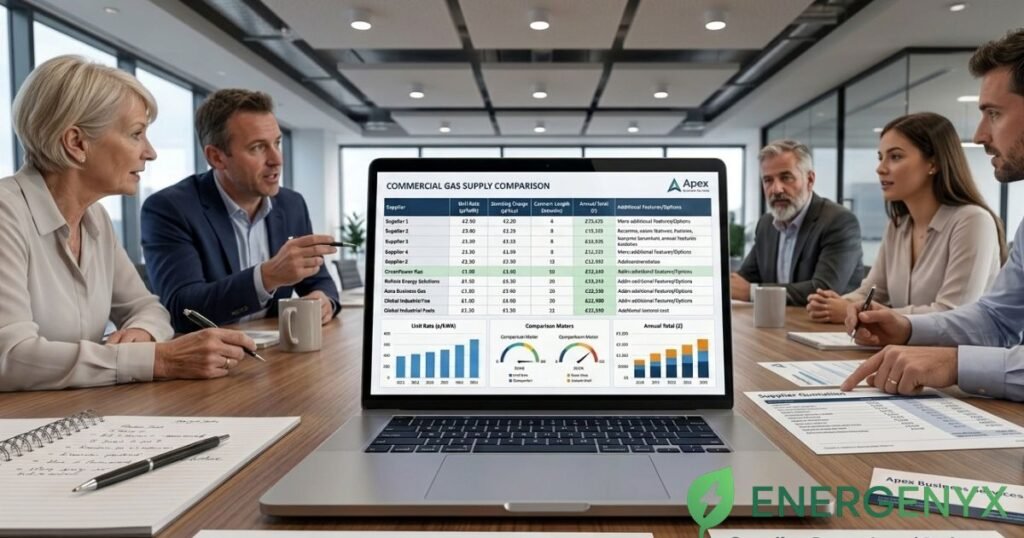
Can I switch business gas suppliers?
Yes. Most UK businesses can switch business gas suppliers when their existing contract allows. Many organisations begin comparing suppliers several months before their contract expires so they have enough time to review quotations and contract options.
What is an MPRN number?
An MPRN (Meter Point Reference Number) is a unique number assigned to every gas supply point in Great Britain.
Business gas suppliers use your MPRN to identify your gas connection when preparing quotations or arranging a supplier switch. You can usually find your MPRN on your commercial gas bill.
How long does it take to switch business gas suppliers?
The time required to switch suppliers depends on your current contract and the arrangements with your new supplier.
Once your new contract has been agreed, the new supplier typically manages most of the switching process. In most cases, your physical gas supply continues without interruption because the existing gas network remains the same.
Should I choose a green business gas tariff?
That depends on your business objectives.
Many organisations choose green gas options to support their sustainability goals, while others prioritise pricing, contract flexibility, or customer service. Comparing multiple suppliers allows you to review all available options before making a decision.
How often should I compare business gas suppliers?
It’s generally advisable to review your commercial gas contract well before its expiry date.
Comparing suppliers regularly helps you understand the market, evaluate new tariff options, and make informed decisions before renewing your agreement.
Can I have different suppliers for electricity and gas?
Yes. Many UK businesses use different suppliers for electricity and gas, while others prefer a single provider for both services. The best approach depends on your business requirements, available tariffs, and contract preferences.
Final Thoughts
Choosing the right business gas supplier involves more than simply finding the lowest price. Reviewing unit rates, standing charges, contract terms, customer service, billing options, and sustainability initiatives provides a more complete picture of each supplier’s offering.
By preparing your business information in advance, comparing several suppliers, and starting the process before your contract expires, you can make a more informed decision that supports your operational and financial objectives.
Whether you’re renewing your current agreement, relocating to new premises, or exploring the market for the first time, taking a structured approach to comparing business gas suppliers can make selecting the right commercial gas contract much easier.
Compare Business Gas Quotes with Energenyx

Finding the right commercial gas supplier shouldn’t be complicated.
Whether you’re:
- Renewing an existing gas contract
- Switching business gas suppliers
- Moving to new commercial premises
- Expanding your business
- Looking to better understand your commercial gas costs
our comparison service helps you explore suitable options based on your business requirements.
Request your free, no-obligation business gas comparison today and discover commercial gas contracts tailored to your business.