
Introduction
Choosing the right business energy contract can be challenging. With numerous suppliers, different tariff structures, changing wholesale energy prices, and varying contract terms, many business owners find it difficult to know whether they’re getting good value.
This is where a business energy broker can help.
A business energy broker acts as an intermediary between businesses and energy suppliers, helping organisations compare commercial electricity and gas contracts, understand their options, and make informed decisions. Instead of approaching suppliers one by one, businesses can often access multiple quotes through a single point of contact.
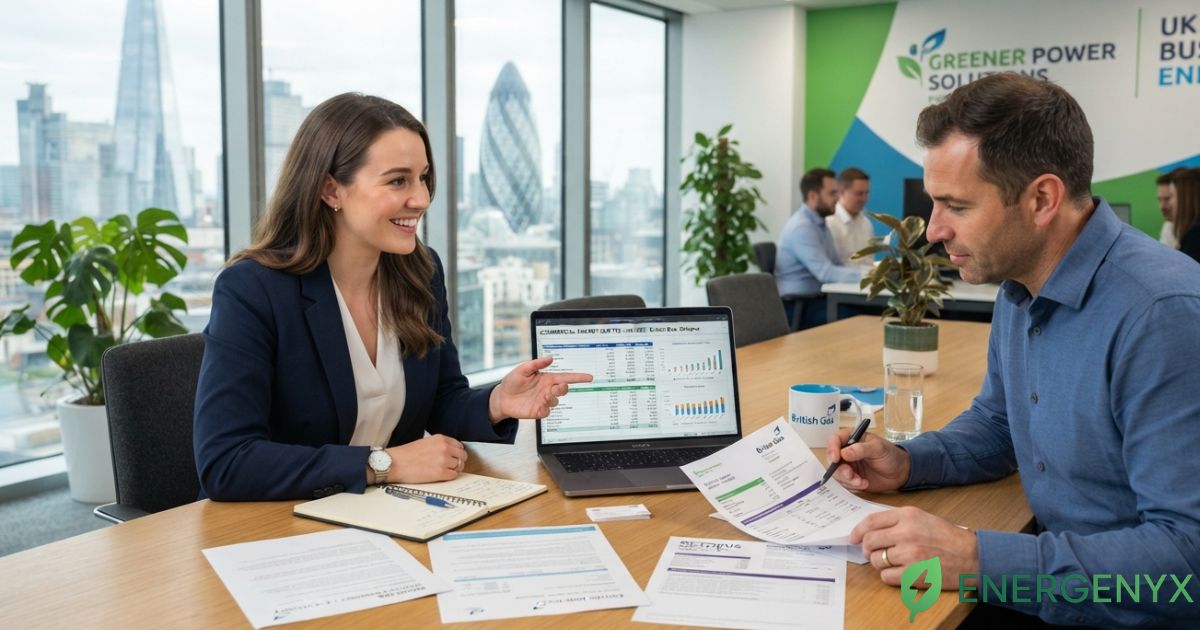
Whether you’re running a small café, managing several office locations, operating a manufacturing facility, or overseeing a large commercial property, working with a business energy broker may save time and simplify the energy procurement process.
In this guide, we’ll explain what a business energy broker does, how business energy brokers work, their advantages and potential drawbacks, and how to choose a broker that meets your business’s needs.
Key Takeaways
Before exploring the details, here are the main points to remember:
- A business energy broker helps businesses compare energy like electricity and gas contracts from multiple suppliers.
- Brokers can simplify the process of finding and arranging business energy contracts.
- Some brokers also provide contract renewal reminders and ongoing account support.
- Not every broker works with every supplier, so it’s worth understanding how they operate.
- Choosing a transparent and experienced broker can help you make a more informed decision.
What Is a Business Energy Broker?
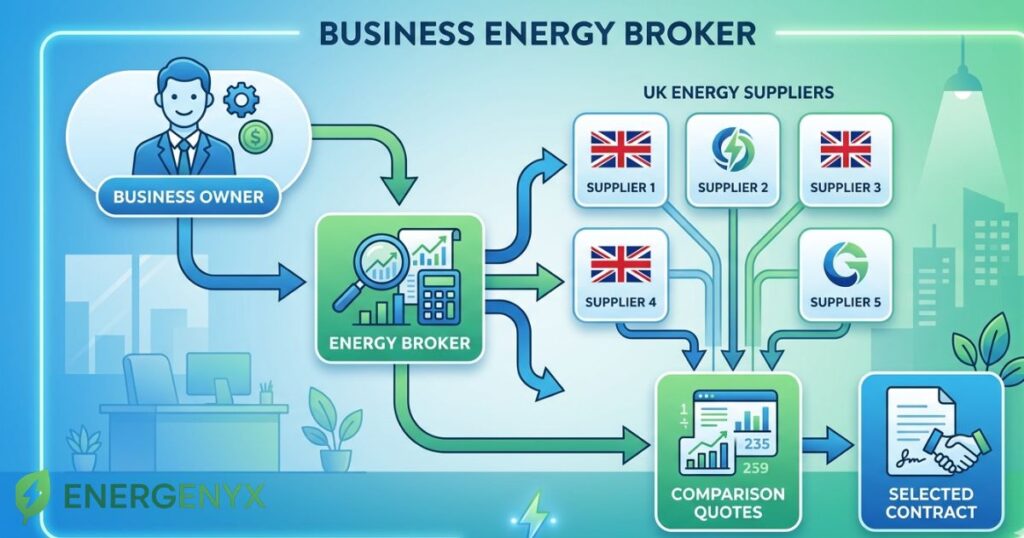
A business energy broker is a company or consultant that helps organizations compare and arrange commercial electricity and gas contracts. Brokers can help businesses understand available tariffs and assess commercial gas rates and electricity rates when reviewing their energy options.
Rather than generating energy themselves, brokers work with business energy suppliers to identify tariffs that match a customer’s requirements. They may compare pricing, contract lengths, renewable energy options, and other features before presenting suitable choices to the business.
For many organisations, this can reduce the time spent researching the market and make it easier to understand the available options.
However, it’s still important for businesses to review any recommended contract carefully before making a final decision.
How Does a Business Energy Broker Work?
Although the process varies between brokers, it generally follows these steps:
- The business provides details about its current energy contract.
- The broker reviews information such as annual energy consumption, meter details, and contract end dates.
- The broker approaches participating energy suppliers to request quotations.
- The available offers are presented to the business.
- The business decides whether to accept one of the available contracts.
Many brokers also assist with paperwork, contract administration, and communication during the switching process.
Who Uses Business Energy Brokers?
Business energy brokers work with organisations of many different sizes and sectors.
Examples include:
- Small businesses
- Retail shops
- Restaurants and cafés
- Offices
- Hotels
- Schools
- Warehouses
- Manufacturers
- Healthcare providers
- Multi-site organisations
Whether a business has one location or dozens of premises, comparing multiple suppliers can help decision-makers understand what’s available in the market.
What Does a Business Energy Broker Do?
A business energy broker typically supports clients throughout the energy procurement process.
Their responsibilities may include comparing suppliers, explaining contract options, helping with renewals, and providing general market guidance.
The exact services offered will vary from one broker to another.
Comparing Business Energy Suppliers
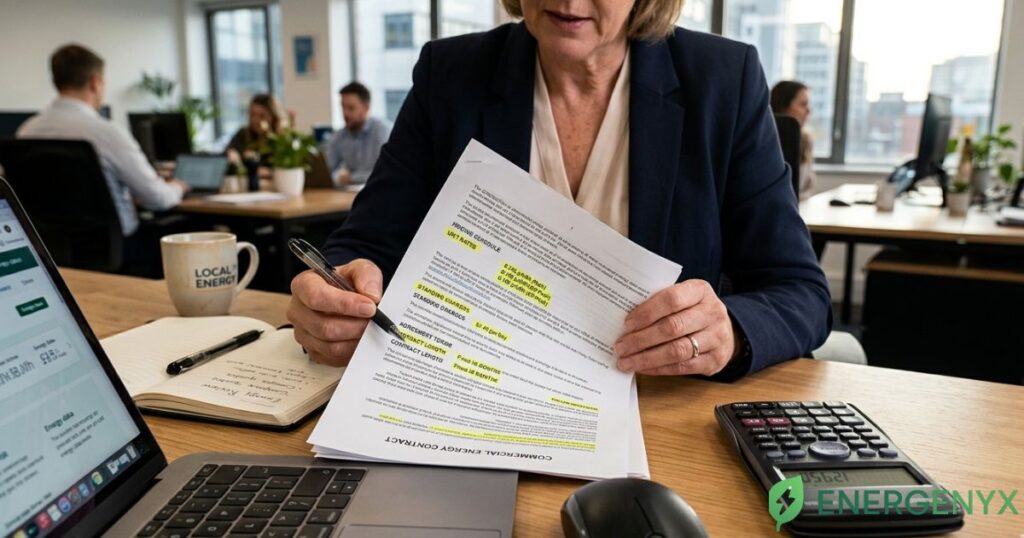
One of the broker’s primary roles is comparing energy suppliers.
Instead of contacting multiple suppliers individually, businesses can often receive several quotations through a single broker.
Comparisons may include:
- Electricity unit rates
- Gas unit rates
- Standing charges
- Contract lengths
- Fixed and variable tariffs
- Renewable energy options
- Billing features
This can make it easier to compare contracts on a like-for-like basis.
Helping Businesses Understand Contracts

Business energy contracts often include technical terms that may be unfamiliar.
A broker may explain topics such as:
- Fixed and variable tariffs
- Contract duration
- Notice periods
- Renewal windows
- Standing charges
- Unit rates
- Exit terms
Understanding these elements helps businesses make more informed choices rather than focusing solely on the lowest advertised price.
Assisting with Contract Renewals

Many brokers contact customers before their contracts expire.
This allows businesses to review the market before automatic renewal or out-of-contract rates become a concern.
Planning ahead can provide more time to compare available tariffs and evaluate different suppliers.
Supporting the Switching Process

If a business decides to move to a new supplier, the broker may assist with the administrative aspects of switching.
This could include:
- Confirming contract details.
- Coordinating with the new supplier.
- Monitoring the switching process.
- Answering customer questions.
- Helping ensure the transition progresses smoothly.
In most cases, the electricity or gas supply continues without interruption during a correctly managed switch.
Benefits of Using a Business Energy Broker
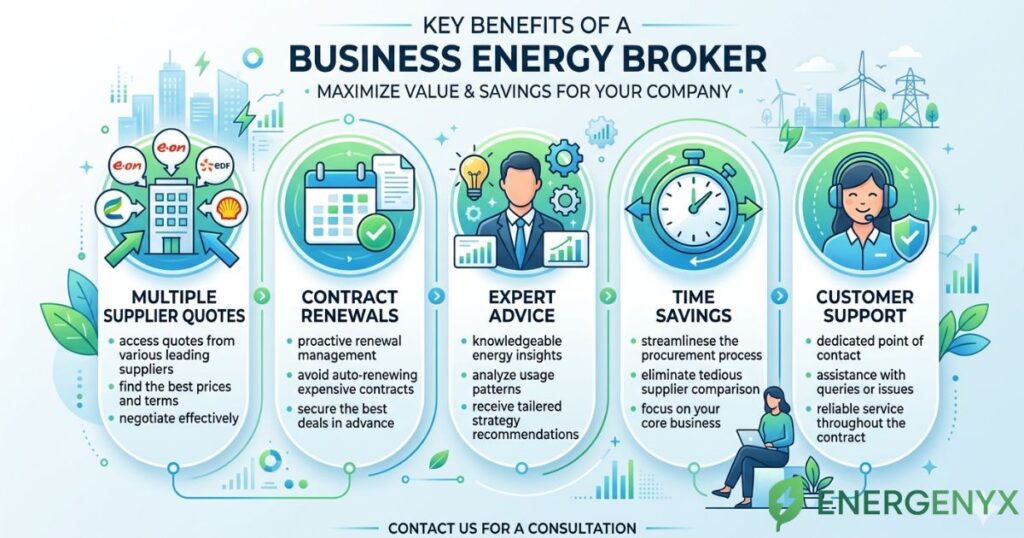
Working with a business energy broker may offer several advantages, depending on your business’s circumstances and the broker you choose.
Save Time
Researching the business energy market can take time, especially if you’re contacting suppliers individually.
A broker may streamline the process by gathering multiple quotations on your behalf, reducing the amount of administration required.
Access Multiple Quotes
Instead of reviewing one supplier at a time, brokers often present several available options from participating suppliers.
This makes it easier to compare pricing, contract terms, and tariff types in one place.
Expert Market Knowledge
Business energy markets change regularly.
Experienced brokers monitor market trends, contract structures, and supplier offerings, helping businesses understand the options available at a particular point in time.
Support with Renewals
Missing a contract renewal deadline could result in your business moving onto more expensive temporary rates.
Many brokers provide renewal reminders, giving businesses time to compare contracts before their current agreement ends.
Ongoing Customer Support
Some brokers continue supporting customers after a contract has been agreed.
This may include answering questions, helping with future renewals, and providing general account assistance throughout the contract period.
Potential Disadvantages of Using a Business Energy Broker
While business energy brokers can provide valuable support, it’s important to understand that their services may not be the right fit for every business. Knowing the potential drawbacks allows you to make a more informed decision.
Service Quality Can Vary
Not all business energy brokers offer the same level of service.
Some provide comprehensive support throughout the contract lifecycle, while others may focus primarily on arranging the initial agreement.
Before choosing a broker, consider:
- Their experience in the business energy market.
- Customer reviews and testimonials.
- The range of suppliers they work with.
- The level of ongoing support they provide.
Choosing a reputable broker can make a significant difference to your overall experience.
Not Every Broker Works with Every Supplier
Business energy brokers typically work with a network of participating suppliers.
This means the quotes you receive may only include suppliers within that broker’s panel rather than every supplier operating in the UK market.
For this reason, it’s worth asking:
- Which suppliers do you work with?
- How many suppliers are included in your comparisons?
- How often is your supplier panel reviewed?
Understanding how comparisons are made helps set realistic expectations.
Transparency Matters
A trustworthy broker should clearly explain:
- How they compare suppliers.
- What services they provide.
- Any fees or commissions that may apply.
- The terms of the recommended contract.
Transparency helps businesses make confident decisions and understand exactly what they’re agreeing to.
Business Energy Broker vs Contacting Suppliers Directly
Both approaches have advantages, and the right choice depends on your business’s priorities.
| Business Energy Broker | Contacting Suppliers Directly |
|---|---|
| Access to multiple participating supplier quotes through one point of contact. | You approach each supplier individually. |
| Can reduce the time spent researching the market. | May require contacting several suppliers yourself. |
| May assist with contract renewals and switching. | You manage the entire process independently. |
| Can explain contract terms and tariff options. | You compare contract details yourself. |
| Often provides ongoing customer support. | Support depends on the individual supplier. |
Neither option is universally better. Some businesses prefer handling negotiations directly, while others value the convenience and market knowledge that an experienced broker can provide.
How to Choose a Business Energy Broker

Selecting the right broker is just as important as choosing the right energy contract.
Here are some factors to consider.
1. Industry Experience
Look for a broker with experience in commercial energy procurement.
An established broker is more likely to understand:
- Different business sectors.
- Contract structures.
- Market trends.
- Supplier requirements.
Experience can help simplify what is often a complex process.
2. Transparency
Choose a broker that communicates openly.
They should explain:
- How the comparison process works.
- The suppliers included in their panel.
- Any commissions or fees.
- Contract terms and conditions.
Clear communication helps build trust throughout the process.
3. Supplier Network
A broader supplier network may provide access to more contract options.
Ask how many suppliers they compare and whether they regularly review their panel to ensure businesses receive competitive quotations.
4. Customer Reviews
Reading independent customer reviews can provide useful insight into a broker’s service quality.
Look for feedback relating to:
- Communication.
- Professionalism.
- Responsiveness.
- Support after the contract has been agreed.
While no company receives positive feedback from every customer, consistently strong reviews can be a positive indicator.
5. Ongoing Support
A good broker’s role doesn’t necessarily end once a contract has been signed.
Some continue supporting customers by:
- Providing renewal reminders.
- Answering account queries.
- Assisting with future comparisons.
- Helping businesses review changing energy needs.
Ongoing support can be particularly valuable for businesses with multiple sites or regularly changing energy requirements.
Questions to Ask Before Choosing a Broker
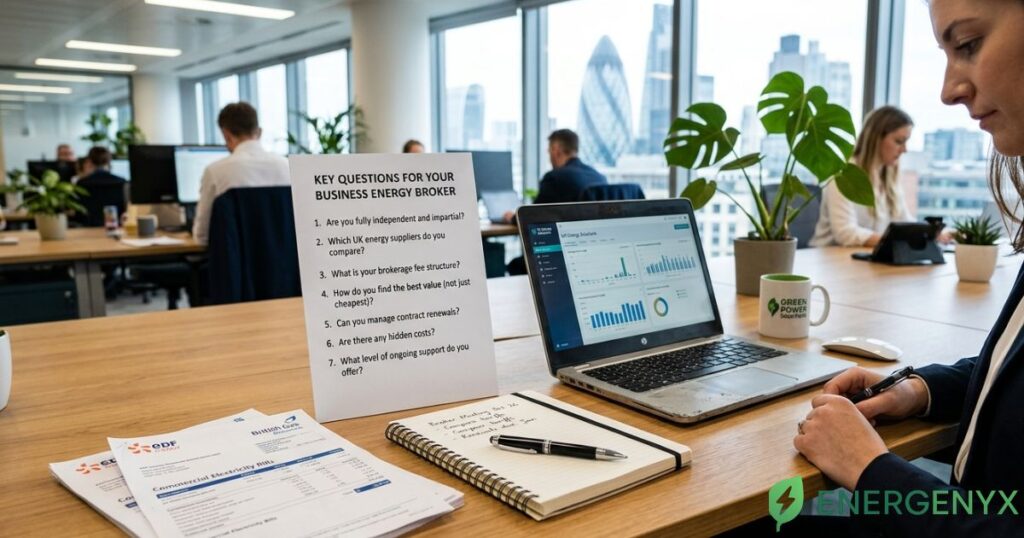
Before working with a business energy broker, consider asking:
- Which energy suppliers do you compare?
- How many quotes will I receive?
- Do you help with contract renewals?
- Will you support me during the switching process?
- Do you provide ongoing account management?
- How do you explain your recommendations?
- What information do you need to prepare accurate quotes?
These questions can help you understand the service being offered and compare brokers more effectively.
Red Flags to Watch For
Although many brokers provide a professional service, it’s sensible to be cautious if you encounter:
- Pressure to sign immediately.
- Unclear explanations of contract terms.
- Limited information about participating suppliers.
- Poor communication.
- Promises of guaranteed savings.
- Difficulty obtaining written information.
Taking time to review your options can help you make a more informed decision and choose a broker that aligns with your business’s needs.
Frequently Asked Questions
Are business energy brokers free to use?
Some business energy brokers are paid by energy suppliers through commission, while others may charge businesses directly for certain services. The payment structure varies, so it’s always a good idea to ask the broker how they are compensated before agreeing to a contract.
Do business energy brokers save businesses money?
A broker cannot guarantee savings, as energy prices depend on market conditions, your business’s energy usage, and the contracts available at the time. However, comparing multiple quotes through a broker may help businesses identify more competitive options than simply accepting an automatic renewal offer.
Are business energy brokers regulated?
Business energy brokers operate within the UK energy market, but the regulatory framework differs from that of energy suppliers. Businesses should choose a reputable broker that is transparent about its services, supplier relationships, and pricing.
Should small businesses use a business energy broker?
Many small businesses choose to work with a broker because it can reduce the time spent researching suppliers and comparing contracts. Whether it’s the right choice depends on your business’s needs, available resources, and preference for managing the process yourself.
Can a broker help if my contract is about to expire?
Yes. Many brokers help businesses review their options before their current contract ends. Starting the comparison process early may help avoid moving onto more expensive out-of-contract rates.
Can a broker help with both electricity and gas?
Yes. Many business energy brokers compare both commercial electricity and business gas contracts. If your business uses both services, you may be able to review them together.
Final Thoughts
A business energy broker can make it easier to compare commercial electricity and gas contracts by bringing multiple supplier quotes together in one place. For many organisations, this saves time and simplifies what can otherwise be a complex procurement process.
That said, every business is different. It’s important to compare contract terms carefully, ask questions about how the broker works, and ensure you understand the recommended agreement before making a decision.
Whether you’re approaching the end of your current contract, opening new premises, or simply reviewing your energy costs, taking the time to compare your options can help you make a well-informed choice.
Compare Business Energy Quotes with Energenyx Today

Our goal is to make the comparison process straightforward by helping businesses review available tariffs, contract lengths, and pricing options based on their individual requirements.
Whether you’re:
- Renewing an existing contract
- Switching suppliers
- Moving into new business premises
- Looking to better understand your energy options
our team is here to help you compare business energy quotes with confidence.
Request your free, no-obligation business energy comparison today and discover which commercial energy options could be the best fit for your business.