
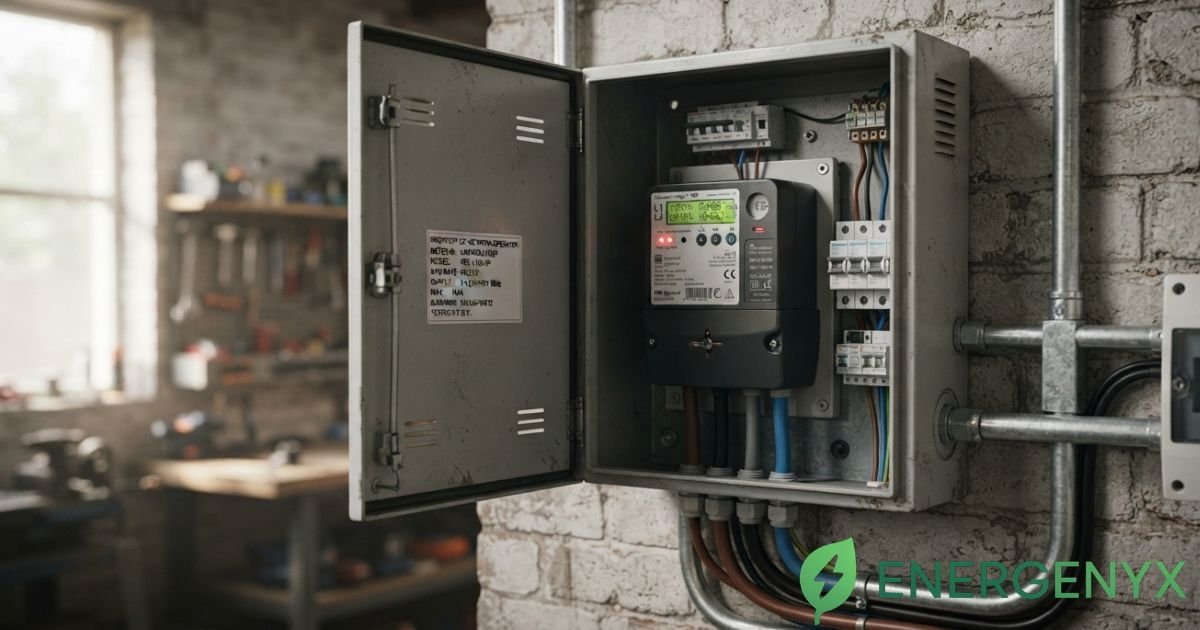
If you manage a business electricity account, you may come across several different numbers on your electricity bill or meter. One of the most important is your business electricity meter number, also known as the meter serial number (MSN).
Your meter number identifies the physical electricity meter installed at your business premises. It can be useful when reporting meter problems, checking whether a bill relates to the correct meter, changing suppliers, moving into a new commercial property, or managing premises with multiple meters.
However, your meter number is not the same as your MPAN, account number or electricity supply number. Understanding the difference can prevent confusion when dealing with your supplier or energy broker.
In this guide, we explain what a business electricity meter number is, where to find it, how it differs from an MPAN, and why businesses should keep a record of it.
What Is a Business Electricity Meter Number?
A business electricity meter number is a unique reference used to identify the physical electricity meter installed at your commercial premises.
It is commonly called a:
- Meter number
- Meter serial number
- MSN
- Electricity meter serial number
The number is assigned to the physical meter rather than the electricity supply itself.
For example, if your business has an electricity meter installed at its premises, that physical device will have its own identification number. Your electricity supplier can use this information alongside other supply details to identify the meter associated with your account.
The meter number may be printed directly on the meter and can also appear on your electricity bill.
Simple example
Imagine your business has the following information:
| Information | Example |
|---|---|
| Business name | ABC Retail Ltd |
| Electricity meter number | 12345678 |
| MPAN | Electricity supply identifier |
| Supplier account number | 987654321 |
| Meter reading | 45,620 kWh |
The meter number identifies the physical meter, while the MPAN identifies the electricity supply point.
What Does MSN Stand For?
MSN stands for Meter Serial Number.
It is another common term for a business electricity meter number.
You may see “MSN” on:
- Electricity bills
- Supplier correspondence
- Metering documentation
- Energy contracts
- Industry records
- Electricity meter labels
Different suppliers may present the information differently, so don’t be concerned if your bill simply calls it “Meter Number” rather than “MSN”.
Where Can I Find My Business Electricity Meter Number?
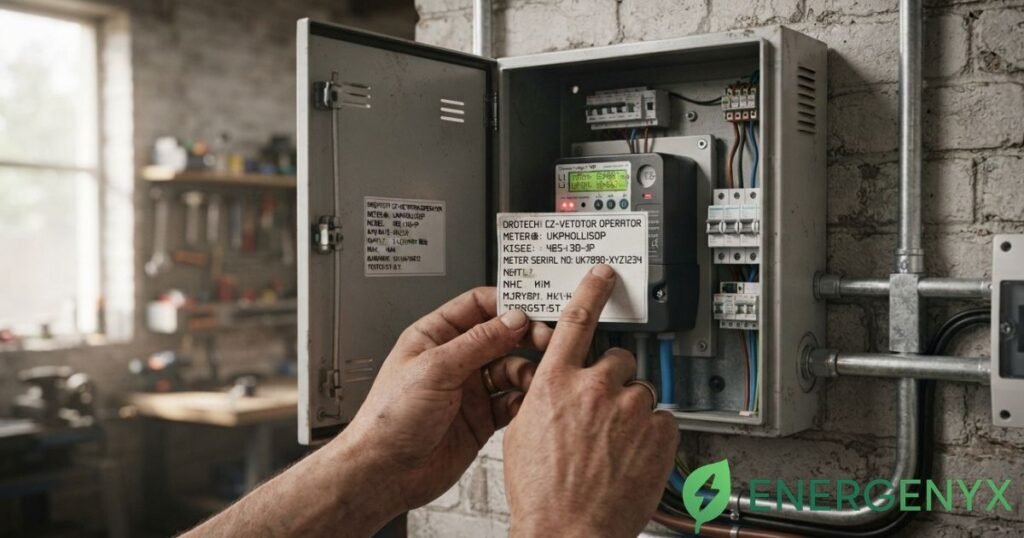
There are several places where you can usually find your business electricity meter number.
The easiest options are:
- Check the electricity meter itself.
- Look at a recent electricity bill.
- Check your supplier’s online account.
- Contact your electricity supplier.
- Ask your energy broker or property manager if they hold your supply information.
Let’s look at each option.
1. Check the Electricity Meter
The easiest way to find your meter number is often to look directly at the physical meter.
Depending on the type of meter installed at your business, the meter number may appear:
- On the front of the meter
- Near the display
- On a printed label
- Above or below the barcode
- Next to the manufacturer’s information
The number may be labelled Meter No, Serial No, MSN or something similar.
Be careful not to confuse the meter number with the current meter reading.
Meter number vs meter reading
Your meter number identifies the meter.
Your meter reading records how much electricity has passed through the meter.
For example:
Meter number: 12345678
Current reading: 45,620 kWh
The first identifies the device. The second measures electricity consumption.
2. Check Your Business Electricity Bill
Your electricity bill is another good place to look.
The exact position of the meter number varies between suppliers, but it may appear in a section containing information such as:
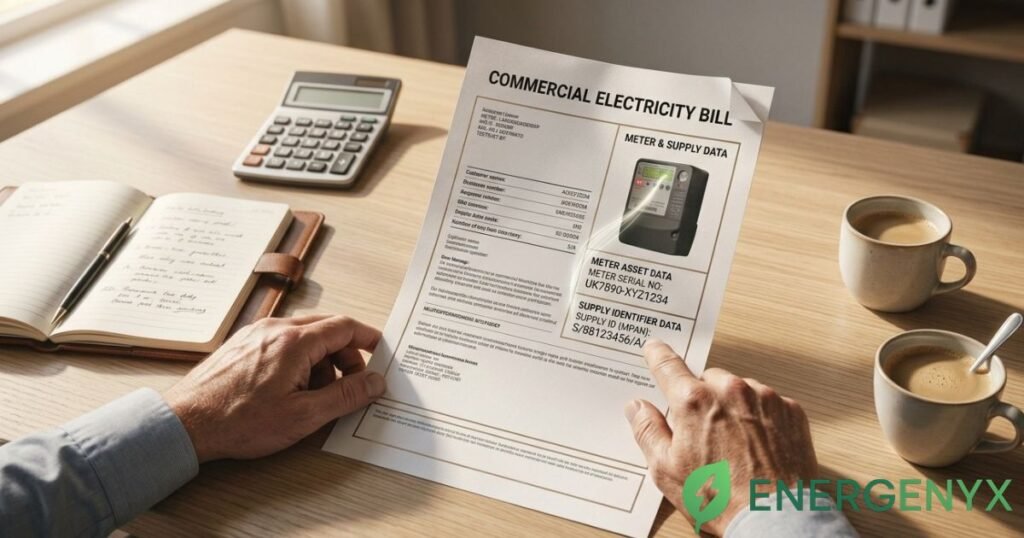
- Meter details
- Supply details
- Electricity usage
- Meter readings
- Account information
- Property information
Look for labels such as:
Meter Number
Meter Serial Number
MSN
Serial Number
If your business has multiple meters, your bill may list more than one meter number.
3. Check Your Supplier’s Online Account
If your supplier provides an online business energy account, log in and look under your:
- Account details
- Meter details
- Supply information
- Property information
- Billing information
The exact layout will depend on your supplier.
This can be particularly useful if you manage multiple business premises because you may be able to see the meter information associated with each site.
4. Contact Your Electricity Supplier
If you cannot find the number, contact your current electricity supplier.
Have some basic information available, such as:
- Business name
- Supply address
- Account number
- Recent bill
- Meter reading
- MPAN, if available
Your supplier should be able to help identify the meter associated with your account.
5. Ask Your Energy Broker or Property Manager
If your business uses an energy or electricity broker, they may already have important information about your electricity supply.
Similarly, landlords, property managers or facilities teams may keep records for commercial premises with multiple meters.
However, it is still a good idea for the business occupying the property to maintain its own records.
Is the Business Electricity Meter Number the Same as the MPAN?
No.
The meter number and MPAN are two different identifiers.
This is one of the most common sources of confusion when businesses deal with electricity suppliers.
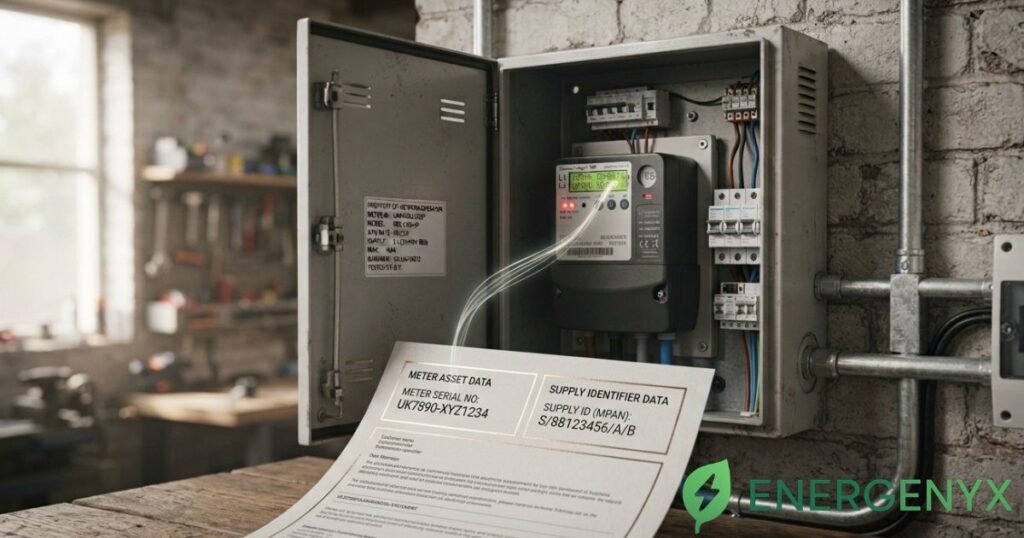
Meter number
The meter number identifies the physical electricity meter.
MPAN
The MPAN (Meter Point Administration Number) identifies the electricity supply point.
You can think of it this way:
Meter number = the physical meter
MPAN = the electricity supply point
Your business electricity bill may contain both.
MPAN vs Meter Number: What’s the Difference?
| Information | What it identifies | Where you may find it |
|---|---|---|
| Meter number / MSN | Physical electricity meter | Meter and electricity bill |
| MPAN | Electricity supply point | Electricity bill |
| Account number | Customer account | Supplier bill/account |
| Meter reading | Electricity consumed | Meter and bill |
| MPRN | Gas supply point | Gas bill |
Understanding these differences becomes particularly important when switching business electricity suppliers.
Why Is Your Business Electricity Meter Number Important?
Your meter number may seem like an unimportant reference, but it can be useful in several situations.
1. Identifying the correct meter
If a commercial building contains several electricity meters, the meter number can help identify which physical meter belongs to a particular supply.
2. Reporting meter problems
If your meter develops a fault, your supplier may ask for the meter number so they can identify the equipment.
3. Checking electricity bills
The meter number can help you check that the bill you’re reviewing relates to the correct meter and premises.
4. Moving business premises
When moving into or out of commercial premises, recording the meter number can provide useful evidence about which meter was present at the property.
5. Managing multiple sites
Businesses with multiple offices, shops, warehouses or other commercial properties may have numerous electricity meters.
Keeping accurate records can make energy management considerably easier.
Do I Need My Meter Number to Switch Business Electricity Supplier?
Not necessarily.
When switching business electricity suppliers, several pieces of information may be relevant, including details about the electricity supply, premises, existing contract and consumption.
Your MPAN is generally more important for identifying the electricity supply point, while the meter number identifies the physical meter.
However, having your meter number available can still be useful, particularly if there is uncertainty about which meter serves your premises.
If you are comparing energy suppliers or arranging a new contract, an energy broker or supplier may ask for additional information to identify the correct supply.
Can I Switch Business Electricity Without Knowing My Meter Number?
In many cases, yes.
Not knowing your meter number does not automatically prevent you from reviewing business electricity options.
Your supplier or energy broker may be able to identify the relevant supply using other information, such as:
- Business address
- Existing supplier
- Account details
- MPAN
- Meter details
- Historical consumption
- Contract information
However, having your meter number recorded can make the process easier, especially when dealing with multiple meters or commercial premises.
What Does a Business Electricity Meter Number Look Like?
There is no single format that every business electricity meter number follows.
The number can vary depending on:
- Meter manufacturer
- Meter type
- Meter installation
- Age of the equipment
- Metering arrangements
It may contain numbers or a combination of letters and numbers.
Rather than trying to identify the meter number based purely on its format, look for a label such as:
Meter Number
Meter Serial Number
MSN
Serial No.
If you’re unsure, compare the number shown on the meter with the meter details on your latest electricity bill.
Is the Meter Number Printed on a Smart Meter?
Yes, a smart electricity meter can have a meter identification or serial number.
The exact location and appearance can vary depending on the meter model.
The meter number is different from the numbers displayed as part of your electricity consumption reading.
If you have a smart meter, avoid assuming that every number shown on the display is the meter number.
If you’re unsure, check the meter label or your supplier’s documentation.
What Is the Difference Between a Meter Number and a Meter Reading?
These terms are easy to mix up.
Meter number
Identifies the physical electricity meter.
Meter reading
Shows the amount of electricity recorded by the meter.
For example:
Meter number: A12345678
Meter reading: 18,540 kWh
The meter number normally remains associated with the physical meter, while the meter reading changes as the business uses electricity.
What Is the Difference Between a Meter Number and an Account Number?
Your meter number identifies the physical electricity meter.
Your account number identifies your customer account with the energy supplier.
A business can potentially have:
- One account with several meters
- Several premises under one supplier relationship
- Multiple accounts
- Multiple meters at one site
Therefore, the account number should not be treated as a replacement for the meter number.
What Is the Difference Between a Meter Number and an MPAN?
This distinction is particularly important for business energy.
| Meter Number | MPAN |
|---|---|
| Identifies the physical meter | Identifies the electricity supply point |
| Usually found on the meter | Usually found on the electricity bill |
| Also called MSN | Also called Supply Number / S Number |
| Useful for identifying equipment | Useful for identifying the electricity supply |
| Can be associated with a particular physical meter | Relates to the electricity supply arrangement |
The two numbers serve different purposes, even though both can appear on business electricity documentation.
What If My Business Has Multiple Electricity Meters?
Some commercial properties have multiple electricity meters.
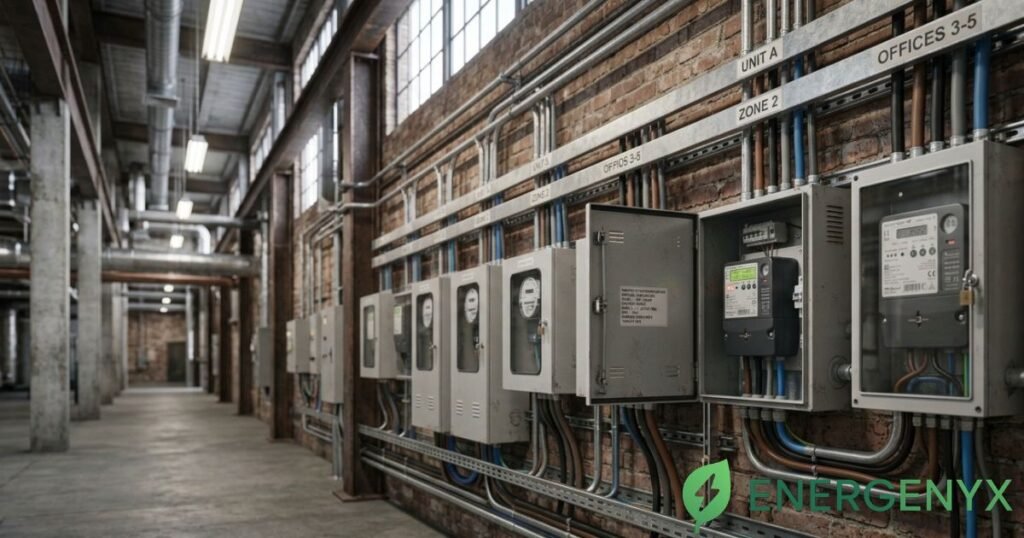
This can happen in:
- Large offices
- Retail premises
- Warehouses
- Factories
- Shopping centres
- Multi-unit buildings
- Restaurants
- Schools and larger organisations
Each meter may have its own meter number.
This makes accurate record-keeping especially important.
Create a simple meter register
For example:
| Location | Meter Number | MPAN | Notes |
|---|---|---|---|
| Main building | 12345678 | Recorded separately | General electricity |
| Warehouse | 23456789 | Recorded separately | Warehouse supply |
| Office | 34567890 | Recorded separately | Office supply |
Keeping a simple register can help prevent confusion when submitting meter readings or dealing with suppliers.
What If the Meter Number on My Bill Doesn’t Match the Meter?
If the meter number shown on your electricity bill does not appear to match the number on the physical meter, don’t ignore the discrepancy.
There could be a legitimate explanation, but it is worth checking.
Possible reasons include:
- The wrong meter has been associated with the account.
- The meter has previously been replaced.
- The property contains multiple meters.
- The bill contains outdated information.
- The physical meter number has been difficult to read correctly.
Contact your electricity supplier and explain the discrepancy.
Take a photograph of the meter identification information if appropriate and keep a copy for your records.
What Happens If a Business Electricity Meter Is Replaced?
Electricity meters can be replaced for various reasons, including equipment upgrades, faults or changes to metering arrangements.
If the physical meter is replaced, the new meter will have its own identification details.
This is why businesses should avoid relying indefinitely on an old meter number.
When a meter is replaced, check that your supplier’s records and future bills correctly reflect the new meter information.
Should You Record Your Business Electricity Meter Number?
Yes.
Keeping a record of your meter number is a simple but useful part of managing business energy.
Consider recording:
- Meter number
- MPAN
- Supplier
- Account number
- Supply address
- Meter type
- Current meter reading
- Date of latest reading
For businesses with multiple premises, maintaining these details in a spreadsheet can be particularly helpful.
Business Electricity Meter Number Checklist
Before contacting your supplier or reviewing your business energy contract, make sure you know where to find the following information:

Electricity supply information
- Business name
- Supply address
- Electricity supplier
- Account number
- MPAN
- Meter number / MSN
- Meter type
- Current meter reading
- Contract end date
Having this information organised can make conversations with suppliers and energy brokers much easier.
Common Business Electricity Meter Number Mistakes
Businesses commonly make a few mistakes when recording or using meter numbers.
Mistake 1: Confusing the meter number with the meter reading
The meter number identifies the device. The meter reading measures electricity consumption.
Mistake 2: Confusing the MPAN with the meter number
They are different identifiers and serve different purposes.
Mistake 3: Recording the wrong meter in a multi-meter building
If several meters are located close together, make sure you identify which meter supplies which area.
Mistake 4: Not updating records after a meter replacement
A replacement meter may have different identification information.
Mistake 5: Assuming every business has only one meter
Large commercial premises can have multiple meters and supply arrangements.
Can an Energy Broker Find My Business Electricity Meter Number?
An energy broker may be able to help identify your electricity supply information, depending on the information available and their access to relevant industry or supplier records.
If you’re struggling to identify your meter, provide as much information as possible, including:
- Business address
- Current supplier
- Account number
- MPAN
- Recent electricity bill
- Meter reading
- Meter photographs where appropriate
However, businesses should always verify important supply information with their supplier or relevant network operator where necessary.
Why Meter Details Matter When Comparing Business Electricity Prices
Your meter number itself doesn’t determine your electricity tariff.
However, accurate supply information helps suppliers and brokers identify the correct electricity supply and understand the characteristics of the premises.
When comparing business electricity prices, other factors can be much more significant, including:
- Electricity consumption
- Contract type
- Contract length
- Unit rate
- Standing charge
- Meter type
- Half-hourly or non-half-hourly settlement arrangements
- Business location
- Market conditions
- Supplier pricing
This is why simply finding your meter number isn’t enough to determine whether you’re getting a competitive energy deal.
Meter Number, MPAN and kWh: Understanding Your Electricity Information
Business electricity bills contain several different pieces of information, and understanding each one can make energy management easier.
Meter number
Identifies the physical electricity meter.
MPAN
Identifies the electricity supply point.
kWh
Measures electricity consumption.
Unit rate
The price charged per unit of electricity consumed.
Standing charge
A daily charge associated with the electricity supply.
Understanding these components can help you make better decisions when reviewing your business energy costs.
What Information Should I Have Before Comparing Business Electricity Deals?
If your business electricity contract is approaching renewal, gathering information in advance can make the energy comparison process smoother.
Ideally, have:
- Your business address
- Current electricity supplier
- Current tariff
- Contract end date
- Annual electricity consumption
- Recent electricity bills
- MPAN
- Meter number
- Meter type
- Current unit rate
- Standing charge
You don’t necessarily need every piece of information before starting the process, but the more accurate your information is, the easier it can be to compare suitable options.
Business Electricity Meter Number FAQs
What is a business electricity meter number?
A business electricity meter number is a unique identifier associated with the physical electricity meter installed at your commercial premises. It is also commonly called a meter serial number or MSN.
Where can I find my business electricity meter number?
You can usually find it directly on the physical electricity meter, on your business electricity bill or through your supplier’s online account.
Is a meter number the same as an MPAN?
No. A meter number identifies the physical electricity meter, while an MPAN identifies the electricity supply point.
Is the meter number the same as the meter reading?
No. The meter number identifies the meter, while the meter reading records electricity consumption.
Do smart meters have meter numbers?
Yes. Smart meters have identification details, including a meter serial number. The exact location and format can vary by meter model.
Do I need my meter number to switch electricity suppliers?
Not always. Other supply information, such as the MPAN and premises details, may be used to identify the electricity supply. However, having your meter number available can still be useful.
Can a business have multiple electricity meter numbers?
Yes. A business premises can have multiple physical electricity meters, and each meter can have its own meter number.
What should I do if my meter number doesn’t match my electricity bill?
Contact your electricity supplier and ask them to investigate the discrepancy. This can be particularly important if the property has multiple meters or if a meter has recently been replaced.
Does my meter number determine my electricity price?
No. Your meter number is an identifier for the physical meter. Business electricity pricing depends on factors such as consumption, tariff structure, contract terms and market conditions.
Final Thoughts
Your business electricity meter number is a simple but important piece of information that identifies the physical electricity meter at your premises.
It is different from your MPAN, account number and meter reading, and understanding these differences can help you avoid mistakes when managing your business energy.
The easiest places to find your meter number are usually the physical meter, your electricity bill or your supplier’s online account.
If your business has multiple meters, keeping a clear record of each meter number alongside the relevant supply address, MPAN and meter readings can make energy administration much easier.
And if your electricity contract is approaching renewal, don’t focus only on identifying your meter. It’s also worth reviewing your unit rate, standing charge, consumption, contract terms and available business electricity tariffs.
Ready to Review Your Business Electricity Deal?
Knowing your meter number is useful, but it is only one part of understanding your business energy costs.
If your contract is approaching renewal or you want to find out whether a more suitable tariff could be available, now is a good time to review your options.
Compare Business Electricity Prices →
Reviewed by: Energenyx Energy Content Team