
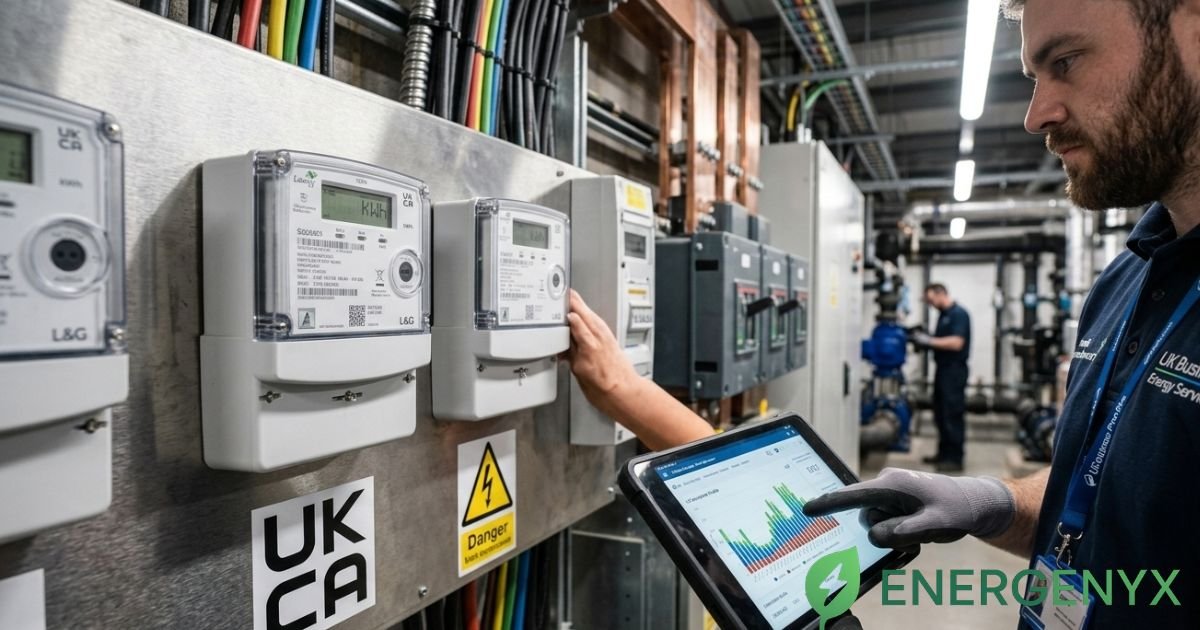
A business electricity meter is an essential part of managing electricity at commercial premises. It measures how much electricity a business uses and provides the consumption information needed for billing and energy management.
However, not all business electricity meters are the same.
A small office may have a standard meter, while a larger factory, warehouse or other high-consumption site may use a half-hourly meter that records electricity consumption at regular intervals throughout the day. Businesses may also encounter smart meters, maximum-demand arrangements and different meter configurations depending on the size and nature of their premises.
Understanding your meter can help you:
- Read and monitor electricity consumption
- Check your business electricity bills
- Understand your energy usage patterns
- Compare electricity contracts
- Provide accurate information when switching suppliers
- Identify opportunities to reduce energy costs
- Understand whether your business needs more detailed consumption data
This guide explains business electricity meters, the main types used by UK businesses, how meter readings work, what an MPAN is, how half-hourly meters differ from standard meters, and what businesses should know when changing suppliers or moving premises.
What Is a Business Electricity Meter?
A business electricity meter is a device that measures the amount of electrical energy consumed at a commercial property.
Electricity consumption is normally measured in kilowatt-hours (kWh).
For example, if your business consumes 100 kWh during a particular period, the meter records that consumption so it can be used for electricity billing and energy management.
A meter may be installed at:
- Offices
- Shops
- Restaurants
- Warehouses
- Factories
- Workshops
- Hotels
- Schools
- Healthcare premises
- Other commercial properties
The size and type of meter required can depend on the electricity demand and characteristics of the premises.
How Does a Business Electricity Meter Work?
At a basic level, an electricity meter measures the amount of electricity flowing through the premises.
The meter records consumption over time, and the information can then be used by suppliers and other parties involved in electricity billing and settlement.
For a simple meter, the business may see a cumulative reading showing total electricity consumption.
For more advanced metering arrangements, consumption data can provide much more detail about when electricity was used.
This distinction is important.
Knowing that your business used 100,000 kWh during a year tells you how much electricity was consumed.
Knowing how that 100,000 kWh was distributed throughout the day can provide additional information that may be useful for energy management and procurement.
Why Is a Business Electricity Meter Important?
Your electricity meter is important because it connects your physical electricity usage with the commercial arrangements surrounding your supply.
Meter information can be used to:
Calculate Electricity Consumption
Your meter records how much electricity your business uses.
Support Billing
Consumption information is used as part of the process of calculating electricity charges.
Compare Energy Usage
Businesses can monitor consumption over different periods.
Identify Unusual Usage
Unexpected increases in consumption can sometimes indicate changes in operating patterns or equipment problems.
Support Energy Procurement
Larger businesses can use detailed consumption data when reviewing electricity contracts and procurement options.
Help With Switching Suppliers
Meter and supply information may be required when arranging a new electricity contract.
Types of Business Electricity Meters
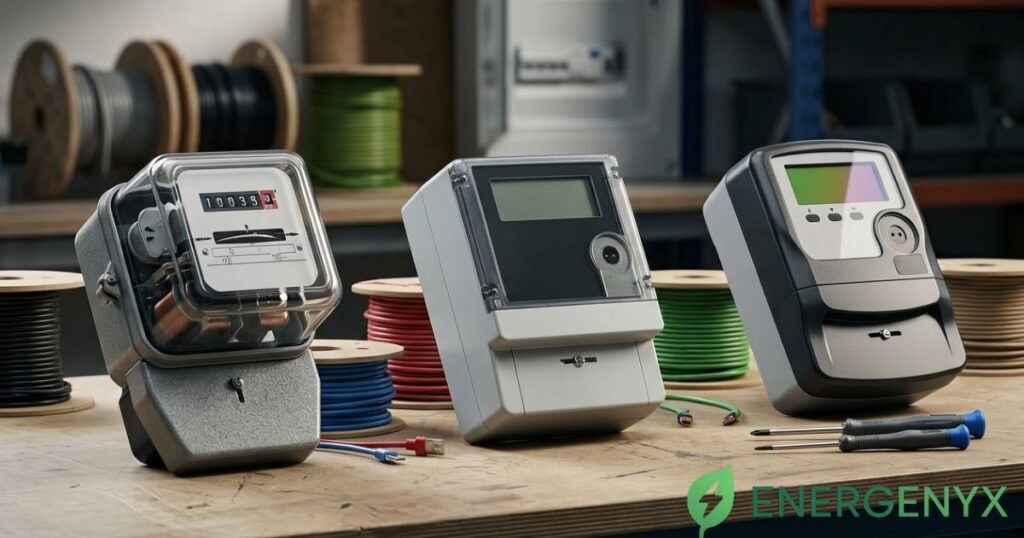
Businesses can encounter several different types of electricity meters and metering arrangements.
The most relevant include:
- Standard electricity meters
- Smart meters
- Half-hourly meters
- Maximum-demand metering arrangements
The right arrangement depends on the characteristics of the electricity supply and the business premises.
Standard Business Electricity Meters
A standard meter records cumulative electricity consumption.
The business can normally obtain a meter reading from the display and provide it to the relevant supplier when required.
Traditional meters can be relatively simple to understand because the main reading represents accumulated electricity consumption.
However, a basic cumulative reading doesn’t provide the same level of detail as a half-hourly meter.
For example, a standard reading may tell you that your business consumed 5,000 kWh during a particular period.
It doesn’t necessarily tell you precisely how that consumption was distributed throughout the day.
Smart Meters for Businesses
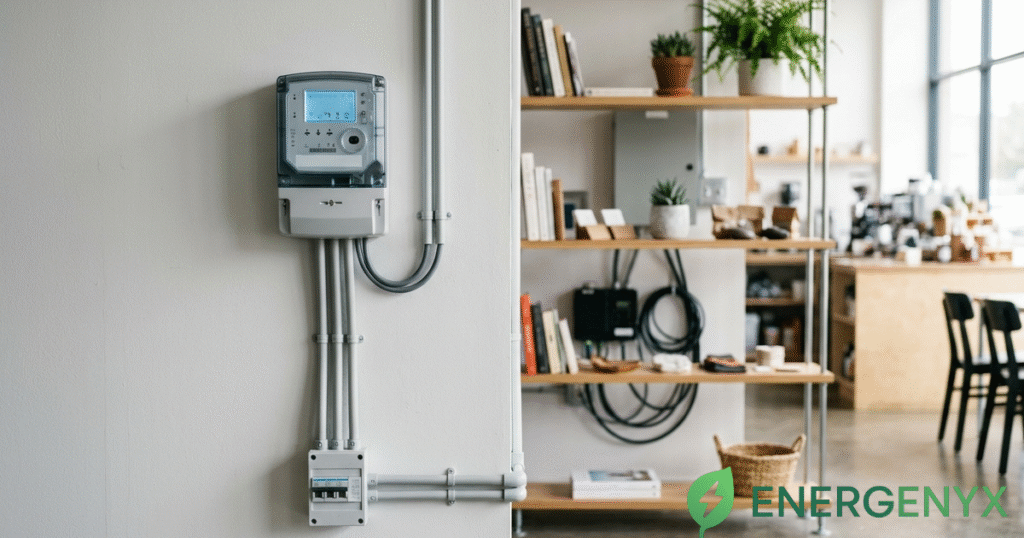
Smart meters can automatically communicate meter information, reducing the need for businesses to manually submit regular readings in many circumstances.
Smart metering can provide more convenient access to consumption information and can help improve visibility of electricity usage.
For businesses, the usefulness of a smart meter depends on the type of supply, meter configuration, supplier arrangements and how the business uses the data.
A smart meter should not automatically be assumed to be equivalent to a half-hourly business meter.
The capabilities and data requirements can differ.
What Is a Half-Hourly Electricity Meter?

A half-hourly electricity meter records electricity consumption in 30-minute intervals.
Instead of only looking at an accumulated meter reading, businesses can obtain detailed information about how much electricity was consumed during individual periods.
This can be particularly useful for businesses with significant electricity consumption.
For example, a manufacturing facility might be able to identify:
- High electricity demand during production
- Lower usage during lunch breaks
- Overnight consumption
- Weekend consumption
- Seasonal changes
- Changes associated with specific operating schedules
This information can provide a much clearer picture of the business’s electricity profile.
Which Businesses Use Half-Hourly Meters?
Half-hourly metering is particularly relevant to larger electricity users.
It can be useful for businesses such as:
- Manufacturing facilities
- Large warehouses
- Supermarkets
- Hotels
- Hospitals
- Large offices
- Industrial sites
- Data-intensive facilities
Whether a particular site requires or uses half-hourly metering depends on the characteristics of the electricity supply and applicable arrangements.
Businesses should therefore check their individual supply rather than assuming that business size alone determines the meter type.
Half-Hourly vs Non-Half-Hourly Electricity Meters
The main difference is the level of consumption detail.
| Feature | Non-Half-Hourly | Half-Hourly |
|---|---|---|
| Consumption data | Less granular | 30-minute intervals |
| Detailed usage profile | Limited | Yes |
| Useful for large energy users | Sometimes | Often |
| Manual reading | May be required | Depends on arrangement |
| Consumption analysis | More limited | More detailed |
| Procurement analysis | Basic | More sophisticated |
The important point is that half-hourly metering gives businesses greater visibility into when electricity is being consumed.
What Is an MPAN?
An MPAN, or Meter Point Administration Number, identifies an electricity supply point.
It is associated with the property and electricity supply rather than simply being the serial number printed on the physical meter.
Your MPAN can be important when:
- Switching electricity suppliers
- Setting up a new electricity contract
- Moving premises
- Resolving supply information
- Discussing your electricity account with a supplier
The MPAN is sometimes referred to as the electricity supply number.
Is an MPAN the Same as the Meter Number?
No.
This is an important distinction.
Meter Serial Number
Identifies the physical electricity meter.
MPAN
Identifies the electricity supply point.
The two numbers serve different purposes.
When communicating with an electricity supplier, make sure you provide the correct information rather than assuming the meter serial number and MPAN are interchangeable.
Where Can You Find Your MPAN?
Your MPAN may appear on your electricity bill or other supply documentation.
If you cannot find it, your electricity supplier or relevant network party may be able to help you identify the correct supply information.
Don’t assume that the number displayed on the front of your meter is your MPAN.
How to Read a Business Electricity Meter
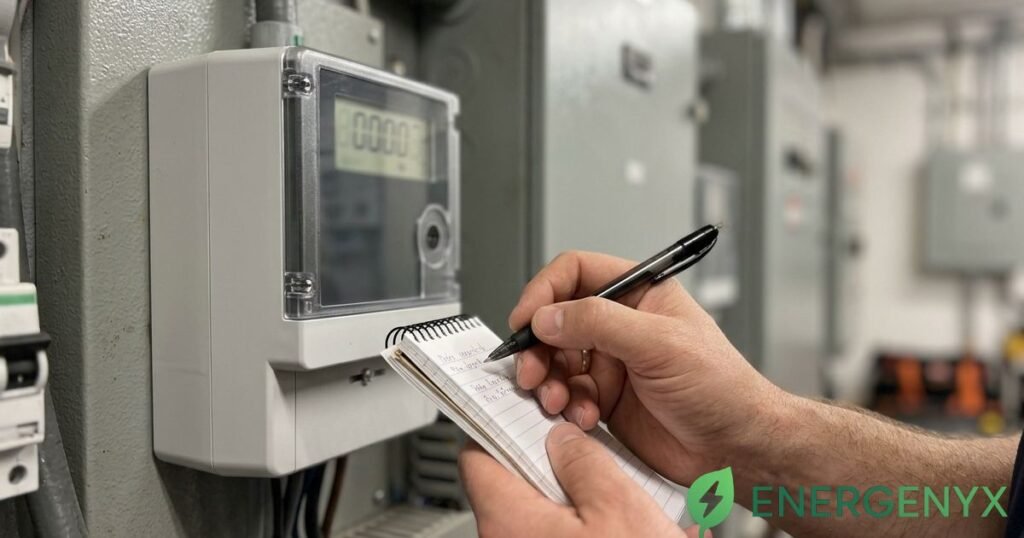
The exact method depends on the type of meter installed.
For a simple digital electricity meter, you may see a numerical display showing your cumulative electricity consumption.
A typical reading might look something like:
012345 kWh
The actual display format can vary.
When taking a reading:
- Locate the electricity meter.
- Check which display shows the electricity reading.
- Record the relevant numbers.
- Check whether your meter has multiple registers or readings.
- Keep a record of the date.
- Submit the reading to your supplier if requested.
If you’re uncertain which reading to provide, check your supplier’s instructions rather than guessing.
Why Should Businesses Take Regular Meter Readings?
Regular meter readings can help businesses maintain better visibility over their electricity consumption.
They can help you:
- Check whether estimated bills appear reasonable
- Monitor changes in consumption
- Identify unusual increases
- Maintain accurate records
- Support energy budgeting
- Check consumption against previous periods
For smaller businesses without detailed automated monitoring, regular meter readings can be particularly useful.
How Is Business Electricity Consumption Measured?
Electricity consumption is generally measured in kilowatt-hours (kWh).
One kilowatt-hour represents the amount of energy consumed by a 1-kilowatt appliance operating for one hour.
For example:
A 2 kW piece of equipment operating for 3 hours would theoretically consume:
2 kW × 3 hours = 6 kWh
If a business has many pieces of equipment operating throughout the day, total consumption can quickly increase.
This is why businesses should understand both their electricity meter and their major sources of electricity consumption.
How Your Electricity Meter Can Affect Business Electricity Prices
Your meter type can influence how electricity consumption is measured and how your business is represented in the energy market.
For example, a business with detailed half-hourly consumption data can provide a much more precise picture of its electricity usage than a business relying only on cumulative readings.
This can be particularly important when larger businesses review:
- Electricity contracts
- Procurement strategies
- Consumption patterns
- Peak demand
- Energy efficiency
- Supplier quotations
However, the meter itself isn’t the only factor determining your electricity price.
Business electricity prices can also depend on:
- Consumption
- Location
- Contract length
- Supplier
- Market conditions
- Credit arrangements
- Network-related costs
- Other applicable charges
For more information, see our guide to business electricity prices.
Can Your Electricity Meter Affect Your Electricity Bill?
The meter doesn’t simply decide how much your electricity costs.
Your bill is determined through your contractual pricing and the electricity consumption associated with your supply.
However, accurate meter data is important because it helps establish how much electricity was consumed.
If consumption is incorrectly recorded or estimated, this can lead to discrepancies between expected and actual billing.
If you believe your electricity bill is incorrect, contact your supplier and provide the relevant meter information.
Does Changing Electricity Supplier Require a New Meter?
Usually, changing electricity supplier does not mean that you need to replace the physical electricity meter.
The supply infrastructure and meter can generally remain in place while the commercial supplier changes.
This is one reason switching business electricity suppliers is primarily a contractual and administrative process rather than a physical replacement of the electricity infrastructure.
However, individual circumstances can vary.
If your business is considering switching suppliers, see our guide on how to switch business electricity supplier.
Can a Business Change Its Electricity Meter?
In some circumstances, a business may be able to change or upgrade its metering arrangement.
The feasibility depends on factors such as:
- Existing meter configuration
- Electricity demand
- Property infrastructure
- Supplier arrangements
- Network requirements
- Technical requirements
A business should not arrange a meter change simply because another meter appears more convenient.
First determine whether the proposed meter is appropriate for the premises and electricity supply.
Smart Meters vs Half-Hourly Meters
These two concepts are sometimes confused.
A smart meter can automatically communicate information about electricity consumption.
A half-hourly meter provides electricity consumption data in 30-minute intervals.
They are related to different aspects of metering and shouldn’t automatically be treated as identical.
If your business needs detailed consumption information, ask your supplier or energy adviser what metering arrangement is appropriate for your premises.
How Meter Data Can Help Reduce Business Electricity Costs
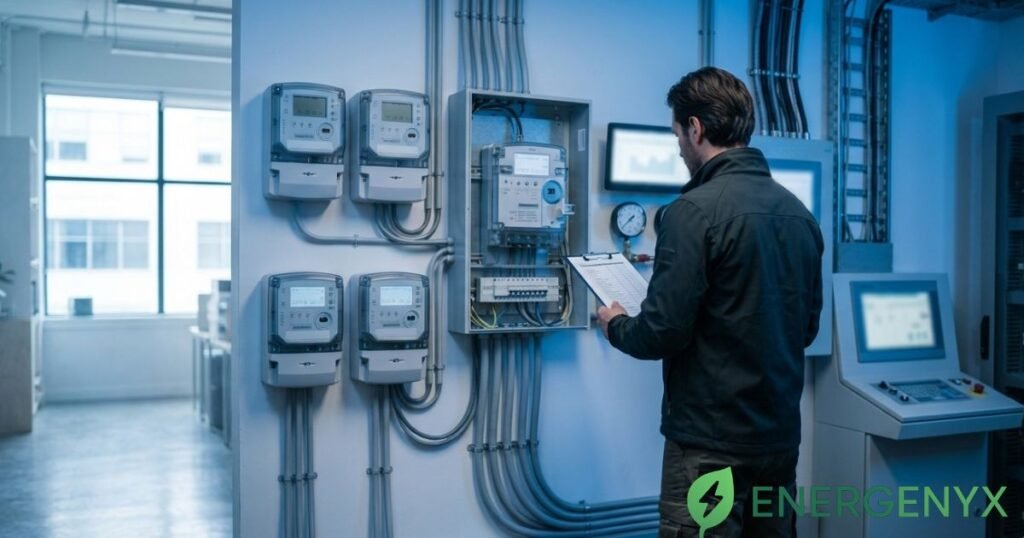
One of the biggest advantages of better meter data is improved visibility.
Suppose a business discovers that significant electricity consumption is occurring outside normal operating hours.
That information could prompt the business to investigate:
- Equipment left running
- Heating or cooling schedules
- Lighting controls
- Refrigeration
- Machinery
- IT equipment
- Security systems
The meter doesn’t automatically reduce consumption.
Instead, it provides information that can help the business identify opportunities to improve efficiency.
Business Electricity Meters and Energy Procurement
Meter information is particularly useful when businesses review their energy procurement strategy.
Before requesting or comparing commercial electricity quotations, businesses should understand their electricity consumption.
Useful information can include:
- Annual kWh consumption
- Meter type
- MPAN
- Meter number
- Historical bills
- Consumption patterns
- Contract end date
For larger organisations, more detailed consumption data can support more sophisticated procurement decisions.
This connects directly with your business energy procurement strategy.
Business Electricity Meters When Moving Premises
Moving premises introduces additional electricity considerations.
Before moving into a new commercial property, identify:
- The electricity meter
- Meter serial number
- MPAN
- Current supplier
- Meter reading
- Existing supply arrangements
- Contract status
When leaving a property, record the final meter reading and retain evidence of the reading where possible.
When entering a new property, take a meter reading as soon as you take responsibility for the premises.
This can help avoid confusion over which electricity consumption belongs to your business.
What Happens to the Electricity Meter When a Business Moves Out?
The physical meter usually remains at the premises.
What changes is responsibility for the electricity supply and billing.
When leaving:
- Record the final meter reading.
- Record the date.
- Take a photograph if appropriate.
- Notify the relevant supplier.
- Provide your forwarding information.
- Keep copies of your records.
Don’t assume that simply leaving the premises automatically ends your responsibility for electricity charges.
Check the contractual arrangements and notify the relevant parties.
What Happens When a New Business Moves Into a Property?
A new business should establish the electricity arrangements as early as possible.
You should identify:
- The existing electricity supplier
- Meter type
- Meter reading
- MPAN
- Contract status
- Electricity rates
- Any relevant supply information
If you occupy a property without arranging an appropriate contract, you may be supplied under different terms until a formal arrangement is established.
This is one reason businesses should address energy arrangements promptly when moving premises.
What Is a Maximum-Demand Meter?
Some larger electricity supplies involve measurement of maximum demand.
Maximum demand refers broadly to the highest level of electricity demand recorded over a relevant period.
For energy-intensive businesses, understanding maximum demand can be important because electricity costs aren’t necessarily determined solely by total annual consumption.
A factory that uses 500,000 kWh per year but has very high peaks can have different network and procurement considerations from another business with the same annual consumption but a more consistent load profile.
What If Your Business Electricity Meter Is Faulty?
If you believe your meter isn’t working correctly, contact your electricity supplier.
Potential warning signs can include:
- Display not working
- Unexpected readings
- Meter appearing completely inactive
- Unusual consumption
- Physical damage
- Error messages
- Electricity usage that doesn’t match normal operations
Don’t attempt to repair or interfere with the meter yourself.
Metering equipment can involve electrical hazards, and any technical investigation should be handled through the appropriate supplier or qualified professional.
Can a Business Monitor Electricity Consumption Without Changing Its Meter?
Yes.
Businesses can use additional energy-monitoring technology to gain more visibility into consumption.
Depending on the premises, this may include:
- Sub-metering
- Energy monitoring systems
- Building management systems
- Smart monitoring equipment
- Equipment-level monitoring
This can allow businesses to understand not only total electricity consumption but also which areas or equipment are responsible for that consumption.
For larger premises, this can be particularly useful for identifying energy-saving opportunities.
Business Electricity Meter Checklist
Before reviewing your business electricity contract, make sure you know:
- Meter type
- Meter serial number
- MPAN
- Annual electricity consumption
- Current supplier
- Current unit rate
- Standing charge
- Contract end date
- Recent meter readings
- Historical electricity bills
- Whether the meter is half-hourly
- Whether additional monitoring is installed
Having this information available can make it easier to discuss your energy requirements with suppliers or brokers.
Common Business Electricity Meter Mistakes
Confusing the Meter Number With the MPAN
They identify different things.
Not Recording Meter Readings
This can make it harder to establish accurate consumption when moving premises or changing suppliers.
Ignoring Unusual Consumption
A sudden increase in electricity use deserves investigation.
Assuming Every Business Has the Same Meter
Commercial premises can have very different electricity requirements.
Assuming Smart Means Half-Hourly
Smart and half-hourly describe different aspects of electricity metering.
Forgetting the Meter When Moving Premises
Always record readings when taking responsibility for or leaving a property.
Attempting to Repair a Meter Yourself
Contact the appropriate supplier or qualified professional instead.
How Business Electricity Meters Relate to Your Electricity Contract
Your electricity contract determines the commercial terms under which electricity is supplied.
Your meter provides information about the electricity being consumed.
These two things work together.
For example, if your business consumes 50,000 kWh annually, that consumption information can help suppliers assess the electricity requirement when providing a quotation.
When reviewing your contract, you should therefore understand both:
What you’re paying
and
How much electricity you’re using.
Knowing only one without the other gives you an incomplete picture of your energy costs.
Business Electricity Meter FAQs
What type of electricity meter does a business need?
It depends on the characteristics of the premises and electricity supply. Smaller businesses may have standard or smart meters, while larger or higher-consumption sites may use half-hourly or other advanced metering arrangements.
What is an MPAN?
An MPAN, or Meter Point Administration Number, identifies an electricity supply point. It is different from the serial number printed on the physical electricity meter.
How do I read a business electricity meter?
The process depends on the meter type. For a simple digital meter, locate the relevant electricity consumption display and record the reading. If you’re unsure which reading to submit, check your supplier’s instructions.
Do I need a new meter when changing business electricity supplier?
Generally, changing supplier does not require replacing the physical meter. The electricity supply infrastructure can usually remain in place while the commercial supplier changes.
What is a half-hourly business electricity meter?
A half-hourly meter records electricity consumption in 30-minute intervals, providing businesses with detailed information about their consumption patterns.
Are smart meters and half-hourly meters the same?
No. Smart metering concerns the communication and collection of meter information, while half-hourly metering refers to consumption data being recorded at 30-minute intervals.
Can I change my business electricity meter?
A meter change or upgrade may be possible depending on the property, electricity demand, technical requirements and supply arrangements. Speak with the relevant supplier or qualified professional before making changes.
Does the electricity meter affect my business electricity price?
The meter itself isn’t the sole determinant of your price, but meter type and consumption data can influence how your electricity supply is managed and priced.
What should I do with my meter when moving business premises?
Record the meter reading, date and relevant supply information when leaving and entering premises. Notify the appropriate supplier and retain your records.
Why is my business electricity consumption suddenly higher?
Possible causes include changes in operating hours, new equipment, heating or cooling demand, refrigeration, machinery or faults. Compare your current usage with previous periods and investigate unusual changes.
How can meter data help my business save money?
Meter data can help you identify when and where electricity is being consumed, making it easier to identify inefficient equipment, unnecessary usage and opportunities to improve energy efficiency.
Final Thoughts
Your business electricity meter is much more than a device that displays a number.
It provides information about how much electricity your business uses and, depending on the metering arrangement, can provide valuable insight into when and how that electricity is consumed.
Understanding your meter can help you:
- Monitor electricity consumption
- Check your bills
- Prepare for supplier comparisons
- Manage energy procurement
- Understand your electricity costs
- Identify unusual consumption
- Improve energy efficiency
- Manage electricity when moving premises
For smaller businesses, simply knowing how to find and record the meter reading can be valuable.
For larger businesses, detailed half-hourly consumption data can become an important part of energy management and procurement.
Before reviewing your next electricity contract, make sure you understand your meter type, MPAN, annual consumption, current rates and contract end date.
That information gives you a much stronger starting point when comparing business electricity options.
Compare Your Business Electricity Options with Energenyx Today
Understanding your electricity meter is one part of managing your business energy costs.
If you’re approaching the end of your electricity contract, reviewing your current rates or looking for alternative commercial electricity arrangements, comparing your options can help you make a more informed decision.
Energenyx helps UK businesses explore their business electricity and energy options based on their individual requirements.
Before choosing a new arrangement, consider your:
- Electricity consumption
- Meter type
- Current unit rate
- Standing charge
- Contract length
- Business operating requirements
Ready to review your business electricity options?
Explore your options with Energenyx and find an electricity arrangement suited to your business.