
Receiving an unexpected electricity bill for energy your business used months ago can be stressful, particularly when the amount is large enough to affect cash flow.
This type of bill is commonly known as a back bill, backdated energy bill, or catch-up bill. It can occur when an energy supplier has not accurately charged a business for electricity that has already been consumed.
Back billing can happen because of estimated meter readings, billing errors, problems with a meter, incorrect account information, or other issues that prevent accurate billing.
However, businesses should not assume that every backdated electricity bill is automatically valid—or that every business receives the same protection.
Ofgem’s current guidance states that its 12-month back-billing rules apply to domestic customers and microbusinesses. Where the rules apply, customers generally do not have to pay for energy used more than 12 months ago when they were not accurately billed for it, subject to specific exceptions. (Ofgem)
In this guide, we’ll explain what business electricity back billing is, why it happens, how the Ofgem rules work, what businesses should do when they receive a back bill, and how to dispute an incorrect electricity bill.
What Is Business Electricity Back Billing?
Business electricity back billing occurs when an energy supplier sends a bill to a business for electricity that was consumed during an earlier period but was not correctly charged at the time.
It is sometimes called a catch-up bill because the supplier is attempting to recover charges that it believes remain outstanding.
For example, imagine a business receives regular electricity bills based on estimated consumption. Several months later, an accurate meter reading becomes available and shows that the business used considerably more electricity than previously estimated.
The supplier may then issue a bill covering the difference.
Simple example
A business was originally billed:
£400 per month
But its actual electricity consumption should have resulted in:
£600 per month
If this continues for several months, the supplier may discover that the business has been undercharged and issue a catch-up bill for the difference.
The important question is not simply “Is this a back bill?”
You also need to establish:
- Why the business was undercharged
- How far back the charges relate to
- Whether accurate bills were previously issued
- Whether the business falls within Ofgem’s back-billing protections
- Whether the supplier has calculated the amount correctly
Why Do Businesses Receive Backdated Electricity Bills?
There are several reasons an electricity supplier may issue a back bill.
1. Estimated Meter Readings
One of the most common causes is estimated consumption.
If a supplier does not have an accurate meter reading, it may estimate how much electricity the business has used.
An estimate can be significantly different from actual consumption.
When an actual reading eventually becomes available, the supplier may recalculate the account.
2. Billing Errors
A supplier may discover that an earlier bill was calculated incorrectly.
For example, there could have been an error involving:
- Electricity consumption
- Meter readings
- Tariff rates
- Billing dates
- Account information
- Meter configuration
The supplier may then issue a corrected bill.
3. Meter Problems
A faulty meter or communications problem can prevent accurate consumption information from reaching the supplier.
This can be particularly relevant where a business expects automated meter readings but the supplier does not receive usable data.
The Energy Ombudsman notes that problems involving meters and meter readings can contribute to back billing, including situations where estimated readings continue to be used. (Energy Ombudsman)
4. Missed or Inaccurate Meter Readings
Businesses can also experience billing problems when meter readings are not regularly provided or recorded accurately.
For businesses without reliable automated readings, keeping records of meter readings can be particularly useful.
A simple record showing:
- Date
- Meter reading
- Photograph of the meter
- Billing period
can help a business challenge an incorrect calculation later.
5. Direct Debit Payments That Are Too Low
A Direct Debit arrangement does not necessarily mean your monthly payment exactly matches your actual electricity consumption.
For example, a supplier could initially calculate a monthly Direct Debit based on estimated annual usage.
If actual consumption is substantially higher, the business could accumulate a debit balance.
Ofgem specifically includes situations where a Direct Debit amount was previously set too low among the circumstances covered by its back-billing guidance. (Ofgem)
This is why businesses should regularly review both their electricity bills and Direct Debit payments.
Can an Electricity Supplier Back Bill a Business?
It depends on the type of business and the circumstances.
This is one of the most important points to understand.
Ofgem’s current back-billing rules protect domestic customers and microbusinesses from being charged for certain energy use that is more than 12 months old. (Ofgem)
Therefore, it would be incorrect to say:
“Energy suppliers can never back bill a business for more than 12 months.”
The protection depends on whether the business qualifies as a microbusiness and whether the circumstances satisfy the back-billing rules.
Larger businesses should carefully review their supply contract and applicable terms rather than assuming that the 12-month consumer protection automatically applies to them.
What Is a Microbusiness?
Understanding the definition of a microbusiness is particularly important when dealing with business electricity back billing.
Ofgem currently states that a business is a microbusiness if it meets the relevant criteria, including having:
- Fewer than 10 employees, or their full-time equivalent, and annual turnover or balance-sheet total of no more than £2 million; or
- Electricity consumption of no more than 100,000 kWh per year; or
- Gas consumption of no more than 293,000 kWh per year.
A business can qualify as a microbusiness for one energy type but not another, depending on its circumstances. (Ofgem)
If you are unsure whether your business qualifies, check your energy records and speak to your supplier.
What Is the 12-Month Back-Billing Rule?
For households and microbusinesses, Ofgem’s rules generally prevent suppliers from requiring payment for energy used more than 12 months ago when the customer:
- Has not previously received an accurate bill for that energy
- Has not been told what was owed through a statement of account
- Had a Direct Debit amount set too low to cover the amount actually owed
These protections are designed to prevent customers from receiving very old, unexpected catch-up bills caused by billing failures. (Ofgem)
Example
Imagine a qualifying microbusiness receives a back bill in September 2026 covering electricity consumed between January 2024 and August 2026.
The business should not simply assume that the entire amount is payable.
It should ask the supplier to explain:
Which period is being billed?
When was the business previously billed for that electricity?
Why was the energy not accurately billed earlier?
Does the 12-month back-billing rule apply?
The supplier should then assess the bill according to the applicable rules.
Does the 12-Month Rule Apply to Every Business?
No.
This is a crucial distinction for businesses searching for information about electricity back billing.
Ofgem’s current guidance specifically says the back-billing rules apply to households and microbusinesses. (Ofgem)
A larger business should not automatically rely on the same protection.
Instead, it should review:
- Its business size
- Electricity contract
- Supplier terms
- Billing history
- Metering arrangements
- Applicable regulatory protections
If you’re uncertain about your position, getting professional advice may be appropriate, particularly where a large amount of money is involved.
When Can a Supplier Charge for Energy Used More Than 12 Months Ago?
There are circumstances where the 12-month protection may not apply.
Ofgem states that a customer may have to pay for older energy use if they have acted unreasonably.
Examples include:
- Preventing the supplier from obtaining accurate meter readings
- Blocking access to the meter
- Ignoring requests for payment
- Tampering with a meter
- Stealing electricity or gas
Ofgem says suppliers can recover energy used more than 12 months ago in these types of circumstances. (Ofgem)
Importantly, simply failing to provide a meter reading does not automatically mean a customer has acted unreasonably. The circumstances need to be considered.
What Should You Do If You Receive a Large Business Electricity Back Bill?
Don’t panic—and don’t immediately assume that the entire amount is correct.
Start by examining the bill carefully.
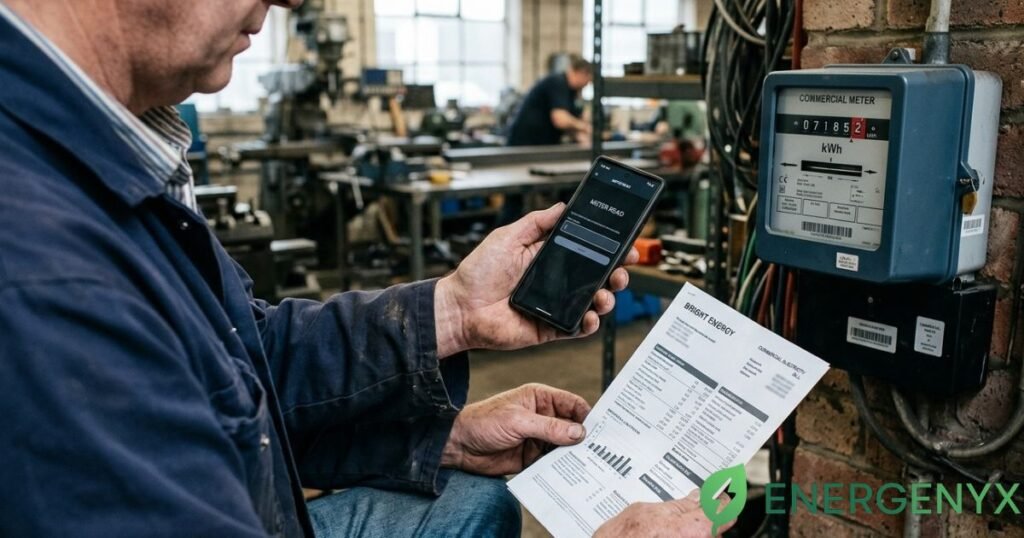
Step 1: Check the Billing Period
Find out exactly which dates the back bill covers.
A bill covering three months is very different from one covering several years.
Step 2: Check Your Previous Bills
Look through your previous electricity bills and determine whether the affected consumption was already charged.
Look for:
- Previous meter readings
- Estimated readings
- Actual readings
- Consumption figures
- Billing periods
- Previous account balances
Step 3: Check Your Meter Reading
Take a current electricity meter reading if it is safe and practical to do so.
If possible, photograph the meter and keep the photograph with the date.
This can provide useful evidence if the supplier’s consumption figures appear incorrect.
Step 4: Ask the Supplier for an Explanation
Contact the supplier and ask why the back bill was issued.
Useful questions include:
- Why was I undercharged?
- Which bills were incorrect?
- What meter readings were used?
- Which dates does the adjustment cover?
- Was the previous consumption estimated?
- When did the supplier identify the problem?
- Does the back-billing protection apply to my business?
- How was the new amount calculated?
Try to keep communication in writing where possible.
Can You Dispute a Business Electricity Back Bill?
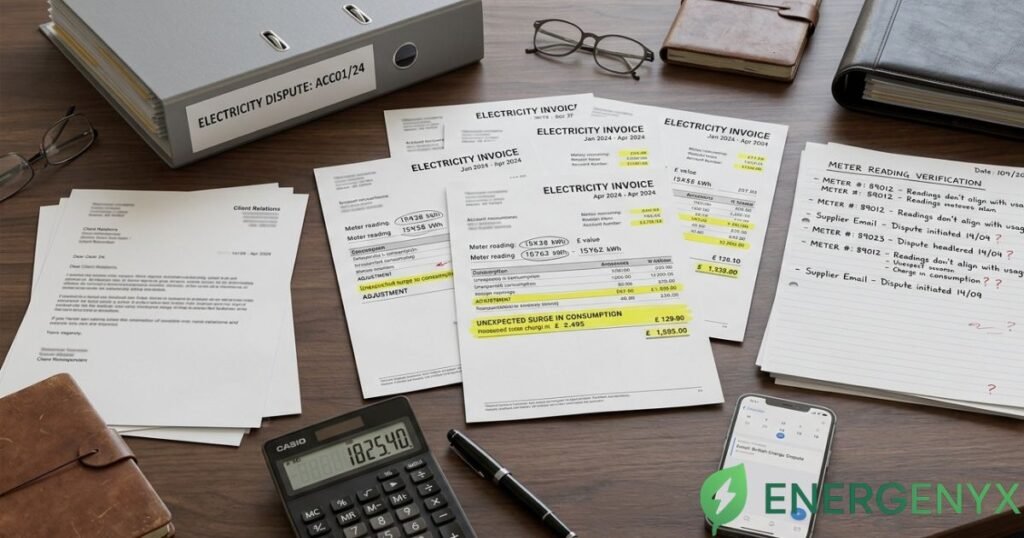
Yes, if you believe the bill is incorrect or the supplier has not followed the applicable rules, you should raise the issue with the supplier.
A dispute could involve:
- Incorrect meter readings
- Incorrect tariff rates
- Incorrect billing dates
- Duplicate charges
- Charges that were already paid
- Incorrect account information
- Miscalculated consumption
- Back-billing rules not being correctly applied
Don’t simply refuse to pay without investigating the bill.
First establish what the supplier says you owe and why.
Ofgem advises customers to contact their supplier promptly if they believe the back-billing rules have not been followed. If the supplier continues seeking payment for a period covered by the rules, customers can make a complaint. (Ofgem)
What If the Back Bill Is Correct?
Sometimes a back bill is legitimate.
If your supplier has identified a genuine undercharge and the amount is payable under the applicable rules, the business may need to pay it.
However, if the amount is substantial, you should contact the supplier and discuss how the balance can be managed.
Ofgem advises businesses that are struggling to pay their energy bills to contact their supplier as soon as possible.
Depending on the circumstances, a supplier may be able to discuss a payment arrangement.
Can You Get a Payment Plan for a Large Electricity Back Bill?
Potentially.
If a business receives a large bill that it cannot comfortably pay in one payment, contact the supplier rather than ignoring the debt.
Explain:
- The size of the bill
- Your normal monthly energy costs
- Your current financial position
- What payment amount you can realistically afford
Any payment arrangement will depend on the supplier and circumstances.
Remember that agreeing to a payment plan is different from agreeing that the original bill is correct. If you believe the bill itself is wrong, make that clear to the supplier.
How Direct Debit Can Contribute to Back-Billing Problems
Direct Debit can make business electricity payments easier, but businesses should not assume that automatic payments guarantee accurate billing.
Suppose your supplier collects:
£500 per month
But your actual electricity costs average:
£700 per month
The £200 monthly difference could gradually build up.
After six months, that could represent:
£1,200 of underpayment
The supplier may eventually identify the difference and adjust the account.
This is why businesses should periodically compare:
Direct Debit amount → Actual bill → Electricity consumption → Account balance
If the numbers don’t appear to match, contact the supplier before the difference becomes significant.
How to Avoid Business Electricity Back-Billing Problems
Although you cannot prevent every supplier error, good record-keeping can reduce the risk of serious billing disputes.
Submit Regular Meter Readings
Where appropriate, provide accurate readings according to your supplier’s requirements.
Keep Photographs of Your Meter
A dated photograph can provide useful evidence of the meter reading at a particular point in time.
Check Every Electricity Bill
Don’t automatically assume that the bill is correct.
Look at:
- Meter readings
- Consumption
- Unit rate
- Standing charge
- Billing dates
- VAT
- Account balance
Monitor Your Electricity Consumption
If electricity consumption suddenly increases or decreases, investigate the reason.
Review Your Direct Debit
Make sure your payment arrangement remains appropriate for your actual usage.
Keep Your Energy Records
Save:
- Contracts
- Bills
- Meter readings
- Supplier correspondence
- Payment records
- Renewal documents
These records can become extremely valuable if a billing dispute develops.
Business Electricity Back Billing vs Normal Billing
It is useful to understand the difference.
| Normal electricity billing | Back billing |
|---|---|
| Covers a regular billing period | Covers previously unbilled or incorrectly billed energy |
| Usually issued according to the normal billing cycle | Usually follows a billing error or adjustment |
| Based on available consumption information | May involve recalculated historical consumption |
| Usually easier to budget for | Can create an unexpected balance |
| Regular payment | Potential catch-up payment |
The key difference is that back billing concerns energy that has already been used but was not accurately charged at the appropriate time.
How Smart Meters Can Help
Smart meters can provide more detailed consumption information and reduce reliance on manual meter readings and estimates when they are operating correctly.
However, a smart meter does not automatically guarantee that every electricity bill will be correct.
Communication problems, meter issues, account errors or other billing problems can still occur.
The Energy Ombudsman has highlighted cases where smart-meter problems and rejected or unavailable readings contributed to billing issues. (Energy Ombudsman)
Businesses should therefore continue checking their bills even when they have a smart meter.
What Should Businesses Keep as Evidence?
If you receive a disputed back bill, documentation can make it much easier to investigate.
Keep copies of:
Electricity bills
Save previous bills so you can compare consumption and charges.
Meter readings
Keep dated readings and photographs where possible.
Energy contracts
Your contract can help establish the applicable rates and terms.
Direct Debit records
Keep records of payments collected from your business bank account.
Supplier correspondence
Save emails, letters and complaint reference numbers.
Consumption records
For larger businesses, internal energy monitoring can provide useful evidence when investigating unusual bills.
When Should You Complain About a Business Electricity Back Bill?
Consider raising a formal complaint if:
- The supplier has not explained the bill
- The meter reading appears incorrect
- You have already paid the amount being requested
- The supplier has ignored your evidence
- You believe applicable back-billing protections have not been followed
- The supplier continues demanding payment for charges you believe should not be recoverable
Start with the supplier’s complaints process.
If the issue remains unresolved, the appropriate escalation route can depend on your business type and the circumstances.
For microbusiness consumers, Ofgem’s guidance specifically advises contacting the supplier first and making a complaint if the supplier continues asking for payment for a period covered by the back-billing rules. (Ofgem)
Business Electricity Back Billing Checklist
If you receive a backdated electricity bill, work through this checklist:
- Check the billing period
- Compare the new bill with previous bills
- Check the meter readings
- Take a current meter reading
- Check whether readings were estimated
- Check the electricity tariff
- Check your Direct Debit payments
- Check your account balance
- Ask the supplier why the bill was issued
- Establish whether your business qualifies as a microbusiness
- Check whether the 12-month back-billing rules apply
- Keep copies of all correspondence
- Dispute incorrect charges
- Discuss a payment arrangement if necessary
- Escalate the complaint if the issue remains unresolved
Frequently Asked Questions
Can an electricity company back bill a business?
Yes, businesses can receive backdated electricity bills when they have not been accurately charged for energy they previously used. However, specific back-billing protections apply to domestic customers and microbusinesses under Ofgem’s rules. (Ofgem)
How far back can a business electricity supplier charge?
For customers covered by Ofgem’s back-billing rules, suppliers generally cannot require payment for energy used more than 12 months ago when the customer was not accurately billed, subject to specific exceptions. The protection applies to microbusinesses as well as domestic customers. (Ofgem)
Does the 12-month back-billing rule apply to every business?
No. Ofgem’s back-billing protection applies to domestic customers and microbusinesses. Larger businesses should check their contract and applicable rules rather than assuming the 12-month protection applies.
What is a microbusiness?
Under Ofgem’s current definition, a business can qualify as a microbusiness based on employee numbers and financial thresholds or certain annual energy-use thresholds. (Ofgem)
Can I dispute a business electricity back bill?
Yes. If you believe the bill is inaccurate or applicable back-billing rules have not been followed, contact your supplier and ask them to investigate. Keep your previous bills, meter readings and supplier correspondence as evidence.
What happens if my electricity supplier used estimated readings?
The supplier may later adjust your account when an accurate reading becomes available. If this results in a back bill, check the dates, readings and calculations carefully.
Does Direct Debit prevent back billing?
No. Direct Debit is simply a payment method. If the payment amount is too low compared with your actual electricity costs, an account balance can build up.
What if I cannot afford my back bill?
Contact your supplier as soon as possible. Explain your circumstances and ask whether a payment arrangement is available. Do not simply ignore the bill. Ofgem specifically advises businesses struggling with energy bills to contact their supplier. (Ofgem)
Can a supplier back bill me if I did not provide meter readings?
It depends on the circumstances. Ofgem’s guidance provides exceptions where a customer has acted unreasonably, such as obstructing access to a meter or ignoring requests for payment. However, the circumstances matter, so businesses should ask the supplier to explain the basis for the charge. (Ofgem)
Conclusion
A business electricity back bill can turn an apparently manageable energy account into a significant unexpected expense. The first step is not to panic or automatically accept the entire amount. Instead, investigate why the bill was issued, check the billing period, compare previous bills and verify the meter readings.
For qualifying microbusinesses, Ofgem’s current back-billing rules provide important protection against being charged for certain energy used more than 12 months ago. However, the rules do not automatically apply to every business, so larger businesses should check their contractual and regulatory position carefully. (Ofgem)
Regularly checking electricity bills, monitoring consumption, keeping meter-reading records and reviewing Direct Debit payments can help businesses identify billing problems earlier.
And if your current electricity contract is approaching renewal, it is worth reviewing your tariff rather than simply allowing your existing arrangement to continue. Comparing business electricity suppliers and contract terms can help you understand whether your business is getting a competitive deal.