
When you apply for a new business electricity contract, the supplier may check your business credit history before agreeing to supply you. This process helps the supplier assess the likelihood that your business will pay its electricity bills on time.
A business electricity credit check can affect the terms a supplier offers, particularly if your business has a limited trading history, a poor credit record, outstanding debts, or previous payment problems.
However, failing a credit check does not necessarily mean you cannot get a business electricity contract. Depending on the circumstances, a supplier may ask for a security deposit, offer different payment terms, require a larger upfront payment, or carry out additional checks.
Understanding how business electricity credit checks work can help you prepare before switching suppliers and avoid unexpected costs.
In this guide, we explain what a business electricity credit check is, why energy suppliers carry them out, what they look at, what happens if your business has poor credit, and how you may improve your chances of getting suitable business electricity terms.
What Is a Business Electricity Credit Check?
A business electricity credit check is an assessment that an energy supplier may carry out to determine the financial risk of supplying electricity to your business.
The supplier wants to establish whether your business is likely to pay its energy bills according to the agreed payment terms.
Depending on the supplier and your business structure, the assessment may consider information such as:
- Your business credit history
- Previous payment behaviour
- Outstanding debts
- County Court Judgments (CCJs)
- The length of time your business has been trading
- Your company’s financial information
- Previous energy accounts
- Information held by credit reference agencies
- The payment history associated with the business or, in some circumstances, its directors
The exact checks vary between energy suppliers. Some suppliers may carry out a formal credit search, while others may use their own risk assessment processes.
Why Do Energy Suppliers Check Business Credit?
Business electricity suppliers face financial risk when they supply energy before receiving payment.
Unlike many ordinary purchases, electricity is consumed continuously. A business could use thousands of pounds’ worth of electricity before the supplier receives payment for it.
For example, imagine a manufacturing company uses £4,000 of electricity each month but pays its bill several weeks after consumption. The supplier has already provided the electricity before receiving the money.
A credit assessment helps the supplier decide how much risk it is prepared to accept.
This does not necessarily mean the supplier believes a business with a lower credit score will fail. It is simply part of the supplier’s approach to managing payment risk.
Do All Business Electricity Suppliers Carry Out Credit Checks?
No. Not every supplier uses exactly the same credit-checking process.
Suppliers have different eligibility criteria, risk policies and approaches to business customers.
One supplier may accept a business with limited credit history while another may request a deposit or additional financial information.
This is particularly relevant when you are comparing business electricity contracts.
If you only look at the advertised unit rate, you could overlook other commercial terms that affect the overall cost of the contract.
These can include:
- Standing charges
- Payment terms
- Security deposits
- Contract length
- Upfront payments
- Direct Debit requirements
- Exit fees
- Credit requirements
Therefore, businesses should consider the full commercial terms, rather than comparing the electricity unit rate alone.
What Information Is Checked During a Business Electricity Credit Check?
The information checked can vary depending on the supplier, the business structure and the circumstances of the application.
However, several areas commonly matter.
1. Business Credit History
A supplier may review the credit history associated with your business.
This can provide information about how your business has handled credit and financial obligations.
For an established company, the supplier may have more information available than for a newly formed business.
A long-established business with a consistent payment history can therefore present a different level of perceived risk from a company that has only recently started trading.
2. Payment History
Payment behaviour can be particularly important.
A history of paying financial commitments on time may indicate that your business manages its obligations responsibly.
Conversely, missed payments, defaults or serious outstanding debts can increase the supplier’s perceived risk.
3. County Court Judgments
A County Court Judgment (CCJ) can appear on a business credit record and may affect how a supplier assesses an application.
A CCJ generally indicates that a court has determined that money is owed and has not been paid as required.
The effect of a CCJ can depend on factors such as when it occurred, whether it has been satisfied, and the supplier’s individual credit policy.
Having a CCJ does not automatically mean that every energy supplier will reject your application.
4. Length of Trading History
New businesses often have limited financial history.
For example, a company that incorporated only a few months ago may not have enough historical information for a supplier to assess its payment behaviour confidently.
This can sometimes result in additional requirements.
A supplier might request:
- A security deposit
- An upfront payment
- Additional financial information
- A personal guarantee
- Different payment terms
The precise requirements depend on the supplier.
5. Existing or Previous Energy Accounts
Where relevant information is available, a supplier may consider your business’s previous energy payment history.
If a business has previously had problems paying energy bills, this may influence how a supplier assesses future credit risk.
This is one reason why keeping business energy accounts up to date matters.
Do Energy Suppliers Check Your Personal Credit Score?
This is one of the most common questions from business owners.
The answer depends partly on the legal structure of your business and the supplier’s credit policy.
A limited company is legally separate from its directors. In many situations, the supplier can assess the company’s credit profile rather than treating the director’s personal credit history as the company’s credit history.
However, suppliers may sometimes request additional information or a personal guarantee, particularly where a business has limited trading history or presents a higher perceived payment risk.
For sole traders and some other business structures, the distinction between the individual and the business can be different.
If a supplier proposes carrying out a personal credit search, it is sensible to ask what type of search it will conduct and why it is required.
What Happens If You Have a Poor Business Credit Score?
A poor business credit history does not necessarily prevent you from getting business electricity.
Instead, the supplier may take additional precautions.
Depending on its policies, a supplier could:
Request a Security Deposit
The supplier may ask you to pay a deposit before starting the contract.
This provides additional protection if the business later fails to pay its bills.
The amount can vary significantly depending on the supplier and perceived risk.
Ask for an Upfront Payment
Some suppliers may require money to be paid before electricity is supplied or before certain services begin.
Offer Different Payment Terms
A supplier may offer payment terms that reduce its exposure to unpaid bills.
For example, it may prefer more frequent payments instead of allowing a longer payment period.
Request a Personal Guarantee
In some circumstances, particularly for smaller or newly established companies, a supplier may ask a director or another individual to provide a personal guarantee.
You should understand exactly what you are agreeing to before signing such an arrangement.
Decline the Application
A supplier can decide that the perceived financial risk is outside its acceptance criteria.
This does not necessarily mean other suppliers will make the same decision.
Can a New Business Get a Business Electricity Contract?
Yes.
Being a new business does not automatically prevent you from getting electricity.
However, a new company may have little or no established credit history.
For example, consider a company that has just opened its first premises. It has:
- No previous business electricity account
- Limited trading history
- No established business credit record
- No published financial history
An energy supplier has less historical information to use when assessing the application.
As a result, the supplier may ask for additional information or financial security.
This is one reason why business electricity for new businesses can sometimes involve different requirements from contracts for established companies.
If you are starting a new business, it is worth checking the supplier’s requirements before agreeing to a contract.
Does a Poor Credit Score Mean You Cannot Switch Business Electricity Supplier?
Not necessarily.
A poor credit history may affect the terms available to you, but it does not automatically mean you cannot switch.
The outcome depends on factors such as:
- The supplier
- Your business structure
- Your credit history
- Existing energy debt
- Contract status
- Payment history
- The supplier’s risk policy
- Whether a deposit or other security is acceptable
This is why comparing suppliers can be important.
Two suppliers can assess the same business differently because their commercial risk policies are not identical.
Can You Switch Business Electricity If You Have Energy Debt?
This can be more complicated.
If your business has outstanding energy debt, you should not assume that you can simply move to another supplier and leave the debt behind.
The situation can depend on the nature of the debt, the account, your contract and the supplier involved.
For example, an unpaid balance with your existing supplier may need to be resolved before a switch can proceed in certain circumstances.
There are also rules governing objections to energy switches, so businesses should establish why a switch has been blocked rather than assuming that the problem is simply a credit score.
If you have an outstanding balance, ask the supplier or broker to explain:
- How much is outstanding?
- What period does the debt relate to?
- Whether the account is disputed?
- Whether the supplier has objected to the switch?
- What needs to happen before the switch can proceed?
Getting these details in writing can prevent confusion later.
What Is a Security Deposit for Business Electricity?
A business electricity security deposit is money that a supplier may request to reduce the financial risk of supplying energy to a business.
The supplier generally holds the deposit according to the terms agreed with the customer.
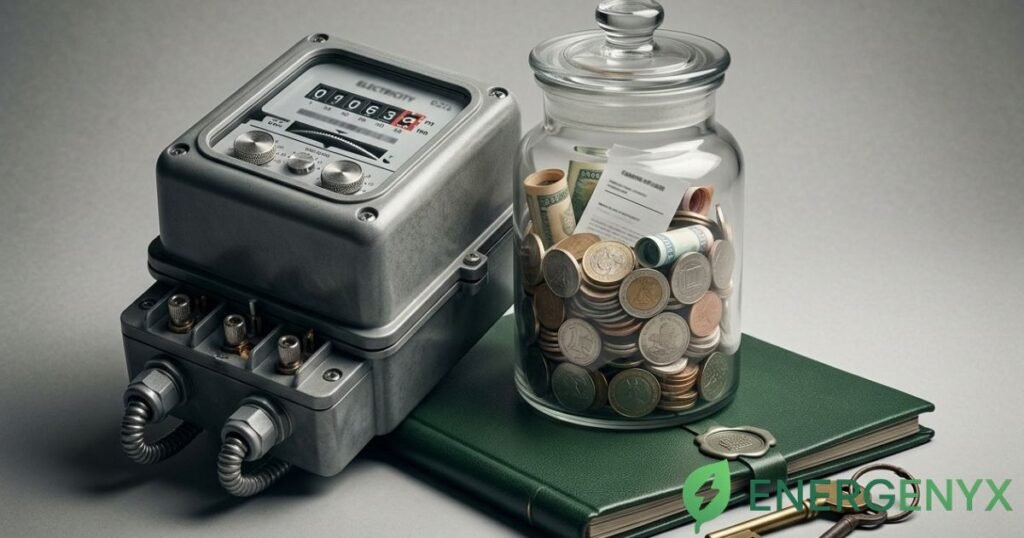
A deposit may be requested when a business:
- Has poor credit
- Has limited trading history
- Has a history of missed payments
- Has outstanding financial issues
- Does not meet the supplier’s standard credit criteria
The deposit is not necessarily an additional electricity charge.
However, it can create a significant cash-flow consideration for a small business.
Example
Suppose a supplier asks a small business for a £1,500 security deposit before accepting its electricity contract.
The business may still receive the electricity supply, but it needs to provide £1,500 upfront.
For a small company with limited working capital, that requirement can matter just as much as the electricity tariff itself.
This is why businesses should ask about deposits and upfront costs before agreeing to a contract.
Can You Improve Your Business Credit Score Before Switching Electricity Supplier?
Yes, although improving a business credit profile usually takes time.
There is no reliable overnight fix.
Businesses can take practical steps to strengthen their financial profile.
Pay Bills on Time
Consistent payment behaviour is one of the fundamentals of maintaining a healthy credit history.
Set up reminders or automated payments for important business commitments.
Keep Business Information Up to Date
Make sure information about your company is accurate and consistent across relevant business records.
Incorrect information can make credit assessment more difficult.
Monitor Your Business Credit Report
Regularly reviewing your business credit information can help you identify errors, outdated information or unexpected entries.
If you find inaccurate information, contact the relevant organisation to investigate it.
Keep Business Finances Organised
Good financial administration can help you manage invoices, supplier payments and energy bills more effectively.
This becomes especially important as your business grows.
Avoid Taking on Unnecessary Debt
Businesses should consider their overall financial position before taking on additional credit.
A high level of borrowing can affect how lenders and other commercial organisations view financial risk.
Does Business Electricity Credit Checking Affect Your Credit Score?
It depends on the type of search carried out.
There is an important distinction between different types of credit searches.
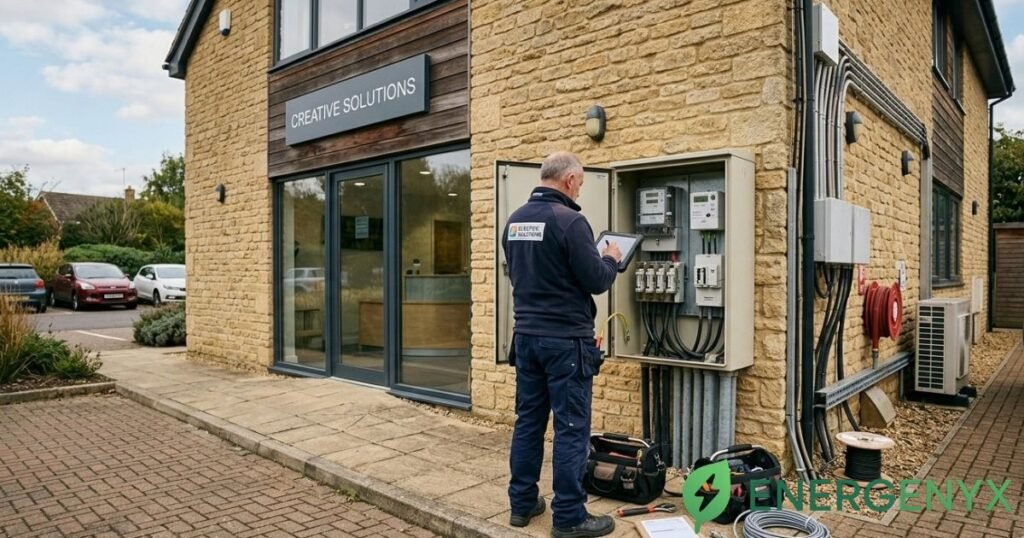
A soft search can allow a company to assess information without leaving the same type of visible footprint as a hard credit search.
A hard search can be recorded on a credit file and may be visible to other organisations accessing that report.
However, the exact process used for a business electricity application depends on the supplier and the circumstances.
Before consenting to a credit search, you can ask the supplier:
“Will this be a hard or soft credit search?”
That simple question can help you understand what the application involves.
Business Electricity Credit Checks for Limited Companies
Limited companies have their own legal identity, which means suppliers can often assess the company’s business credit information separately from an individual director’s personal credit history.
However, this does not mean directors are never relevant to the supplier’s assessment.
A supplier may request information about directors or ask for a personal guarantee in certain circumstances.
This can happen particularly when the company:
- Is newly incorporated
- Has limited financial information
- Has a weak credit profile
- Has previous payment issues
- Does not meet the supplier’s standard risk criteria
If a personal guarantee is requested, read the terms carefully before signing.
Business Electricity Credit Checks for Sole Traders
Sole traders do not operate through a separate limited company in the same way as a limited company.
The business and individual are closely connected from a legal and financial perspective.
As a result, the supplier’s assessment may involve information relating to the individual running the business.
If you operate as a sole trader, ask the supplier exactly what information it will use when assessing your application.
This can help you understand whether your application is likely to require additional financial security.
How Long Does a Business Electricity Credit Check Take?
The time required can vary.
A straightforward application with readily available information may move through the supplier’s process quickly.
However, additional checks can take longer if:
- The business is newly established
- Information needs to be verified
- The supplier requests additional documents
- There are discrepancies in business information
- A deposit or guarantee needs to be arranged
- The supplier needs to review previous energy accounts
If your business needs to switch electricity supplier before an existing contract ends, do not leave the process until the last minute.
Starting early gives you more time to deal with questions about credit checks, contract terms and supplier requirements.
What Documents Might a Business Electricity Supplier Ask For?
Requirements vary, but a supplier may request information such as:
- Company name
- Company registration details
- Business address
- Registered address
- Director information
- Proof of business identity
- Bank details
- Previous energy bills
- Meter details
- Annual electricity consumption
- Existing supplier information
- Financial information
Having these details ready can make the switching process smoother.
It is particularly useful to have a recent business electricity bill available because it normally contains important information about the existing account and electricity supply.
Does Your Electricity Usage Affect a Credit Check?
Your electricity consumption is not the same thing as your credit score.
However, expected consumption can influence the supplier’s commercial risk assessment.
Consider two businesses:
Business A uses £200 of electricity each month.
Business B uses £8,000 of electricity each month.
If both businesses have similar payment histories, the financial exposure to the supplier is still much greater with Business B.
For larger energy users, suppliers may therefore pay closer attention to the overall commercial arrangement.
This is one reason why accurate information about business electricity consumption is important when comparing contracts.
What If You Are Asked for a Larger Deposit?
Do not immediately assume that the deposit makes the contract unsuitable.
Instead, calculate the complete financial picture.
For example:
Option A
- Lower electricity unit rate
- £2,000 deposit
- Standard payment terms
Option B
- Slightly higher unit rate
- No deposit
- More flexible upfront requirements
The cheaper unit rate does not automatically make Option A less expensive overall, just as the absence of a deposit does not automatically make Option B cheaper.
Consider:
- Unit rates
- Standing charges
- Estimated annual consumption
- Contract length
- Deposit
- Payment terms
- Exit fees
- Other contractual charges
This gives you a more realistic comparison.
Can an Energy Broker Help With a Business Electricity Credit Check?
A business energy broker can help you understand supplier requirements and compare available contracts.
A broker may ask for information about your business, current supplier, electricity consumption and existing contract.
Based on the information available, they can help identify suppliers whose commercial criteria may be more suitable.
However, a broker cannot guarantee that a supplier will approve an application.
The final decision remains with the energy supplier.
At Energenyx, the aim is to make business energy comparison easier by helping businesses understand their options before committing to a new electricity contract.
How to Prepare for a Business Electricity Credit Check
If you are planning to switch suppliers, preparation can make the process considerably easier.
1. Check Your Business Details
Make sure your company name, registered address and other business information are correct.
2. Gather Your Latest Electricity Bill
Your latest bill can provide useful information about your current supplier, meter and electricity usage.
3. Check Outstanding Balances
Find out whether your business has any unpaid energy bills or disputed charges.
4. Review Your Business Credit Information
Where possible, check your business credit report before applying.
5. Understand Your Contract
Check your current electricity contract’s end date, notice requirements and any relevant termination charges.
6. Ask About Deposits
If you are concerned about your credit history, ask potential suppliers whether they require a security deposit and under what circumstances.
7. Compare the Full Contract
Do not make your decision based solely on the unit rate.
Look at the complete commercial package.
Common Questions About Business Electricity Credit Checks
Can I get business electricity with bad credit?
Yes, it may still be possible to obtain a business electricity contract with a poor credit history. However, some suppliers may request a security deposit, upfront payment, guarantee or different payment terms.
Do energy suppliers check business credit?
Many business electricity suppliers assess the credit risk of prospective customers, although the exact checks and criteria vary between suppliers.
Does a new business need a credit check for electricity?
A supplier may carry out a credit or risk assessment when a new business applies for electricity. Because a new business may have limited trading history, the supplier may request additional information or financial security.
Can a CCJ stop me getting business electricity?
A CCJ can affect how a supplier assesses your application, but it does not necessarily prevent you from obtaining business electricity. Different suppliers have different risk criteria.
Will a business electricity credit check affect my personal credit score?
Not necessarily. The impact depends on the type of search and the business structure involved. Ask the supplier whether it intends to perform a hard or soft search and whether it will assess personal credit information.
Can I switch business electricity with poor credit?
You may still be able to switch. Your credit history can influence the terms offered, but it does not automatically determine whether every supplier will accept your business.
Why is an electricity supplier asking for a deposit?
A supplier may request a deposit when it considers a business to present a higher payment risk. The deposit provides additional financial protection for the supplier.
Can I get business electricity without a deposit?
Possibly. Whether a deposit is required depends on the supplier’s credit policy and its assessment of your business.
How can I improve my business credit score?
Paying bills on time, keeping business information accurate, monitoring your credit report and maintaining organised business finances can help support a healthier business credit profile over time.
Final Thoughts: Understanding Business Electricity Credit Checks
A business electricity credit check is primarily about payment risk.
Suppliers want to understand whether a business is likely to pay for the electricity it uses. They may consider business credit history, payment behaviour, trading history, outstanding debts and other relevant information when assessing an application.
For businesses with strong and established credit histories, the process may be straightforward. New businesses or companies with financial difficulties may face additional requirements such as deposits, upfront payments or guarantees.
The important point is that a credit check is not necessarily the end of the road if your business has poor or limited credit.
Different suppliers have different criteria, so it can be worthwhile comparing the market rather than assuming that one supplier’s decision applies to every supplier.
Most importantly, look beyond the headline electricity rate. Consider the unit rate, standing charge, contract length, payment terms, deposits and other conditions before committing to a contract.
Compare Business Electricity Options With Energenyx
Finding a suitable business electricity contract can take time, particularly when you need to consider credit requirements alongside pricing and contract terms.
Energenyx helps UK businesses explore their business energy options and make the comparison process simpler.
Whether you are an established company, a new business or reviewing your current electricity contract, getting the right information before you switch can help you avoid unexpected costs and unsuitable terms.
Looking for a business electricity deal? Get in touch with Energenyx today to explore your options and start your business energy comparison.