
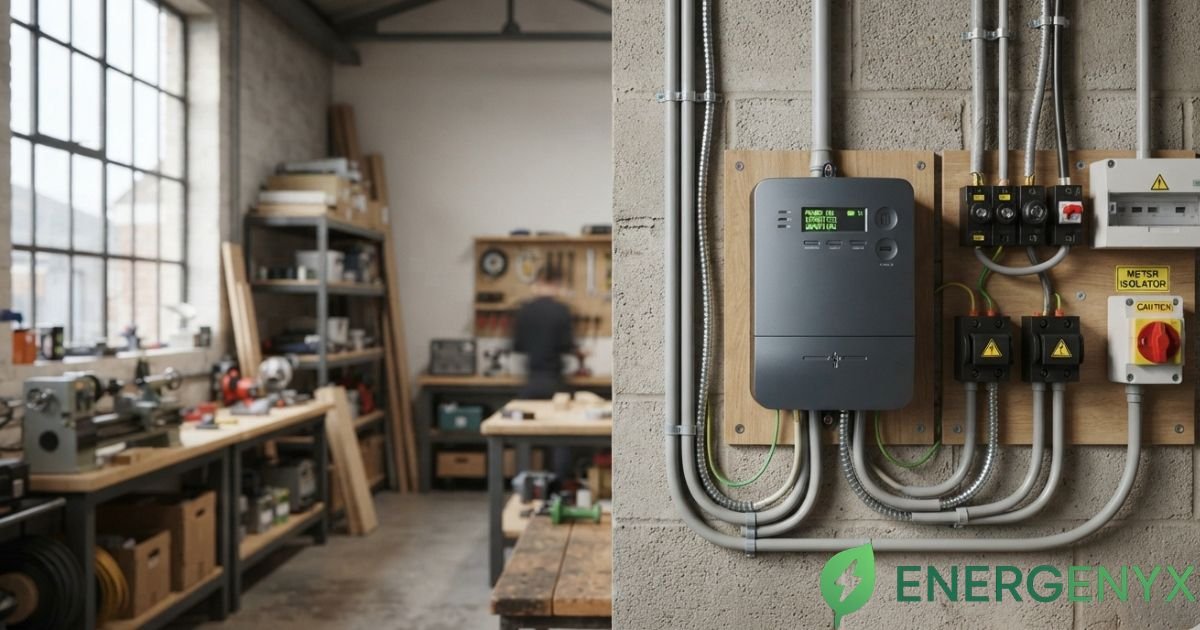
Smart meters are becoming an increasingly important part of the UK business energy market. For many businesses, they can make electricity billing more accurate, reduce the need for manual meter readings and provide useful information about when and how energy is being consumed.
But a smart meter is not simply a traditional electricity meter with a digital display. It can communicate meter readings to an energy supplier, allowing businesses to receive more accurate information about their electricity consumption.
For businesses considering a smart meter, it is important to understand how the technology works, what the potential benefits are, whether a business is eligible, and how smart metering can affect energy management.
In this guide, we explain everything businesses need to know about smart meters for business, including installation, billing, switching suppliers, costs, potential savings and common problems.
What Is a Smart Meter for Business?
A smart meter is an electricity meter that records how much energy a business uses and can automatically send meter readings to the energy supplier through a secure communications network.
Unlike a traditional meter, where a business may need to manually read the meter and submit the reading to its supplier, a smart meter can communicate usage information automatically.
Ofgem explains that smart meters can provide benefits such as more accurate billing and access to more flexible tariffs when they are operating in smart mode.
For a business, this can make it easier to understand electricity consumption and keep track of energy costs.
What Does a Smart Meter Measure?
A business electricity smart meter measures electricity consumption in kilowatt-hours (kWh).
The meter records how much electricity the premises uses and sends relevant readings to the supplier.
Depending on the meter, supplier and arrangements in place, businesses may also be able to access more detailed information about their consumption.
This can help answer questions such as:
- How much electricity is the business using?
- When is electricity consumption highest?
- Which operating periods use the most energy?
- Are electricity costs increasing?
- Could energy use be reduced during expensive periods?
How Do Business Smart Meters Work?
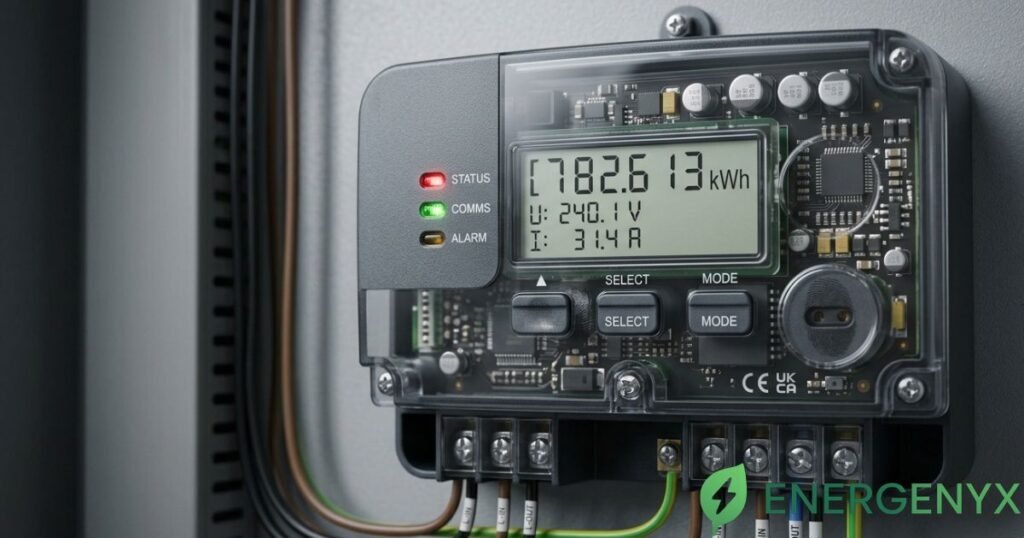
A smart meter performs two important functions.
First, it measures electricity consumption.
Second, it can communicate information about that consumption to the energy supplier.
This communication is what separates a smart meter from many traditional meters.
Instead of relying entirely on manual readings or estimates, the supplier can receive meter data electronically.
Ofgem says energy suppliers must take reasonable steps to ensure smart meters automatically send gas and electricity readings while operating in “smart mode.”
This can help reduce estimated billing and provide businesses with better visibility over their actual energy consumption.
What Are the Benefits of Smart Meters for Businesses?
Smart meters can provide several potential advantages for businesses.
1. More Accurate Electricity Bills
One of the biggest advantages is improved billing accuracy.
Traditional meters may require businesses to submit readings manually. If readings are missed, suppliers may use estimated consumption.
A smart meter can automatically communicate readings to the supplier, reducing reliance on estimates.
This can be particularly useful for businesses where electricity consumption changes significantly throughout the year.
Smart Energy GB says smart meters can help small businesses receive accurate bills based on actual energy consumption rather than estimates.
2. Less Need for Manual Meter Readings
With a functioning smart meter, businesses generally do not need to rely on regular manual readings in the same way they might with a traditional meter.
This can save time for business owners and employees.
Instead of remembering to locate the meter and submit a reading, the meter can communicate the information automatically.
3. Better Understanding of Energy Consumption
Energy data can help businesses identify patterns in electricity usage.
For example, a business may discover that:
- electricity consumption rises sharply during opening hours
- machinery continues consuming energy outside operating hours
- heating or cooling systems use significant amounts of electricity
- certain equipment creates unusually high consumption
- electricity usage remains high when the premises should be largely empty
These insights can help businesses investigate opportunities to improve energy efficiency.
4. Easier Energy Budgeting
Accurate consumption information can make it easier to monitor electricity costs.
Instead of relying on occasional bills, businesses can use available consumption information to understand their energy usage more closely.
This can support budgeting and financial planning.
5. Potential Access to Flexible Tariffs
Smart meters can also support access to certain tariffs that depend on when electricity is consumed.
The availability of tariffs depends on the supplier, meter configuration and business energy contract.
Smart Energy GB notes that smart-meter data can support more flexible tariff options.
Businesses should therefore compare the tariff itself rather than assuming that having a smart meter automatically means cheaper electricity.
6. Easier Identification of Unusual Consumption
Smart meter data can make unusual consumption patterns easier to spot.
For example, if a business normally closes at 6pm but electricity consumption remains unusually high throughout the night, the data may indicate that equipment has been left running.
Finding these patterns can potentially help businesses reduce unnecessary electricity use.
Do Smart Meters Save Businesses Money?
A smart meter does not automatically reduce the price of electricity.
This is an important distinction.
The meter measures and communicates electricity consumption. It does not automatically lower the supplier’s unit rate or standing charge.
However, smart meter data can help businesses identify opportunities to reduce energy consumption and potentially choose tariffs that better match their usage patterns.
For example, a business that understands when it consumes the most electricity may be able to change operating practices or investigate tariffs designed around different consumption periods.
The actual savings will depend on:
- electricity consumption
- business operating hours
- energy efficiency
- electricity tariff
- supplier
- contract terms
- meter configuration
- market prices
Therefore, a smart meter should be viewed as an energy management tool, rather than a guaranteed way to reduce electricity bills.
Smart Meter vs Traditional Business Electricity Meter
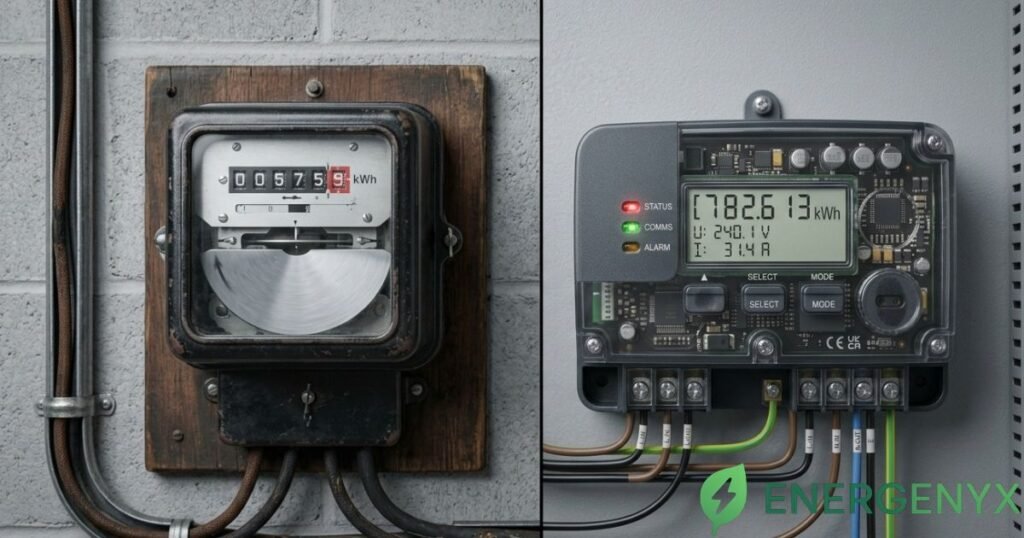
The key difference is how meter information is collected and communicated.
| Feature | Traditional Meter | Smart Meter |
|---|---|---|
| Measures electricity use | Yes | Yes |
| Digital display | Depends on meter | Yes |
| Automatic communication | Usually no | Yes, when operating in smart mode |
| Manual readings | Often required | Usually reduced |
| Estimated bills | Possible | Can be reduced |
| Usage information | More limited | Potentially more detailed |
| Flexible tariff opportunities | Depends on meter | May be available |
| Remote data communication | No | Yes |
The exact capabilities can vary depending on the meter, supplier and business premises.
Can Businesses Get a Smart Meter?
Whether a business can have a smart meter depends on factors including its premises, energy supplier, existing metering arrangement and technical requirements.
Microbusinesses have specific protections and arrangements within the smart meter rollout.
Ofgem’s smart-meter guaranteed standards state that designated premises of microbusinesses within the rollout must be offered a SMETS meter, subject to technical exemptions where installation is not possible.
A business that does not qualify as a microbusiness may have different metering options depending on its circumstances.
For larger businesses, advanced or half-hourly metering arrangements may be more relevant than a standard small-business smart meter.
What Is a Microbusiness?
The distinction is important because different energy rules and metering arrangements can apply depending on the size of a business.
Ofgem currently defines a microbusiness using criteria including:
- fewer than 10 employees or full-time equivalents and annual turnover or balance-sheet total of no more than £2 million; or
- annual electricity consumption of no more than 100,000 kWh; or
- annual gas consumption of no more than 293,000 kWh.
A business can potentially qualify as a microbusiness for one energy type but not another.
If you are unsure whether your business qualifies, check your energy usage and business information or ask your supplier.
Smart Meters and Half-Hourly Metering: What’s the Difference?
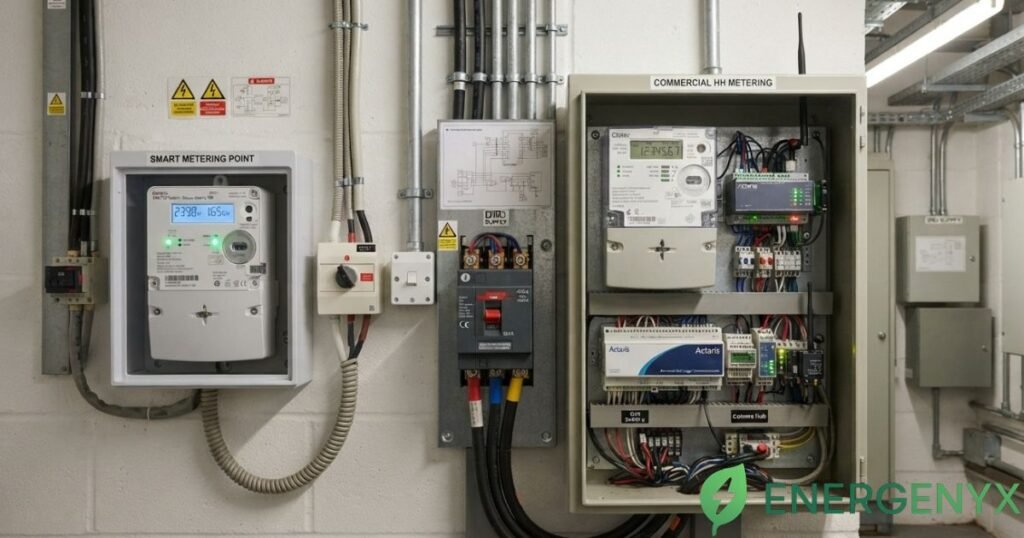
These terms are sometimes confused.
A smart meter describes a type of meter capable of communicating information electronically.
Half-hourly metering refers to electricity consumption being measured and settled using half-hourly data.
They are related concepts, but they are not necessarily interchangeable.
Ofgem explains that some businesses have electricity usage recorded every half hour as part of the settlement process.
For businesses with more complex electricity consumption, half-hourly metering can provide much more detailed information about when electricity is being used.
This can be particularly relevant to larger businesses and premises with significant electricity demand.
What Is an Advanced Meter?
Advanced meters are another form of business electricity metering.
They can provide more detailed information about electricity consumption and are particularly relevant to larger non-domestic consumers.
Ofgem distinguishes between smart metering, which is relevant to suppliers serving domestic and small business customers, and advanced metering arrangements relevant to larger non-domestic consumers.
Therefore, businesses should not assume that every commercial electricity meter with remote communications is the same type of meter.
Will a Smart Meter Stop Estimated Electricity Bills?
It can significantly reduce reliance on estimated readings, but it does not guarantee that every bill will always be perfect.
A functioning smart meter can automatically send readings to the supplier.
However, communication problems can occur.
Ofgem notes that a smart meter may stop operating in smart mode for reasons such as losing its connection with the supplier or problems following a supplier change.
If this happens, the meter can still accurately record electricity consumption, but the supplier may not receive the readings automatically.
In that situation, the business may need to provide manual readings or contact the supplier.
What Happens If a Smart Meter Stops Working in Smart Mode?
A smart meter can continue measuring electricity even if its communications connection is interrupted.
This means that losing smart functionality does not necessarily mean the meter has stopped recording consumption.
If the meter is not communicating correctly, contact the electricity supplier and ask them to investigate the problem.
Ofgem recommends contacting the supplier when a smart meter is not operating in smart mode.
Businesses should also continue keeping records of bills and meter readings while the issue is being investigated.
Can You Switch Business Electricity Supplier With a Smart Meter?
Yes, having a smart meter does not necessarily prevent a business from changing electricity supplier.
However, businesses should understand what happens to the meter after switching.
In some circumstances, a smart meter may temporarily stop operating in smart mode after a supplier change.
Ofgem notes that a smart meter can lose its connection after a supplier change and may need to be operated as a traditional meter until smart functionality is restored.
This does not mean the electricity supply itself will stop.
If you are switching business electricity supplier, ask the new supplier how it will support your existing meter before agreeing to a contract.
Can a Smart Meter Be Used With a Fixed Electricity Contract?
Yes.
A smart meter and an electricity tariff are separate things.
A business can have a smart meter while being on a fixed-rate business electricity contract.
A fixed-rate contract generally determines the price the business pays per unit of energy for the agreed contract period, subject to the contract’s specific terms.
The smart meter records consumption.
The contract determines how that consumption is priced.
Therefore, having a smart meter does not mean that your business must move onto a variable or time-of-use tariff.
Can Smart Meter Data Help With Energy Efficiency?
Yes.
One of the biggest practical benefits of smart metering is visibility.
Businesses cannot manage energy efficiently if they do not understand how they are using it.
For example, a restaurant could examine electricity consumption around refrigeration, cooking and opening hours.
An office could investigate heating, cooling, lighting and computer equipment.
A warehouse could examine lighting, machinery and charging equipment.
Once high-consumption periods have been identified, the business can investigate whether the usage is necessary.
This can turn energy data into practical energy-management decisions.
How Businesses Can Use Smart Meter Data
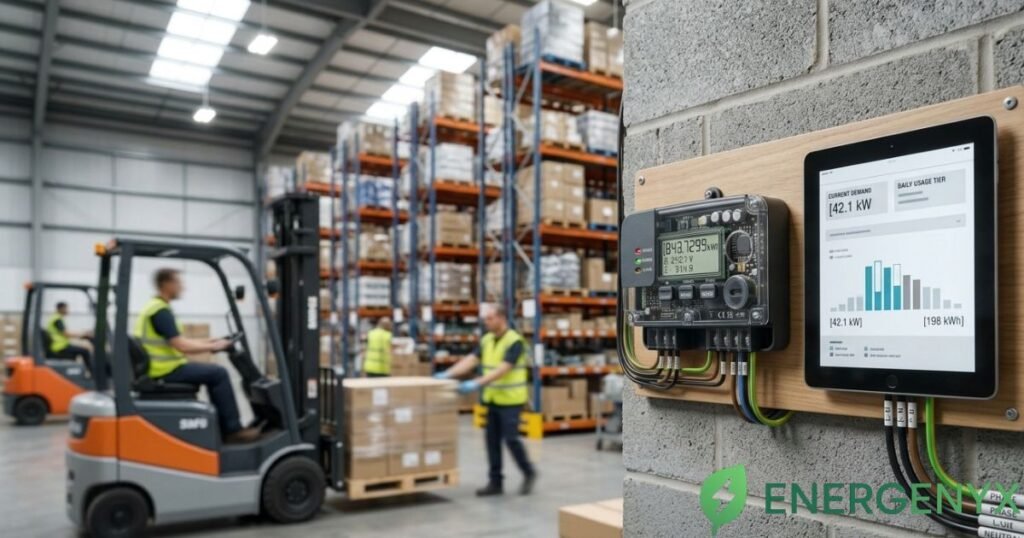
A business can use smart meter information to:
- Monitor electricity consumption.
- Identify unusually high usage.
- Compare consumption across different periods.
- Investigate energy use outside normal operating hours.
- Support energy-efficiency projects.
- Improve electricity budgeting.
- Review whether the current tariff suits its consumption pattern.
- Track the effect of energy-saving measures.
The more consistently a business monitors its consumption, the more useful the data can become.
Are Smart Meters Mandatory for Businesses?
There is no simple yes-or-no answer for every business.
Smart-meter obligations and available metering arrangements depend on the type and size of the business, premises, supplier and technical circumstances.
For microbusiness premises within the relevant rollout, suppliers have specific obligations concerning the offer of smart meters, subject to technical exemptions.
Larger businesses can have different metering requirements and may use advanced or half-hourly arrangements.
If your business is offered a new meter, ask the supplier what type of meter is being installed and how it will work with your electricity contract.
How Much Does a Business Smart Meter Cost?
The cost depends on the circumstances of the installation and the business’s metering arrangement.
Businesses should not assume that there is a standard nationwide installation price that applies to every commercial property.
Ask the supplier:
- Is installation free?
- Are there any upfront charges?
- Are there ongoing metering charges?
- Will the meter require additional equipment?
- Will the installation affect my current contract?
- Will I need to pay any removal or replacement costs?
Metering charges can form part of business energy costs. Ofgem lists Meter Operator Charges among the possible costs included in business energy arrangements.
Always check the specific commercial energy contract rather than relying on a general assumption.
What Happens During a Business Smart Meter Installation?
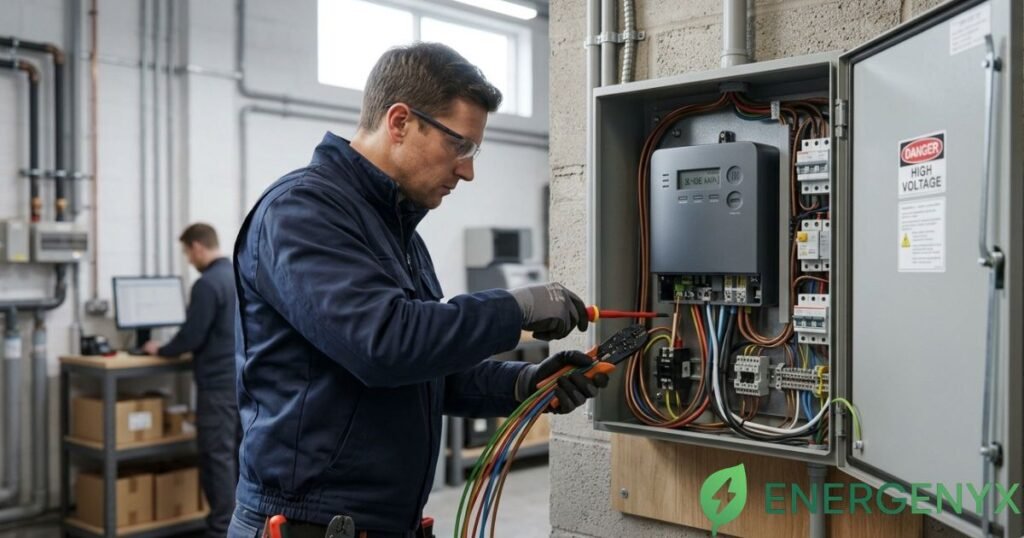
The exact process varies depending on the supplier and premises.
Generally, the supplier or appointed metering provider will:
- Confirm that the premises is suitable.
- Arrange an installation appointment.
- Inspect the existing meter and installation.
- Remove or replace the relevant meter where appropriate.
- Install and test the new meter.
- Confirm that the meter is communicating correctly.
- Provide information about the meter and readings.
For larger or more complex premises, additional technical requirements may apply.
Businesses should plan installations carefully so they do not interfere with important operations.
Can Smart Meters Help Prevent Business Electricity Back Billing?
They can help reduce some causes of billing problems, but they cannot eliminate every billing issue.
Because smart meters can automatically communicate consumption data, they can reduce reliance on estimated meter readings.
This can make billing more accurate.
However, billing problems can still occur because of:
- communication failures
- incorrect meter configuration
- supplier errors
- incorrect meter information
- contract issues
- meter faults
- account problems
This is particularly important because your existing business electricity back billing article explains how billing errors and inaccurate readings can result in unexpected charges.
A smart meter is therefore a useful tool, but businesses should still check their electricity bills.
What Should You Do If Your Smart Meter Is Not Working Properly?
If you notice a problem, start by identifying exactly what is wrong.
For example:
- Is the display working?
- Is electricity consumption being recorded?
- Is the supplier receiving readings?
- Does the bill show estimated readings?
- Did the problem begin after switching supplier?
- Has the supplier contacted you about the meter?
Then contact your electricity supplier.
Keep copies of relevant bills, meter readings and communications.
If the issue cannot be resolved, the appropriate complaint or dispute process will depend on the size of your business and the circumstances.
Smart Meters and Business Electricity Bills
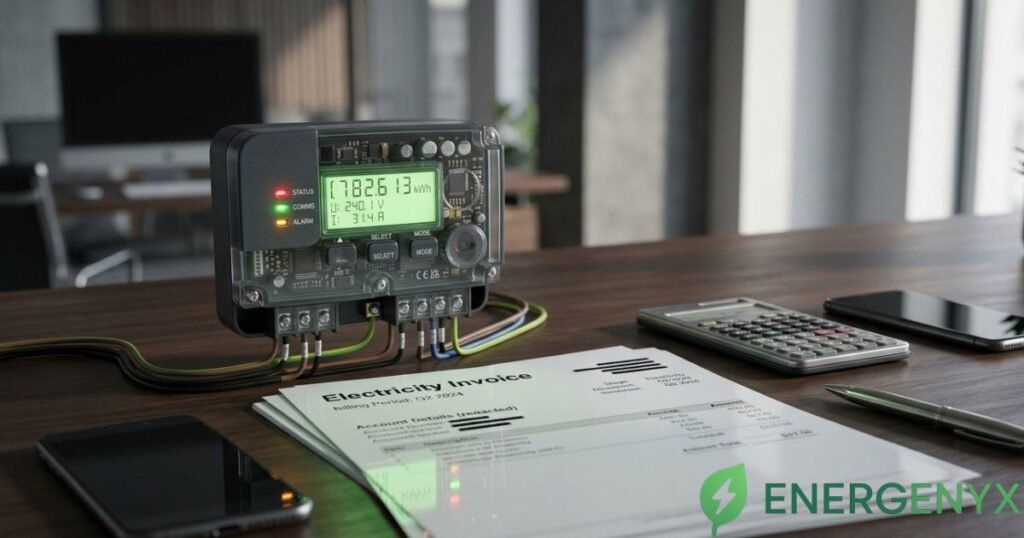
A business electricity bill can include several different costs.
Ofgem explains that business energy bills can include energy costs, network costs, taxes, government schemes and other supplier or metering costs. The exact details depend on factors including the business, contract, meter type and supplier.
A smart meter primarily affects how electricity consumption is measured and communicated.
It does not eliminate other components of a business electricity bill.
This is why businesses should look at the entire bill rather than assuming that installing a smart meter will automatically reduce the total amount payable.
Smart Meters for Different Types of Businesses
Smart meters can be useful across many sectors.
Offices
Offices can use consumption data to investigate lighting, heating, cooling and equipment usage.
Shops
Retail businesses can monitor electricity consumption associated with lighting, refrigeration, heating and operating hours.
Restaurants
Restaurants often have significant electricity demand from refrigeration, cooking equipment, ventilation and heating or cooling.
Warehouses
Warehouses can monitor lighting, machinery, charging equipment and other electrical systems.
Small Workshops
Workshops can investigate electricity consumption from machinery, tools, compressors and other equipment.
The benefits will vary depending on the business’s electricity consumption and operating pattern.
Smart Meter Checklist for Businesses
Before getting or replacing a business electricity meter, consider the following:
- What type of meter do I currently have?
- Is my business eligible for a smart meter?
- Does my supplier support the meter?
- Will installation cost anything?
- Will there be ongoing metering charges?
- Will the meter operate in smart mode?
- How will readings appear on my bills?
- Can I access detailed consumption information?
- Will the meter work if I switch supplier?
- Does my current electricity tariff suit my usage?
- Are there any contract conditions relating to the meter?
- Should I compare business electricity tariffs before renewing?
Smart Meter FAQs for Businesses
Can a business have a smart meter?
Yes, many businesses can have smart meters, although eligibility and available metering arrangements depend on the business, premises, supplier and technical circumstances.
Are smart meters free for businesses?
There is no universal answer for every commercial installation. Ask your supplier whether installation and any associated metering costs are covered under your particular arrangement.
Do smart meters reduce business electricity bills?
Not automatically. A smart meter does not itself reduce the electricity unit rate. However, accurate consumption data can help businesses identify energy-saving opportunities and potentially select tariffs that better match their usage.
Do smart meters give accurate electricity readings?
A functioning smart meter accurately records electricity consumption. When operating in smart mode, it can also automatically communicate readings to the supplier.
Can I switch business electricity supplier with a smart meter?
Yes, a business can generally switch supplier, subject to its contract and applicable rules. However, smart functionality may be affected temporarily following a supplier change.
What happens if my smart meter stops communicating?
The meter can continue recording electricity consumption, but the supplier may not receive readings automatically. Contact the supplier and ask them to investigate the communication problem.
Are smart meters better than traditional meters for businesses?
They can offer advantages such as automatic readings, better consumption information and reduced reliance on estimated billing. Whether they are the best option depends on the business’s size, consumption and metering requirements.
Can smart meters prevent back billing?
They can reduce some problems associated with estimated readings, but they cannot prevent every type of billing error. Businesses should continue checking their bills and keeping energy records.
Can large businesses use smart meters?
Larger businesses can have different metering requirements and may use advanced or half-hourly metering arrangements. The appropriate solution depends on the business’s electricity consumption and circumstances.
How to Get a Smart Meter for Your Business
If you are interested in installing a smart meter, the first step is to contact your current electricity supplier.
Ask them:
- whether your premises is eligible
- what type of smart meter is appropriate
- whether installation is available
- whether there are any charges
- how the meter will communicate
- how meter readings will appear on your bills
- whether the meter will continue working if you switch supplier
- whether your current contract needs to change
If you are approaching the end of your business electricity contract, it can also be a good time to review your wider energy requirements.
Instead of considering the meter separately, compare the meter, tariff, contract terms and supplier together.
Should Your Business Get a Smart Meter?
For many businesses, smart metering can be a useful upgrade.
The biggest potential benefits are not simply technological. They come from having better information about electricity consumption.
A business that receives accurate consumption information can make better decisions about:
- energy efficiency
- operating schedules
- electricity tariffs
- budgeting
- equipment usage
- supplier contracts
However, a smart meter is not a guaranteed money-saving device.
The biggest savings will generally come from using the information effectively and choosing an electricity contract that suits the businCess.
Click here to Compare Business Energy Options
Final Thoughts
Smart meters for business can make electricity management easier by providing more accurate consumption information and reducing reliance on manual meter readings.
For qualifying businesses, smart meters can also provide useful opportunities to monitor consumption and investigate energy-saving measures.
However, businesses should understand that a smart meter does not automatically mean cheaper electricity. The total cost of business energy still depends on the tariff, unit rate, standing charge, consumption, contract and other charges.
Before installing a smart meter or renewing your electricity contract, check what type of meter your business needs, understand the available options and compare the wider terms of your business energy deal.
If you are reviewing your current electricity costs or preparing for a contract renewal, Energenyx can help you understand your business energy options and compare suitable business electricity deals.
Information in this guide is intended for general information and should be checked against the latest guidance from Ofgem and your energy supplier before making a commercial energy decision.