

Introduction
Many UK businesses focus on finding the best energy tariff when signing a contract. However, not every business operates under a fixed or variable agreement.
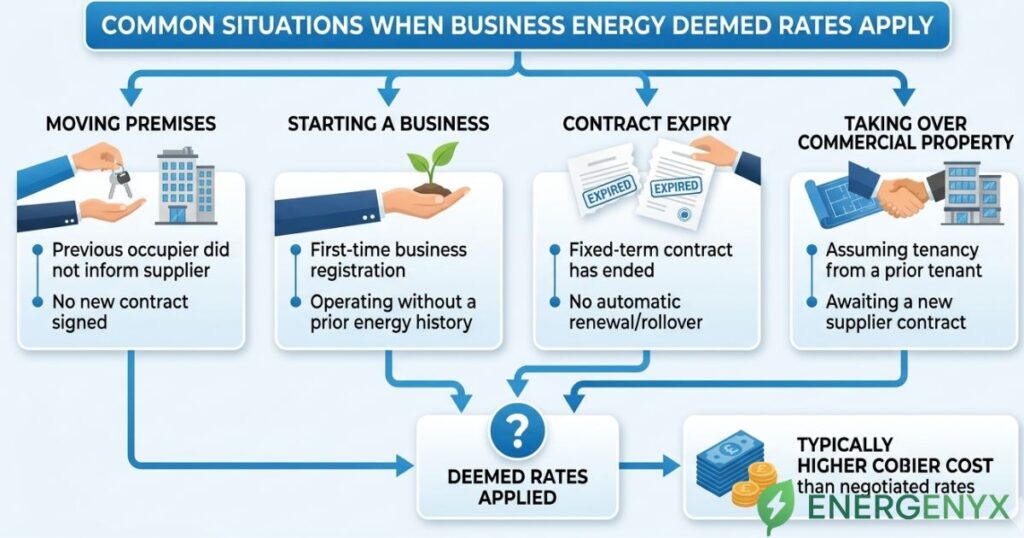
If you’ve recently moved into new premises, your previous contract has expired, or you’ve never agreed a formal business energy contract, you may be paying business energy deemed rates.
Deemed rates are often more expensive than negotiated business energy tariffs, meaning businesses can end up paying significantly more for their electricity and gas without realizing it. Confused.com energy guide highlights that prices on deemed contracts are, on average, 80% higher than negotiated rates.
Understanding what deemed rates are, when they apply, and how to move onto a competitive contract can help your business avoid unnecessary energy costs.
In this guide, we’ll explain everything you need to know about business energy deemed rates, including how they work, why suppliers use them, and the steps you can take to switch to a more suitable tariff.
Key Takeaways
Before exploring deemed rates in more detail, here are the most important points.
- Business energy deemed rates apply when no formal energy contract is in place.
- They commonly affect businesses moving into new premises or those whose previous agreement has ended.
- Deemed rates are usually more expensive than negotiated business energy contracts.
- Businesses can often reduce their energy costs by comparing suppliers and agreeing a new contract.
- Understanding your current tariff is the first step towards making informed energy decisions.
What Are Business Energy Deemed Rates?
A business energy deemed rate is the price your energy supplier charges when your business is receiving electricity or gas without having agreed a formal contract.
Rather than disconnecting your energy supply, the supplier continues providing electricity and gas under temporary pricing known as a deemed tariff.
This ensures your business continues operating without interruption while giving you time to arrange a suitable commercial energy contract.
Although deemed rates provide continuity of supply, they are generally among the most expensive business energy tariffs available.
For this reason, businesses should avoid remaining on a deemed tariff for longer than necessary.
Why Do Business Energy Deemed Rates Exist?
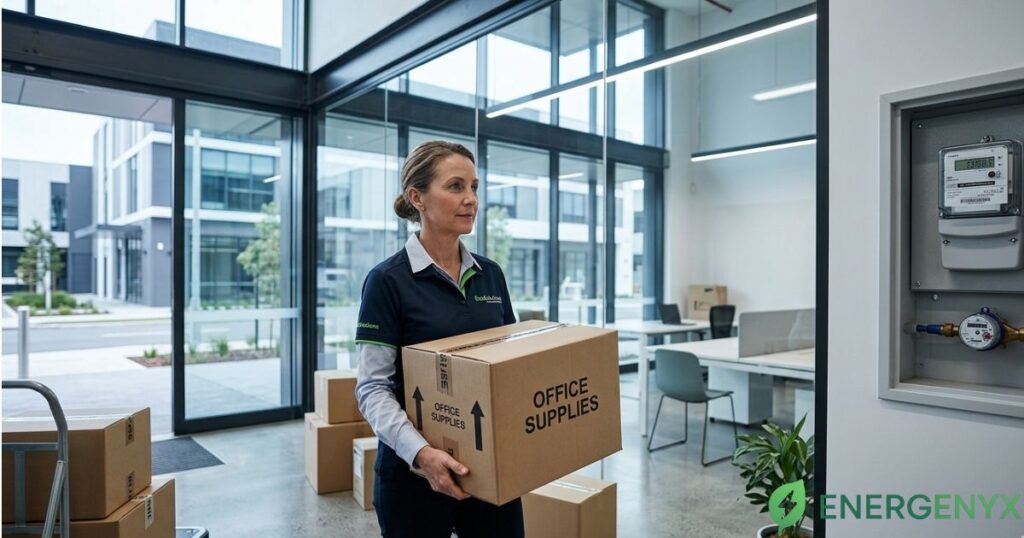
Energy suppliers have a legal responsibility to continue supplying electricity and gas to occupied business premises.
If a business has not agreed a contract, suppliers still need a way to charge for the energy being consumed.
Deemed rates provide this temporary pricing arrangement until a formal contract is put in place.
Without deemed tariffs, businesses moving into new premises could face unnecessary disruption to their energy supply.
Instead, the supplier keeps the energy flowing while allowing the new occupier time to arrange a commercial energy agreement.
When Do Business Energy Deemed Rates Apply?
There are several situations where your business may automatically be placed on deemed rates.
Understanding these scenarios can help you avoid unexpected energy costs.
Moving Into New Business Premises
One of the most common reasons businesses end up on deemed rates is moving into a new office, shop, warehouse, or commercial property.
When you move in, the existing energy contract usually belongs to the previous occupier and cannot simply be transferred to your business.
Until you arrange your own business energy contract, you’ll normally be supplied under your supplier’s deemed tariff.
This is why contacting the current supplier as soon as you move into new premises is essential.
Your Previous Contract Has Ended
If your existing agreement expires and you haven’t signed a new contract, your supplier may place your business on a deemed tariff or another out-of-contract arrangement, depending on the terms of your agreement.
This can lead to higher electricity and gas prices compared with negotiated contract rates.
Reviewing your options well before your renewal date can help you avoid this situation.
Starting a New Business
Many first-time business owners assume that business energy works like domestic energy.
However, commercial energy contracts operate differently.
If you open a new business without arranging a contract, you’ll usually begin receiving electricity and gas on deemed rates until you agree a formal tariff.
Understanding this process early can help you avoid paying higher prices during your first months of trading.
If you want to know the difference between business energy and domestic energy, you can click the highlighted link and read our guide.
Taking Over an Existing Business
If you purchase or lease a business premises from another company, the previous owner’s contract doesn’t automatically transfer to you.
Instead, you’ll usually be supplied on deemed rates until you arrange your own business energy agreement.
Providing accurate opening meter readings and contacting the supplier promptly can help ensure your bills are accurate from the start.
How Do Business Energy Deemed Rates Work?
Deemed rates are set by your current energy supplier and typically include:
- A unit rate for each kilowatt-hour (kWh) of electricity or gas used.
- A daily standing charge.
- Applicable taxes and government levies.
Unlike fixed contracts, deemed tariffs are not individually negotiated for your business.
Instead, suppliers publish their deemed rates, which apply to businesses that receive energy without an agreed contract.
Because these tariffs are intended as temporary arrangements, they are often significantly higher than the prices available through negotiated business energy contracts.
For this reason, businesses should compare available tariffs as soon as possible rather than remaining on deemed rates indefinitely.
Why Are Business Energy Deemed Rates Usually More Expensive?
One of the first things many businesses notice after receiving a bill on a deemed tariff is the higher cost.
Compared with negotiated business energy contracts, deemed rates are generally more expensive because they are designed as a temporary arrangement rather than a long-term pricing option.
Since the supplier hasn’t agreed a fixed contract with your business, they take on greater uncertainty. To account for this, deemed tariffs often include higher unit rates and standing charges than contract-based tariffs.
For businesses with high energy consumption, remaining on a deemed tariff for several months can result in significantly higher operating costs.
This is why arranging a formal business energy contract as soon as possible is usually the most cost-effective approach.
While standard fixed rates sit lower, money super market business energy market analysis shows average out-of-contract electricity rates running around 38p per kWh.
Business Energy Deemed Rates vs Out-of-Contract Rates
The terms deemed rates and out-of-contract rates are often used interchangeably, but they don’t always mean the same thing.
Understanding the difference can help you better manage your energy costs.
What Are Deemed Rates?
Deemed rates usually apply when:
- You move into new business premises.
- You begin receiving electricity or gas without agreeing a contract.
- There is no existing agreement between your business and the supplier.
In these situations, the supplier continues providing energy while charging its published deemed tariff.
Example Scenario
Sarah opens a café in Manchester. She takes over an existing premises and starts trading immediately without arranging a new energy contract. Her supplier continues supplying electricity and gas on deemed rates. After comparing business energy quotes through Energenyx, she switches to a fixed contract, giving her more predictable energy costs and avoiding extended time on a higher-priced temporary tariff.
What Are Out-of-Contract Rates?
Out-of-contract rates generally apply when:
- Your previous business energy contract has ended.
- You remain with the same supplier.
- You haven’t agreed a new contract or switched suppliers.
Depending on the supplier, out-of-contract rates may also be higher than standard contract prices.
Because terminology and billing practices can vary between suppliers, it’s always worth checking your contract and contacting your supplier if you’re unsure which tariff you’re on.
Business Energy Deemed Rates vs Fixed Contracts
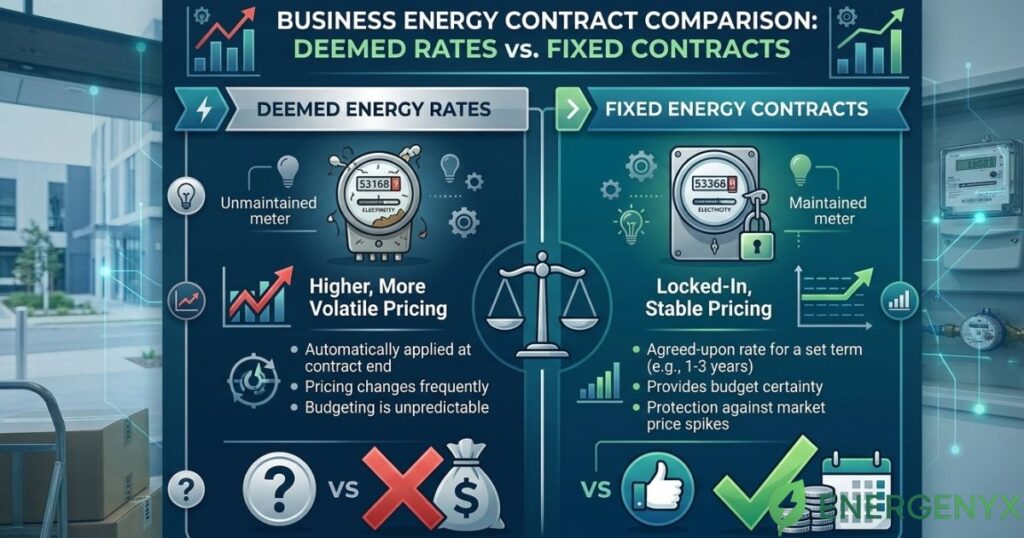
The table below compares the main differences between a deemed tariff and a negotiated fixed business energy contract.
| Feature | Business Energy Deemed Rate | Fixed Business Energy Contract |
|---|---|---|
| Contract Required | No | Yes |
| Unit Rate | Usually higher | Agreed before the contract starts |
| Standing Charge | Often higher | Agreed in advance |
| Price Stability | Varies by supplier | Fixed for the contract term |
| Ability to Compare Suppliers | Yes | Yes (at renewal or switch) |
| Best Used For | Temporary supply only | Long-term business energy management |
For most businesses, a fixed contract offers greater price certainty and is usually more cost-effective than remaining on a deemed tariff.
How Much Could Deemed Rates Cost Your Business?
The exact cost depends on factors such as:
- Your electricity and gas consumption.
- Your business location.
- Your meter type.
- The supplier’s pricing structure.
- Current market conditions.
For example, a small office with low electricity usage may notice only a modest increase in costs.
However, businesses with higher energy demands—such as restaurants, hotels, manufacturers, and warehouses—could see a much larger difference if they remain on deemed rates for an extended period.
Even a small increase in the unit rate can have a noticeable impact on annual energy costs when your business consumes thousands of kilowatt-hours each year.
How Can You Tell If You’re on a Deemed Tariff?
Many businesses don’t realise they’re paying deemed rates until they receive their first bill.
Here are some signs that you may be on a deemed tariff.
You Recently Moved Into New Premises
If you’ve taken over a new commercial property and haven’t signed an energy contract, you’re likely receiving electricity and gas on a deemed tariff.
You can review current averages via uswitch commercial electricity rate trackers to see where your business size falls.
You Never Agreed a Business Energy Contract
If you haven’t actively chosen a supplier or accepted a commercial energy agreement, it’s worth checking whether you’re on a deemed rate.
Your Energy Bills Are Higher Than Expected
Unexpectedly high energy costs can sometimes indicate that you’re paying deemed or out-of-contract rates.
Although high bills can have several causes, it’s worth reviewing your tariff if your costs seem unusually high.
Your Bill Mentions a Deemed or Out-of-Contract Tariff
Some suppliers clearly identify the tariff type on business energy bills.
Review your latest invoice carefully.
If you’re unsure what the tariff means, contact your supplier and ask for clarification.
How to Avoid Paying Business Energy Deemed Rates
The good news is that deemed tariffs are usually temporary.
There are several steps businesses can take to move onto a more competitive contract.
Arrange a Contract as Soon as You Move In
If you’re moving into new business premises, contact the current energy supplier immediately.
Providing your opening meter readings and business details allows the supplier to set up your account correctly while you compare long-term options.
Compare Business Energy Suppliers
Rather than accepting the first tariff offered, compare quotes from multiple suppliers.
Different suppliers may offer different prices, contract lengths, and tariff options based on your business’s energy usage and requirements.
Understand Your Energy Usage
Knowing your annual electricity and gas consumption makes it easier to compare like-for-like quotes.
This information is usually available on previous business energy bills.
Review Your Contract Before Renewal
If your current agreement is approaching its end date, start reviewing your options several months in advance.
Planning ahead reduces the likelihood of moving onto expensive out-of-contract or deemed pricing.
Expert Tip
If you’ve recently moved into new premises, don’t assume the existing tariff is suitable for your business.
Taking just a little time to compare business energy contracts could help reduce your operating costs and ensure you’re paying a competitive rate from the beginning.
Can You Switch from Business Energy Deemed Rates?
Yes. In most cases, businesses can move from a deemed tariff to a negotiated business energy contract.
Switching to a formal contract is often one of the quickest ways to reduce energy costs, especially if your business has been paying deemed rates for several weeks or months.
The process is usually straightforward.
You’ll typically need to:
- Confirm your business details.
- Provide your business address.
- Supply your MPAN (electricity) or MPRN (gas) number if available.
- Submit recent meter readings.
- Compare available tariffs.
- Choose a supplier and contract that meets your needs.
Once your new agreement is in place, your supplier will arrange the switch with minimal disruption to your electricity or gas supply.
Want to know more about business energy switching process read our guide by clicking the highlighted link.
How Long Can You Stay on a Deemed Tariff?
There isn’t a fixed legal time limit for how long a business can remain on deemed rates.
However, staying on a deemed tariff for longer than necessary is rarely a good financial decision.
Because deemed rates are generally higher than negotiated business energy contracts, the longer you remain on them, the more your business could spend on electricity and gas.
If you’ve recently moved into new premises or started a new business, arranging a formal energy contract as soon as possible is usually the most cost-effective option.
What Information Do You Need Before Comparing Business Energy Quotes?
Having the right information available can make the comparison process quicker and more accurate.
Before requesting quotes, try to gather:
- Your business name and address.
- Recent electricity and gas bills.
- Annual energy consumption (kWh), if known.
- Your MPAN (electricity) number.
- Your MPRN (gas) number.
- Current meter readings.
- The date you moved into the premises (if applicable).
Providing accurate information helps suppliers prepare quotes that reflect your business’s actual energy requirements.
Common Mistakes Businesses Make with Deemed Rates
Many businesses unknowingly remain on deemed tariffs for longer than necessary.
Here are some of the most common mistakes to avoid.
Assuming the Previous Owner’s Contract Still Applies
When you move into commercial premises, the previous occupier’s contract does not automatically transfer to your business.
Until you arrange your own agreement, you’re likely to be billed on deemed rates.
Delaying Contact with the Energy Supplier
Some businesses wait several weeks before informing the supplier that they’ve taken over a property.
This can delay account setup and make resolving billing issues more complicated.
Contacting the supplier as soon as you move in helps avoid unnecessary confusion.
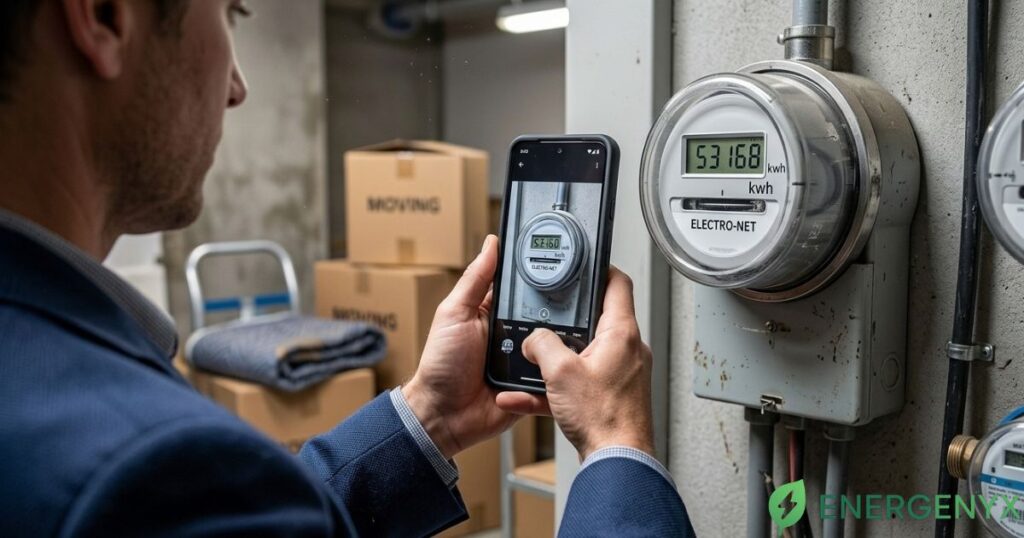
Not Taking Opening Meter Readings
Failing to record opening meter readings can make it difficult to calculate exactly how much energy your business has used.
Always take photographs of your electricity and gas meters when you move into new premises.
This provides clear evidence if any billing queries arise later.
Staying on a Deemed Tariff Too Long
Because businesses are often busy with day-to-day operations, energy contracts may not be a priority.
However, remaining on deemed rates for several months could result in avoidable energy costs.
Scheduling time to compare suppliers soon after moving in can help reduce long-term expenses.
How Energenyx Helps Businesses Compare Energy Contracts
At Energenyx, we understand that navigating business energy contracts can feel complicated—especially if you’ve recently moved premises or discovered you’re paying deemed rates.
Our comparison service helps UK businesses:
- Compare commercial electricity and gas tariffs.
- Explore fixed and variable contract options.
- Review quotes from trusted UK suppliers.
- Understand contract terms before signing.
- Find tariffs that suit their energy usage and budget.
Instead of contacting multiple suppliers individually, you can compare your options in one place and make an informed decision with confidence.
Frequently Asked Questions
Are business energy deemed rates more expensive?
In many cases, yes.
Deemed tariffs are generally intended as temporary arrangements and are often priced higher than negotiated business energy contracts.
Can I switch suppliers if I’m on a deemed tariff?
Yes.
Most businesses can switch to a new supplier after agreeing a suitable business energy contract.
The exact process may vary depending on your circumstances and supplier.
Do deemed rates affect both electricity and gas?
Yes.
Businesses can be placed on deemed tariffs for electricity, gas, or both, depending on the services supplied to the premises.
Are deemed rates the same across all suppliers?
No.
Each supplier sets its own deemed tariff pricing.
This is one reason why comparing business energy suppliers can be worthwhile.
How can I check if I’m on a deemed tariff?
Review your latest business energy bill or contact your supplier directly.
If you recently moved into commercial premises without arranging a contract, there’s a possibility you’re currently paying deemed rates.
Final Thoughts
Business energy deemed rates play an important role in ensuring that businesses continue receiving electricity and gas even when no formal contract is in place.
However, while they provide continuity of supply, they are generally intended as a temporary solution rather than a long-term tariff.
If your business is currently paying deemed rates, taking the time to compare business energy contracts could help reduce your energy costs and provide greater certainty over future bills.
Understanding your current tariff, reviewing your options, and arranging a suitable contract are simple steps that can make a meaningful difference to your operating expenses.
Ready to Move Off a Deemed Tariff?
If your business is paying deemed rates or you’re unsure which tariff you’re on, now is a great time to review your options.
Energenyx helps UK businesses compare commercial electricity and gas tariffs from trusted suppliers, making it easier to find a contract that matches your business needs.