

Introduction
Electricity is one of the most important operating costs for many UK businesses.
Whether you run a small office, retail shop, restaurant, warehouse, hotel, or manufacturing facility, the amount you pay for electricity can have a direct impact on your operating expenses and profitability.
However, there is no single business electricity price that applies to every company.
Commercial electricity rates can vary considerably depending on factors such as annual consumption, business size, location, meter type, contract structure, supplier, wholesale market conditions, and the terms of the agreement.
Unlike domestic electricity customers, businesses generally have different commercial contracts and may have more flexibility in how they purchase their energy.
Understanding how business electricity prices work is therefore important before renewal of a contract or switching electricity supplier.
In this guide, we’ll explain how business electricity prices are calculated, what affects commercial electricity rates, how unit rates and standing charges work, why prices change, and how owners in UK can compare business energy pricing options.
Key Takeaways
Before looking at business electricity prices in detail, here are the most important points:
- There is no single electricity rate for all UK businesses.
- Business electricity prices depend on factors including consumption, contract type, supplier and market conditions.
- The unit rate is the price charged for each unit of electricity consumed.
- The standing charge is a fixed daily charge associated with the electricity supply.
- Larger businesses may receive different pricing structures from smaller businesses.
- Half-hourly electricity supplies can involve more complex procurement and pricing arrangements.
- A lower unit rate does not necessarily mean a lower overall electricity bill.
- Businesses should compare the complete cost and contract terms rather than focusing on one headline figure.
- Reviewing your options before your existing contract expires can give you more time to make an informed decision.
How Much Does Business Electricity Cost in the UK?
The cost of business electricity varies from one organisation to another.
Two businesses operating in the same town could pay completely different rates because their electricity consumption, meter arrangements, contract terms and purchasing requirements may be different.
For example, a small office that uses electricity primarily for computers, lighting and heating will have a very different consumption profile from a manufacturing facility operating energy-intensive machinery.
Some of the main factors affecting the price include:
- Annual electricity consumption
- Business size
- Meter type
- Location
- Contract length
- Fixed or flexible procurement
- Supplier
- Wholesale market conditions
- Payment terms
- Network and other industry charges
- Timing of the contract purchase
This is why businesses should be cautious about relying on a single “average” electricity price when estimating their future costs.
An average can provide general context, but your actual commercial electricity quotation will depend on the circumstances of your business.
What Is a Business Electricity Unit Rate?

The unit rate is the amount your business pays for each unit of electricity it consumes.
Electricity consumption is normally measured in kilowatt-hours (kWh).
For example, if a business uses 1,000 kWh during a billing period and its electricity unit rate is 25 pence per kWh, the energy consumption component would be:
1,000 kWh × £0.25 = £250
This is a simplified example because an actual electricity bill can contain additional charges, taxes and other costs.
The unit rate is nevertheless one of the most important figures to understand when comparing business electricity contracts.
What Is a Business Electricity Standing Charge?
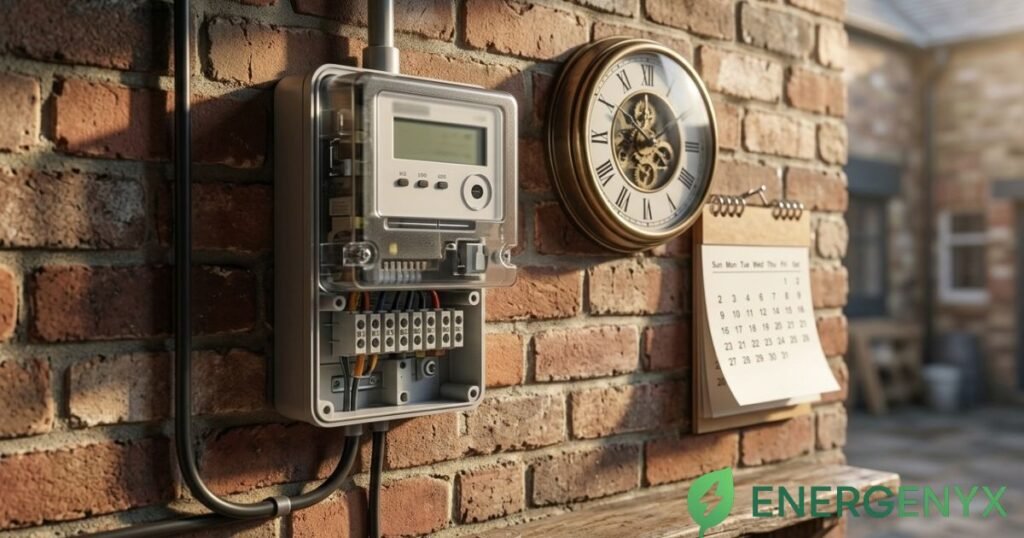
The standing charge is a fixed daily charge associated with the electricity supply.
Unlike the unit rate, the standing charge does not depend directly on how many units of electricity the business consumes.
For example, suppose a business has:
- Electricity unit rate: 25p per kWh
- Standing charge: £1.50 per day
The business would pay the standing charge whether it uses a large amount of electricity or relatively little.
Over a 30-day period:
£1.50 × 30 = £45
This would be added to the other applicable charges on the bill.
When comparing electricity contracts, businesses should therefore consider both the unit rate and standing charge.
Why You Shouldn’t Compare Unit Rates Alone
A common mistake is to look at two electricity quotations and choose the one with the lowest unit rate.
That can be misleading.
Consider two hypothetical offers:
| Supplier A | Supplier B | |
|---|---|---|
| Unit rate | 24p/kWh | 23p/kWh |
| Standing charge | £2.00/day | £3.50/day |
Supplier B has the lower unit rate, but its standing charge is higher.
Depending on the business’s electricity consumption and contract terms, the overall cost could therefore be different from what the headline unit rates suggest.
Businesses should compare the total expected cost, not just one number.
How Are Business Electricity Bills Calculated?
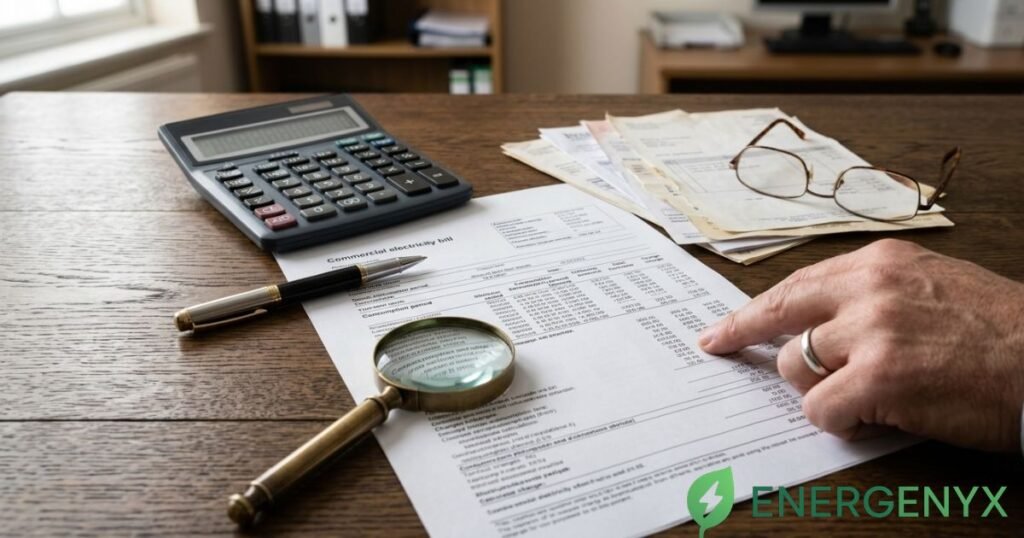
A simplified commercial electricity bill can be thought of as consisting of several components.
Electricity consumption
This is the amount of electricity the business uses during the billing period.
Unit rate
The price charged per kWh.
Standing charge
The daily fixed charge.
Network-related charges
Costs associated with transporting electricity through the electricity network can form part of the overall cost.
Taxes and government charges
Applicable taxes and other charges may also appear on the bill.
VAT
VAT treatment can depend on the circumstances of the business and its energy use.
The exact structure of a business electricity bill can therefore be more complicated than simply:
Electricity used × unit price
This is why businesses should examine their complete quotation and contract terms before making a decision.
What Factors Affect Business Electricity Prices?
1. Electricity Consumption
The amount of electricity a business uses is one of the most important factors affecting its energy requirements.
A company consuming 50,000 kWh per year has a very different purchasing profile from one consuming several million kWh.
Consumption can also affect the type of procurement strategy that makes sense for the business.
2. Wholesale Energy Prices
Wholesale electricity market conditions influence the cost of supplying electricity.
Wholesale prices can change because of factors such as:
- Fuel prices
- Supply and demand
- Weather
- Generation availability
- International energy markets
- Network conditions
- Geopolitical events
Suppliers take these market conditions into account when pricing energy contracts.
3. Contract Type
The type of contract can influence how a business’s electricity costs are determined.
For example, a fixed-price contract may provide greater price certainty for a defined period.
A flexible procurement strategy may provide a different approach to purchasing energy and managing market exposure.
The appropriate option depends on the organisation’s requirements and risk tolerance.
4. Contract Length
Businesses may have access to contracts of different durations.
A longer contract can provide greater price certainty, while a shorter arrangement may offer greater flexibility.
However, the best contract length depends on the business and market conditions at the time of procurement.
5. Meter Type
The type of electricity meter can affect how the supply is managed and priced.
For example, businesses with half-hourly electricity meters can have detailed consumption data available for their electricity supply.
This can be particularly relevant for larger businesses with substantial or complex electricity consumption.
6. Business Location
The location of a business can influence certain components of its electricity costs because network-related charges can vary depending on geographical area and other supply characteristics.
A business should therefore use pricing relevant to its actual supply rather than relying on rates advertised for another location.
7. Payment Terms
Suppliers may consider payment arrangements when establishing commercial contracts.
Businesses should understand whether the quoted price assumes:
- Direct debit
- Monthly payments
- Credit terms
- Other payment arrangements
Always review the payment conditions before signing a contract.
Business Electricity Prices for Small Businesses
Small businesses often have relatively straightforward electricity requirements.
Examples include:
- Small offices
- Independent shops
- Professional practices
- Small cafés
- Small restaurants
- Salons
- Workshops
However, “small business” does not necessarily mean low electricity consumption.
A restaurant with commercial refrigeration and cooking equipment may consume significantly more electricity than a small office.
When comparing prices, therefore, businesses should focus on their actual consumption rather than simply their employee count or premises size.
Business Electricity Prices for Large Businesses
Large businesses can have significantly more complicated electricity requirements.
For example, a large organisation may operate:
- Multiple offices
- Warehouses
- Factories
- Retail locations
- Hotels
- Distribution centres
These businesses may consume substantial quantities of electricity and may therefore require more sophisticated procurement strategies.
Large electricity users may also have access to more detailed consumption data, particularly where half-hourly metering is involved.
For these organizations, comparing business electricity prices may involve analyzing consumption profiles, contract structures, market exposure and procurement strategies rather than simply requesting a basic tariff.
Business Electricity Prices by Business Type
Different industries have very different electricity consumption patterns.
Offices
Office electricity consumption typically comes from:
- Lighting
- Computers
- Heating
- Cooling
- Servers
- Kitchen equipment
The size of the office, operating hours and heating/cooling requirements can significantly affect consumption.
Retail Stores
Retail electricity usage may include:
- Lighting
- Refrigeration
- Heating and cooling
- Security systems
- Point-of-sale equipment
- Signage
Long opening hours can increase total electricity consumption.
Restaurants
Restaurants can have substantial electricity requirements because of:
- Refrigeration
- Freezers
- Cooking equipment
- Ventilation
- Lighting
- Heating and cooling
- Dishwashing equipment
Consumption can vary significantly depending on the size and operating hours of the restaurant.
Warehouses
Warehouse electricity costs can depend on:
- Lighting
- Refrigeration
- Heating
- Forklift charging
- Automation
- Conveyor systems
- Operating hours
A temperature-controlled warehouse can have significantly different energy requirements from a basic storage facility.
Manufacturing
Manufacturing businesses can be among the most electricity-intensive commercial users.
Electricity may be required for:
- Production machinery
- Motors
- Compressors
- Heating systems
- Ventilation
- Cooling
- Automation
For energy-intensive businesses, electricity procurement can therefore be a major strategic consideration.
Fixed vs Flexible Business Electricity Prices
One of the biggest decisions a business may face when purchasing electricity is whether to choose a fixed-price contract or a more flexible procurement approach.
There isn’t a universally correct option. The right choice depends on the business’s consumption, budget, risk tolerance and procurement strategy.
Fixed Business Electricity Prices
A fixed-price contract generally means the agreed energy unit rate is fixed for a specified contract period.
This can provide businesses with greater certainty when budgeting.
For example, if a company agrees a fixed electricity unit rate for a defined period, it can have greater visibility over the energy component of its future bills.
Potential advantages
- Greater price certainty
- Easier budgeting
- Reduced exposure to some wholesale market movements
- Simpler procurement for many smaller businesses
Potential disadvantages
- The business may not benefit if market prices fall
- Early termination can be subject to contractual conditions
- The quoted rate may include allowances for future market risk
Businesses should always read the full contract rather than assuming that every charge is fixed simply because the contract is described as “fixed.”
Flexible Business Electricity Prices
Flexible energy procurement takes a different approach.
Rather than necessarily purchasing the entire energy requirement at one fixed price and one point in time, a business may use a structured purchasing strategy.
This approach can be more relevant to larger organisations with substantial electricity consumption.
A flexible strategy may involve:
- Purchasing energy in stages
- Monitoring market conditions
- Forecasting consumption
- Managing purchasing risk
- Using specialist procurement support
Potential advantages
- Greater procurement flexibility
- Ability to respond to market conditions
- Potential to spread purchasing decisions over time
- More control for sophisticated energy buyers
Potential disadvantages
- Greater complexity
- More active management
- Greater exposure to market movements
- Potential requirement for specialist expertise
Businesses considering flexible procurement should understand both the potential benefits and risks before entering an arrangement.
Why Do Business Electricity Prices Change?
Business electricity prices can change because the underlying cost of supplying electricity changes.
Wholesale energy markets are influenced by numerous factors. Wholesale energy markets are influenced by numerous factors, including electricity supply and demand, generation availability and wider system conditions. The National Energy System Operator (NESO) provides information and data relating to Great Britain’s electricity system, including electricity demand and generation.
Supply and Demand
When electricity demand increases or available generation decreases, market prices can be affected. Businesses interested in understanding wider electricity-system conditions can also refer to NESO’s electricity demand and system data.
For example, periods of extreme weather can change electricity demand.
Gas Prices
Gas generation can influence electricity markets because gas-fired power stations play an important role in Great Britain’s electricity generation mix.
Changes in gas prices can therefore have an effect on wholesale electricity prices.
Renewable Generation
Wind and solar generation can influence electricity market conditions.
When renewable generation is high, the amount of electricity available from those sources increases.
When renewable generation is lower, other generation sources may play a greater role.
International Events
Energy markets can also be affected by international developments.
Changes in global fuel supply, geopolitical events, trade conditions and other factors can influence wholesale energy prices.
This is one reason why business electricity prices can change significantly over time.
Why Your Business Electricity Price May Differ From Another Business
It’s common for business owners to compare their electricity rate with another company and wonder why they pay more.
However, two businesses can have completely different electricity contracts.
For example:
Business A
- Small office
- Low annual consumption
- Standard meter
- Simple procurement requirements
Business B
- Manufacturing facility
- High annual consumption
- Half-hourly meter
- Complex procurement requirements
Even if both businesses are located in the same region, their electricity pricing can be very different.
Other factors such as contract timing, supplier, payment terms and market conditions can also affect the quotation.
What Is the Average Business Electricity Price?
Businesses often search for the “average business electricity price.”
While average figures can be useful for general research, they should be treated carefully.
There is no single rate that accurately represents every UK business.
A meaningful comparison should consider:
- Business size
- Annual consumption
- Meter type
- Contract type
- Location
- Supplier
- Contract duration
- Market conditions
- Additional charges
For this reason, businesses should use their own consumption and supply information when seeking an actual quotation.
An average price can provide a rough benchmark, but it should not be treated as a guaranteed rate.
How to Compare Business Electricity Prices

Comparing business electricity suppliers properly involves more than finding the lowest advertised unit rate.
Step 1: Check Your Current Contract
Before looking for a new deal, establish:
- Current supplier
- Contract end date
- Current unit rate
- Standing charge
- Contract type
- Annual consumption
Step 2: Review Your Electricity Consumption
Look at your recent bills and determine how much electricity your business uses.
If you have half-hourly metering, detailed consumption data can provide additional insight.
Step 3: Understand Your MPAN
Your MPAN identifies your electricity supply point and may be required when requesting quotations.
Make sure you provide the correct supply information.
Step 4: Compare Multiple Options
Don’t automatically accept the first quotation.
Compare offers from appropriate suppliers or through a reputable energy comparison or procurement service.
Step 5: Compare the Total Cost
Look beyond the unit rate.
Consider:
- Unit rates
- Standing charges
- Contract length
- Payment terms
- Applicable taxes
- Other charges
- Contract conditions
Step 6: Check Contract Terms
A cheap headline price isn’t necessarily a good deal if the contract contains conditions that don’t suit your business.
Check cancellation terms, renewal arrangements and any other important provisions.
When Should a Business Compare Electricity Prices?
Ideally, businesses should start reviewing their electricity arrangements before the existing contract expires.
Leaving procurement until the last minute can reduce the amount of time available to compare options and understand the market.
A forward-planning approach gives businesses more time to:
- Review current consumption
- Gather supply information
- Understand contract expiry dates
- Request quotations
- Compare suppliers
- Review contract terms
- Make an informed decision
The exact timing will depend on the contract and supplier arrangements.
How to Get a Better Business Electricity Deal
There are several practical steps a business can take to improve its chances of securing a suitable electricity arrangement.
Understand Your Consumption
You can’t effectively manage your business energy costs without knowing how much electricity you’re using.
Review your historical consumption and identify significant changes.
Avoid Last-Minute Renewals
Give yourself enough time to research the market and compare available options.
Compare the Complete Contract
Don’t judge an electricity contract using the unit rate alone.
Calculate or assess the expected overall cost.
Improve Energy Efficiency
Reducing unnecessary consumption can lower electricity costs regardless of the tariff you pay.
Consider reviewing:
- Lighting
- Heating
- Cooling
- Refrigeration
- Machinery
- Office equipment
- Operating schedules
Consider Your Procurement Strategy
A small business may prefer the simplicity of a fixed contract, while a larger organisation may consider more sophisticated procurement.
The strategy should match the business’s size, risk tolerance and energy requirements.
How Energy Efficiency Can Reduce Electricity Costs

Reducing the amount of electricity a business consumes can be one of the most direct ways to lower energy expenditure.
For example, businesses can investigate:
LED Lighting
Replacing inefficient lighting with LED technology can reduce electricity consumption associated with lighting.
Heating and Cooling
Improving temperature controls and operating schedules can reduce unnecessary energy use.
Equipment
Older or inefficient equipment may consume more electricity than newer alternatives.
Standby Consumption
Equipment that remains switched on outside operating hours can contribute to unnecessary consumption.
Energy Monitoring
Detailed energy data can help businesses identify where electricity is being consumed.
For larger businesses, half-hourly data can be particularly useful for analysing consumption patterns.
How Half-Hourly Meters Can Affect Business Electricity Costs
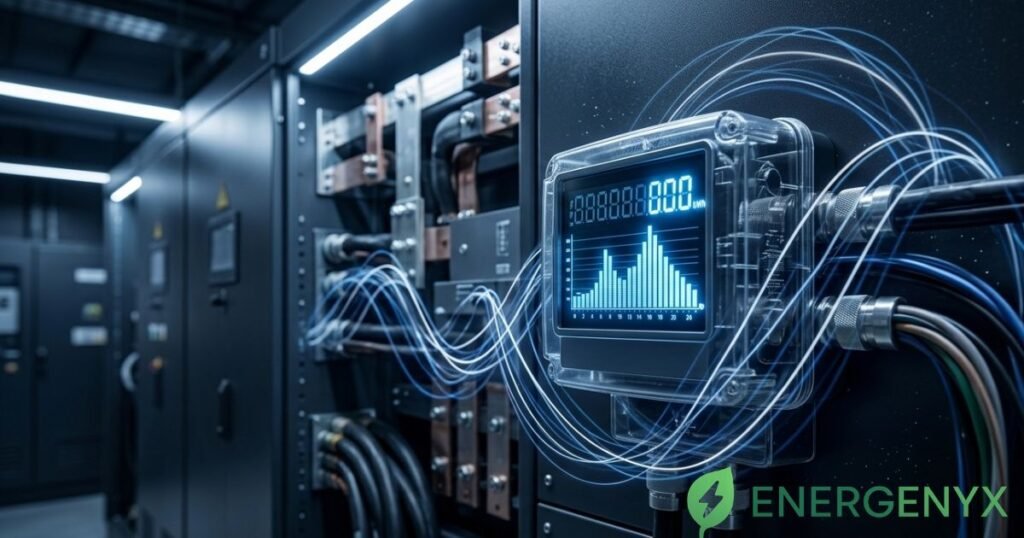
A half-hourly meter does not automatically make electricity cheaper.
Instead, it provides detailed information about electricity consumption in 30-minute intervals. Half-hourly electricity data also plays an important role in the UK’s electricity settlement arrangements. Elexon provides information on Market-wide Half Hourly Settlement (MHHS) and the use of half-hourly data within the electricity market.
This can help businesses understand:
- Peak demand
- Operating patterns
- Overnight consumption
- Weekend usage
- Seasonal changes
That information can then support energy management and procurement decisions.
For larger electricity users, understanding their consumption profile can be an important part of managing energy costs.
You can learn more in our guide to [half-hourly electricity meters].
Business Electricity Prices and Contract Renewals
Contract renewal is an important opportunity to reassess your electricity arrangements.
Don’t assume that renewing with your existing supplier is automatically the best option.
Before renewal, consider:
- Has your electricity consumption changed?
- Has your business expanded?
- Have your operating hours changed?
- Are you using new equipment?
- Is your existing contract still suitable?
- Could another procurement strategy work better?
- Are there opportunities to improve energy efficiency?
A contract review can help ensure that your next arrangement reflects the current needs of your business.
Business Electricity Price Comparison: What Should You Look For?
When comparing quotations, create a simple comparison table.
| Factor | Supplier A | Supplier B | Supplier C |
|---|---|---|---|
| Unit rate | — | — | — |
| Standing charge | — | — | — |
| Contract length | — | — | — |
| Contract type | — | — | — |
| Payment terms | — | — | — |
| Estimated annual cost | — | — | — |
| Renewable options | — | — | — |
| Exit conditions | — | — | — |
This makes it easier to compare offers consistently.
Remember that the cheapest-looking quotation may not always be the most suitable one.
Common Mistakes Businesses Make When Comparing Electricity Prices
Choosing the Lowest Unit Rate
The lowest unit rate isn’t necessarily the lowest overall cost.
Ignoring the Standing Charge
A higher standing charge can affect total costs, particularly for businesses with relatively low consumption.
Waiting Until the Contract Expires
Last-minute procurement can limit your options.
Ignoring Consumption Changes
If your business has expanded or reduced operations, historical consumption may no longer accurately represent future requirements.
Comparing Only One Supplier
Obtaining multiple quotations can provide a better understanding of available options.
Ignoring Contract Terms
Price is important, but contractual conditions matter too.
Assuming Average Prices Apply to Your Business
Published averages don’t necessarily reflect the rate your particular business can obtain.
Frequently Asked Questions
What is the average business electricity price in the UK?
There isn’t one universal average that applies to every business. Commercial electricity prices vary according to consumption, meter type, location, supplier, contract and market conditions.
Is business electricity cheaper than domestic electricity?
Business and domestic electricity contracts are structured differently, so direct comparisons can be misleading. Businesses should compare commercial contracts based on their own consumption and requirements.
What is a business electricity unit rate?
The unit rate is the price charged for each kilowatt-hour of electricity consumed.
What is a standing charge?
A standing charge is a fixed daily charge associated with an electricity supply, regardless of how much electricity is consumed.
Why are business electricity prices different for every company?
Businesses have different consumption profiles, locations, meter types, contract structures and procurement requirements. Market conditions and contract timing can also affect pricing.
Can I negotiate business electricity prices?
Commercial energy procurement can involve different pricing and contract structures. Larger energy users may have more scope to use structured procurement strategies, while smaller businesses may have more standardised options.
Should I choose a fixed electricity contract?
A fixed contract can provide greater price certainty, but whether it is suitable depends on your business’s requirements, budget and approach to energy price risk.
How can I reduce my business electricity bill?
Businesses can look at both procurement and consumption. Comparing contracts, reviewing standing charges and unit rates, improving energy efficiency, monitoring consumption and reducing unnecessary usage can all contribute to better energy cost management.
When should I compare business electricity prices?
Businesses should ideally review their electricity arrangements before their existing contract expires. The appropriate timing depends on the contract terms and procurement requirements.
Does a half-hourly meter mean higher electricity prices?
Not necessarily. Half-hourly metering provides more detailed consumption data and can involve different procurement arrangements. The actual cost depends on the supply and contract.
Final Thoughts
Business electricity prices can vary considerably across the UK.
There is no single commercial electricity rate that is appropriate for every organisation because each business has different consumption, operating patterns, meter arrangements and procurement requirements.
The most important thing is to look beyond the headline unit rate.
A proper comparison should consider the unit rate, standing charge, contract structure, consumption, payment terms and overall expected cost.
Businesses can also reduce their energy expenditure by improving efficiency and using consumption data to identify unnecessary electricity use.
For larger organisations, detailed information from half-hourly meters can provide additional insight into electricity demand and support more sophisticated procurement decisions.
Most importantly, don’t wait until your current contract is about to expire before reviewing your options.
Understanding your current electricity costs and comparing suitable alternatives in advance can put your business in a stronger position when it is time to renew or switch.
Compare Business Electricity Options with Energenyx

Finding a suitable business electricity contract can take time, particularly when you’re trying to understand different suppliers, unit rates, standing charges and contract structures.
Energenyx helps UK businesses explore their commercial energy options, making it easier to understand and compare potential electricity and gas arrangements.
Whether you’re a small business reviewing your first commercial energy contract or an established organisation approaching renewal, understanding your options is the first step toward making a more informed decision.
Ready to review your business electricity options?
Contact Energenyx today to explore your business energy options and find an arrangement that fits your organisation’s requirements.